
Cat Vomit Color Chart: Common Causes and When to Call a Vet

About the Author
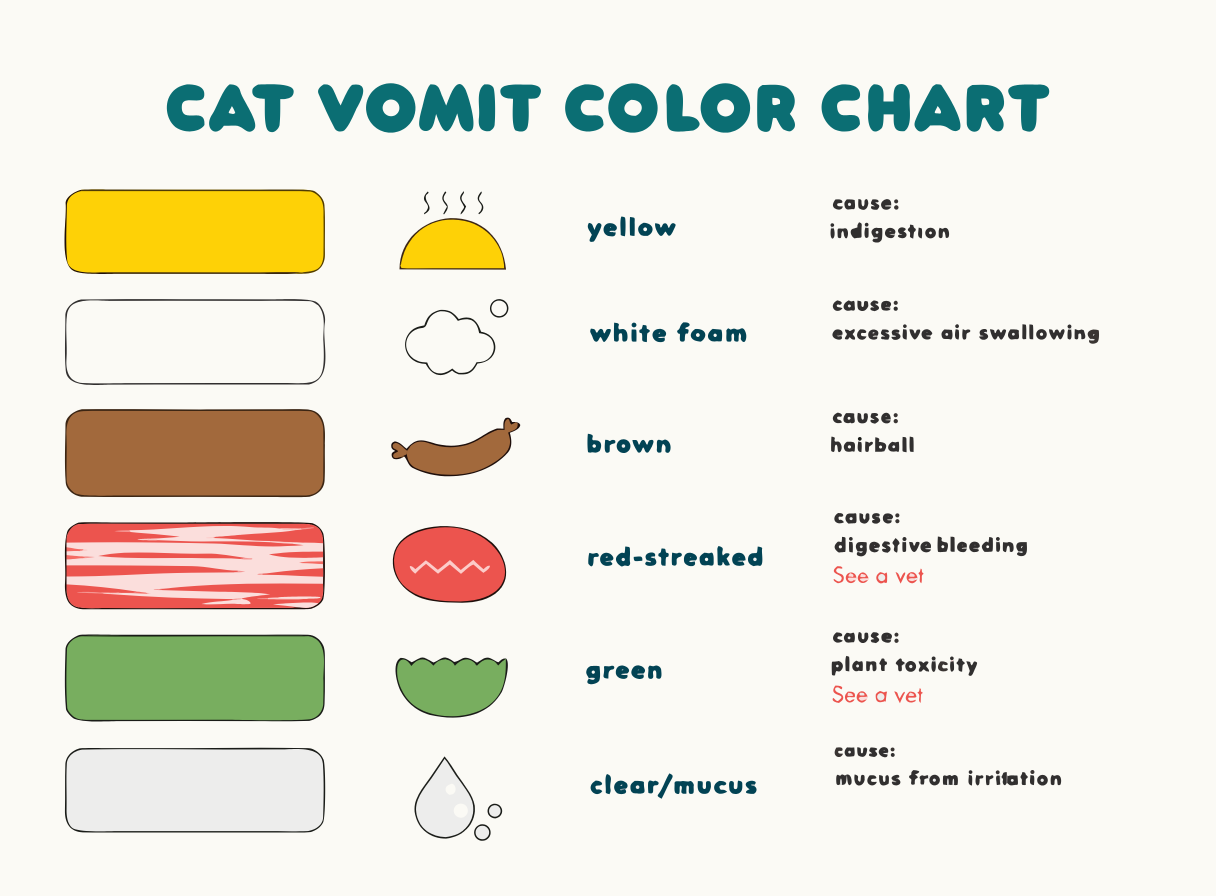
A quick look at your cat's vomit can give you useful clues, but color is only part of the picture. This Cat Vomit Color Chart shows what each shade may signal, whether the material contains food, bile, stomach fluid, plants, or blood, but color alone can't explain the cause. Check when the episode happened, what the vomit looked like, whether it's happened before, and how your cat acts afterward. ● Monitor One isolated episode may be watched if your cat quickly returns to normal. ● Call your veterinarian Repeated vomiting or vomiting with appetite, weight, stool, thirst, or behavior changes needs veterinary advice. ● Emergency Blood, black coffee-ground material, collapse, breathing trouble, severe pain, or suspected toxin or string ingestion needs urgent care. Cat Vomit Color Chart: What Each Color Means Note: Owners often assume every pile is a hairball or the result of eating too fast. The chart below gives you a better starting point, but your cat’s behavior and the frequency of vomiting matter as much as the color. Color or appearance What may be present Common situation What to do next Clear or watery Water, saliva, mucus, or stomach fluid Recent drinking, an empty stomach, or irritation Monitor one isolated episode if your cat acts normal. Contact your veterinarian if it repeats or comes with appetite, thirst, urination, or behavior changes. White or foamy Saliva, mucus, stomach acid, and air An empty or irritated stomach Record when it happened. Get veterinary advice if it returns, your cat stops eating, or other symptoms appear. Yellow or yellow-green Bile mixed with stomach fluid A long gap between meals or digestive irritation Contact your veterinarian if it repeats or comes with pain, diarrhea, weakness, or appetite loss. Green or plant-filled Bile, grass, leaves, or another plant Plant chewing or bile in the vomit Look for damaged plants. Seek help at once if your cat may have eaten a toxic plant. Orange or food-colored Partly digested food and stomach fluid A recent meal, treat, or food dye Note what your cat ate. Call your veterinarian if vomiting continues or comes with weight loss. Brown or foul-smelling Food, swallowed debris, or digested blood Brown food, foreign material, or possible bleeding Contact a veterinarian promptly if brown vomit is very dark, grainy or unusually foul-smelling. Black or coffee-ground-like material, pale gums, weakness or collapse requires urgent care. Red or pink Fresh blood, red food, or food dye Irritation, trauma, exposure to toxins, or some other medical condition Handle blood seriously and consult a veterinarian. Black or coffee-ground-like Partly digested blood Possible bleeding in the stomach or upper digestive tract Seek urgent veterinary care. Take a photo only if it will not delay leaving. Undigested food Kibble, wet food, or recently eaten material Fast eating, regurgitation, stomach upset, or an esophagus problem Note how soon it came up and whether your cat retched. Repeated episodes need veterinary review. Vomit may contain food, liquid, bile, or foam. The cause can sit in the gut, a hairball, fast eating, an upset stomach, or well beyond it, in the kidneys, liver, or thyroid, which is whycolor alone can't diagnose it. How to read the chart Color can mislead you Dark colored kibble can give brown vomiting. Grass or leaves from indoor plants can give green color, while food coloring can cause vomiting with orange, pink, or red colors. Also, lighting can change your view. If you use a warm bulb, clear or white vomit will appear yellow-colored. It’s recommended to take one picture under natural light conditions before washing the area. Do not assume clear vomit is harmless or that every brown episode contains blood. Color, texture, timing, frequency and the cat's behavior provide more useful context together. Look at the whole pattern Ask yourself these questions: Was it before eating, immediately after eating, or a few hours after? Was there a heaving, or did the food come out unexpectedly? Was the substance liquid, foamy, chunky, woolly, grainy? Did it happen once, or was it a regular weekly event? Is your cat eating, drinking, walking and going to the toilet properly? Time can help you too. Food which comes out fast and looks intact can be regurgitation. But vomiting a few hours after eating, especially recurrent, needs investigation. One isolated episode in an otherwise alert cat may be less urgent, but repeated vomiting or vomiting with weakness, pain, blood, diarrhea, appetite loss, weight loss, or changes in thirst and urination needs veterinary advice. Is it vomiting, regurgitation, a hairball, or a cough? Owners often wait for a hairball that never appears. What looks like retching may be vomiting, regurgitation, or coughing. Event What happens first What comes up What happens after Vomiting Drooling, lip licking, restlessness, and belly heaving Partly digested food, bile, foam, or fluid The cat may seem tired or unwell Regurgitation Little warning and no belly heaving Undigested food, often in a tube shape The cat often acts normal and may try to eat again Hairball Hacking, gagging, and a crouched posture A long, wet clump of compacted fur The cat usually returns to normal Coughing Low crouch, stretched neck, and dry or wet hacking Usually nothing, or a small amount of foam Breathing may be fast for a short time True vomiting is active. You can usually see the abdomen contract. Regurgitation is passive and often happens soon after eating. The food may still look whole because it did not remain in the stomach long enough to be digested. Hairballs are usually long rather than round because they pass through the narrow esophagus. Frequent hairballs or regular hacking without producing one should be checked. A coughing cat may crouch, stretch its neck forward, and produce little or nothing. A short video can help your veterinarian tell coughing from vomiting. Why repeated vomiting matters Vomiting every week or every few weeks may start to feel routine. Owners may say, “That is normal for my cat,” especially when the cat eats and plays normally afterward. A repeating pattern still deserves attention. Long-term vomiting may lead to dehydration, weight loss, weakness, or changes in electrolyte levels. It may also be linked to a problem that is easier to manage when found early. Tracking is harder in a multi-cat home. One puddle each week may appear to come from different cats, when the same cat could be responsible every time. In a multi-cat home, identify and observe each cat directly when possible. A litter box cannot determine which cat vomited or diagnose the cause, so keep a written record of episodes, appetite, stool, thirst, urination and weight. Keep a simple vomiting log Date and time Which cat vomited Color, texture, and amount How soon it happened after eating Food, treats, or diet changes Access to plants, string, chemicals, or small objects Appetite, energy, stool, thirst, urination, and weight changes One clear photo for the veterinarian In a multi-cat home, note whether one cat stole another cat’s food before the episode. This detail may explain why portion control or slow feeding has not worked. A clear history helps your veterinarian decide whether an examination, blood test, stool test, X-ray, or ultrasound may be useful. A slow-eating plan for cats that bring food back up Some cats eat a full serving in seconds, bring it back up, and immediately ask for more. Smaller meals may help, but first check whether the food was vomited or passively regurgitated. Check the timing. Whole food that returns within minutes may be regurgitation. Food that comes up hours later may have another cause. Split the daily amount. Offer four to six smaller servings without increasing the total daily food. Use a slow feeder. Try a ridged bowl, food puzzle, or kibble spread across a flat tray. Feed cats separately. Competition can make even friendly cats rush their meals. Prevent food stealing. Pick up unfinished bowls or use a feeder that opens only for the assigned cat. Call your veterinarian if it continues. A feeding change should reduce simple fast-eating episodes. If it does not, stop treating speed as the only explanation. The real problem in many multi-cat homes is not the bowl. One cat finishes quickly because it expects another cat to take the food. Removing that pressure may work better than changing the dish alone. Other common causes of vomiting 1. Diet and meal timing Long gaps between meals may be followed by clear fluid, foam, or yellow bile. A sudden food change can also upset digestion. Introduce new foods slowly unless you receive other guidance from your vet. Instead of leaving food out all day, offer smaller meals at regular times so your cat's stomach isn't empty for long stretches. Some cats cannot tolerate a certain food or ingredient, yet vomiting on its own does not mean your pet has an allergy. Other reasons need to be excluded prior to switching diet. 2. Fur, plants, foreign bodies Cats ingest their fur when self-grooming. Some fur can clump and cause a hairball, although frequent hairballs and dry heaving should not necessarily be considered normal. Plants, strings, ribbons, threads, dental floss, hair ties, or broken toys can irritate or obstruct the digestive system. As some specialists state, long thin foreign bodies, such as string or yarn, can become lodged causing an obstruction. Never try to remove strings from the mouth or the anus of your cat. Consult your veterinarian for instructions. 3. Digestive system disease, or any disease affecting the body in general Infections, parasites, gastritis and inflammatory bowel disease may cause vomiting. Kidney disease, liver disease, pancreatitis, hyperthyroidism and other metabolic disorders can also cause nausea even when the primary problem is outside the stomach. The color will not help prove any of these disorders. Pattern repetition, weight loss, diarrhea, changes in thirst, or loss of appetite is more helpful to the veterinarian than the color itself. What to do immediately after your cat throws up 1. Examine your cat first Observe your cat before you clean the floor. Look for breathing problems, consciousness level, balance, movements, pain, pale gums, weakness, swelling of the abdomen, retching, diarrhea, or hiding behavior. If your cat faints, can’t stand, has trouble breathing, or seems to be in pain, go for emergency assistance. 2. Take one photo and check the area Photograph the vomit in good light. Note when it happened, what your cat ate, and how they acted before and afterward. Check for: Damaged plants Chewed medication packets Missing string or ribbon Broken toys Household chemicals Spoiled food Keep a plant sample or product label when possible. Do not delay urgent care to take several photos. 3. What not to do Do not give human medication. Do not diagnose the cause from color alone. Do not pull visible string. Do not delay contacting a veterinarian or poison-control service while trying to collect more proof. Don’t withhold food from kittens or cats that are vulnerable due to medical conditions without seeking the opinion of a veterinarian. Don’t try to make your cat vomit. Do not try to make a cat vomit at home unless a veterinarian or animal poison-control professional specifically instructs you to do so. Hydrogen peroxide should not be given to cats because it can injure the stomach and esophagus. When to see a veterinarian A cat may look normal between episodes and still have a problem that needs evaluation. Chronic vomiting may be intermittent even while a cat appears otherwise well. Arrange veterinary care when vomiting: Happens repeatedly over several days or weeks, or more than once per week Comes with appetite loss or weight loss Occurs with diarrhea or constipation Appears with increased thirst or urination Is paired with hiding or low energy Continues after meals are slowed down Includes frequent hairballs or repeated dry hacking EMERGENCY — GO NOW Seek urgent or emergency care If your cat has: Red blood, black fluid, or coffee-ground-like material Repeated vomiting in a short period, especially when water will not stay down Trouble keeping water down Signs such as weakness, fainting, or unsteadiness Enlarged or painful abdomen Pale, blue, or gray gums Breathing trouble Suspected toxin exposure Possible string or foreign-object ingestion Kittens, elderly cats, pregnant/nursing cats, medicated cats, and cats with underlying health issues should have quicker access to care. Tests Your Vet May Perform Your vet will inquire about the duration of the vomiting, frequency of vomiting, diet of your cat, and any change in its feces, thirst, weight, or behavior. Your vet will check your cat's hydration, gums, temperature, weight, and abdomen. For ongoingcat care, tests that may be performed include: Blood tests Urine tests Stool tests X-rays Ultrasound Endoscopy or biopsy in some long-term cases A guide to testing for vomitingexplains that history and a physical examination come first, followed by tests chosen for the individual cat. Treatment depends on the cause. It may include fluids, medicine prescribed for cats, diet changes, parasite treatment, or surgery when a blockage is present. How to reduce preventable vomiting You cannot prevent every cause, but these steps may reduce avoidable episodes Introduce new food gradually. Give smaller meals at regular times. Use a slow feeder for cats that gulp food. Feed cats separately when they compete. Prevent one cat from stealing another cat’s meal. Brush loose fur from your cat’s coat. Keep medicines and chemicals in closed cabinets. Remove string, thread, hair ties, and small objects. Check that indoor plants are safe for cats. Discuss repeated vomiting with your veterinarian. Health and safety note: This article is educational and cannot diagnose the cause of vomiting. Contact a veterinarian for advice based on your cat's symptoms and medical history. FAQs What color vomit is most concerning in cats? Red or pink vomit may contain fresh blood, while black or coffee-ground-like material may contain digested blood. Contact a veterinarian promptly and seek urgent care when blood appears with weakness, pale gums, pain, collapse or repeated vomiting. Is yellow vomit normal for cats? Yellow vomit normally contains bile and tends to occur when there is a large time period between two meals. If the yellow vomiting occurs frequently or accompanies other signs, contact your veterinarian. Is any type of cat vomit considered healthy? No type of vomit is considered healthy. One isolated episode may not indicate a serious problem when the cat immediately returns to normal, but recurrence or additional symptoms need veterinary advice. How do I know if my cat’s vomit is bad? Consult a veterinarian about vomiting with blood, frequent episodes, associated with pain, weakness, diarrhea, appetite loss, weight loss, excessive thirst, or change in behavior. How often is too often for a cat to vomit? A repeating pattern should not be dismissed as normal. Cornell advises veterinary evaluation when vomiting occurs more than once per week or appears with lethargy, weakness, appetite loss, blood, diarrhea, or changes in thirst or urination. How can I tell vomiting from regurgitation? Vomiting usually involves nausea, retching and abdominal contractions. Regurgitation is more passive, often happens soon after eating, and may bring up undigested food in a tube-like shape. Should I withhold food after my cat vomits? Do not start prolonged fasting or a home treatment plan without veterinary guidance, especially for kittens, seniors or cats with medical conditions. Ask a veterinarian what and when to feed after vomiting. Sources Cornell Feline Health Center — Vomiting Merck Veterinary Manual — Vomiting in Cats VCA Animal Hospitals — Vomiting in Cats Cornell Feline Health Center — Common Cat Hazards ASPCA — Is It Ever Safe to Induce Vomiting?
A quick look at your cat's vomit can give you useful clues, but color is only part of the picture. This Cat Vomit Color Chart shows what each shade may signal, whether the material contains food, bile, stomach fluid, plants, or blood, but color alone can't explain the cause. Check when the episode happened, what the vomit looked like, whether it's happened before, and how your cat acts afterward.
|
● Monitor |
One isolated episode may be watched if your cat quickly returns to normal. |
|
● Call your veterinarian |
Repeated vomiting or vomiting with appetite, weight, stool, thirst, or behavior changes needs veterinary advice. |
|
● Emergency |
Blood, black coffee-ground material, collapse, breathing trouble, severe pain, or suspected toxin or string ingestion needs urgent care. |
Cat Vomit Color Chart: What Each Color Means

|
Note: Owners often assume every pile is a hairball or the result of eating too fast. The chart below gives you a better starting point, but your cat’s behavior and the frequency of vomiting matter as much as the color. |
|
Color or appearance |
What may be present |
Common situation |
What to do next |
|
Clear or watery |
Water, saliva, mucus, or stomach fluid |
Recent drinking, an empty stomach, or irritation |
Monitor one isolated episode if your cat acts normal. Contact your veterinarian if it repeats or comes with appetite, thirst, urination, or behavior changes. |
|
White or foamy |
Saliva, mucus, stomach acid, and air |
An empty or irritated stomach |
Record when it happened. Get veterinary advice if it returns, your cat stops eating, or other symptoms appear. |
|
Yellow or yellow-green |
Bile mixed with stomach fluid |
A long gap between meals or digestive irritation |
Contact your veterinarian if it repeats or comes with pain, diarrhea, weakness, or appetite loss. |
|
Green or plant-filled |
Bile, grass, leaves, or another plant |
Plant chewing or bile in the vomit |
Look for damaged plants. Seek help at once if your cat may have eaten a toxic plant. |
|
Orange or food-colored |
Partly digested food and stomach fluid |
A recent meal, treat, or food dye |
Note what your cat ate. Call your veterinarian if vomiting continues or comes with weight loss. |
|
Brown or foul-smelling |
Food, swallowed debris, or digested blood |
Brown food, foreign material, or possible bleeding |
Contact a veterinarian promptly if brown vomit is very dark, grainy or unusually foul-smelling. Black or coffee-ground-like material, pale gums, weakness or collapse requires urgent care. |
|
Red or pink |
Fresh blood, red food, or food dye |
Irritation, trauma, exposure to toxins, or some other medical condition |
Handle blood seriously and consult a veterinarian. |
|
Black or coffee-ground-like |
Partly digested blood |
Possible bleeding in the stomach or upper digestive tract |
Seek urgent veterinary care. Take a photo only if it will not delay leaving. |
|
Undigested food |
Kibble, wet food, or recently eaten material |
Fast eating, regurgitation, stomach upset, or an esophagus problem |
Note how soon it came up and whether your cat retched. Repeated episodes need veterinary review. |
Vomit may contain food, liquid, bile, or foam. The cause can sit in the gut, a hairball, fast eating, an upset stomach, or well beyond it, in the kidneys, liver, or thyroid, which is whycolor alone can't diagnose it.
How to read the chart

Color can mislead you
|
Look at the whole pattern
|
Ask yourself these questions:
Time can help you too. Food which comes out fast and looks intact can be regurgitation. But vomiting a few hours after eating, especially recurrent, needs investigation. One isolated episode in an otherwise alert cat may be less urgent, but repeated vomiting or vomiting with weakness, pain, blood, diarrhea, appetite loss, weight loss, or changes in thirst and urination needs veterinary advice. |
Is it vomiting, regurgitation, a hairball, or a cough?

Owners often wait for a hairball that never appears. What looks like retching may be vomiting, regurgitation, or coughing.
|
Event |
What happens first |
What comes up |
What happens after |
|
Vomiting |
Drooling, lip licking, restlessness, and belly heaving |
Partly digested food, bile, foam, or fluid |
The cat may seem tired or unwell |
|
Regurgitation |
Little warning and no belly heaving |
Undigested food, often in a tube shape |
The cat often acts normal and may try to eat again |
|
Hairball |
Hacking, gagging, and a crouched posture |
A long, wet clump of compacted fur |
The cat usually returns to normal |
|
Coughing |
Low crouch, stretched neck, and dry or wet hacking |
Usually nothing, or a small amount of foam |
Breathing may be fast for a short time |
True vomiting is active. You can usually see the abdomen contract. Regurgitation is passive and often happens soon after eating. The food may still look whole because it did not remain in the stomach long enough to be digested.
Hairballs are usually long rather than round because they pass through the narrow esophagus. Frequent hairballs or regular hacking without producing one should be checked.
A coughing cat may crouch, stretch its neck forward, and produce little or nothing. A short video can help your veterinarian tell coughing from vomiting.
Why repeated vomiting matters
Vomiting every week or every few weeks may start to feel routine. Owners may say, “That is normal for my cat,” especially when the cat eats and plays normally afterward.
A repeating pattern still deserves attention. Long-term vomiting may lead to dehydration, weight loss, weakness, or changes in electrolyte levels. It may also be linked to a problem that is easier to manage when found early.
Tracking is harder in a multi-cat home. One puddle each week may appear to come from different cats, when the same cat could be responsible every time.
In a multi-cat home, identify and observe each cat directly when possible. A litter box cannot determine which cat vomited or diagnose the cause, so keep a written record of episodes, appetite, stool, thirst, urination and weight.
Keep a simple vomiting log
|
In a multi-cat home, note whether one cat stole another cat’s food before the episode. This detail may explain why portion control or slow feeding has not worked. A clear history helps your veterinarian decide whether an examination, blood test, stool test, X-ray, or ultrasound may be useful.
A slow-eating plan for cats that bring food back up
Some cats eat a full serving in seconds, bring it back up, and immediately ask for more. Smaller meals may help, but first check whether the food was vomited or passively regurgitated.
- Check the timing. Whole food that returns within minutes may be regurgitation. Food that comes up hours later may have another cause.
- Split the daily amount. Offer four to six smaller servings without increasing the total daily food.
- Use a slow feeder. Try a ridged bowl, food puzzle, or kibble spread across a flat tray.
- Feed cats separately. Competition can make even friendly cats rush their meals.
- Prevent food stealing. Pick up unfinished bowls or use a feeder that opens only for the assigned cat.
- Call your veterinarian if it continues. A feeding change should reduce simple fast-eating episodes. If it does not, stop treating speed as the only explanation.
The real problem in many multi-cat homes is not the bowl. One cat finishes quickly because it expects another cat to take the food. Removing that pressure may work better than changing the dish alone.
Other common causes of vomiting

1. Diet and meal timing
Long gaps between meals may be followed by clear fluid, foam, or yellow bile. A sudden food change can also upset digestion.
Introduce new foods slowly unless you receive other guidance from your vet. Instead of leaving food out all day, offer smaller meals at regular times so your cat's stomach isn't empty for long stretches.
Some cats cannot tolerate a certain food or ingredient, yet vomiting on its own does not mean your pet has an allergy. Other reasons need to be excluded prior to switching diet.
2. Fur, plants, foreign bodies
Cats ingest their fur when self-grooming. Some fur can clump and cause a hairball, although frequent hairballs and dry heaving should not necessarily be considered normal.
Plants, strings, ribbons, threads, dental floss, hair ties, or broken toys can irritate or obstruct the digestive system. As some specialists state, long thin foreign bodies, such as string or yarn, can become lodged causing an obstruction.
Never try to remove strings from the mouth or the anus of your cat. Consult your veterinarian for instructions.
3. Digestive system disease, or any disease affecting the body in general
Infections, parasites, gastritis and inflammatory bowel disease may cause vomiting. Kidney disease, liver disease, pancreatitis, hyperthyroidism and other metabolic disorders can also cause nausea even when the primary problem is outside the stomach.
The color will not help prove any of these disorders. Pattern repetition, weight loss, diarrhea, changes in thirst, or loss of appetite is more helpful to the veterinarian than the color itself.
What to do immediately after your cat throws up
1. Examine your cat first
|
2. Take one photo and check the area
Photograph the vomit in good light. Note when it happened, what your cat ate, and how they acted before and afterward.
|
Check for:
Keep a plant sample or product label when possible. Do not delay urgent care to take several photos. |
3. What not to do
|
Do not try to make a cat vomit at home unless a veterinarian or animal poison-control professional specifically instructs you to do so. Hydrogen peroxide should not be given to cats because it can injure the stomach and esophagus.
When to see a veterinarian

|
A cat may look normal between episodes and still have a problem that needs evaluation. Chronic vomiting may be intermittent even while a cat appears otherwise well. Arrange veterinary care when vomiting: |
- Happens repeatedly over several days or weeks, or more than once per week
- Comes with appetite loss or weight loss
- Occurs with diarrhea or constipation
- Appears with increased thirst or urination
- Is paired with hiding or low energy
- Continues after meals are slowed down
- Includes frequent hairballs or repeated dry hacking
|
EMERGENCY — GO NOW Seek urgent or emergency care If your cat has: |
- Red blood, black fluid, or coffee-ground-like material
- Repeated vomiting in a short period, especially when water will not stay down
- Trouble keeping water down
- Signs such as weakness, fainting, or unsteadiness
- Enlarged or painful abdomen
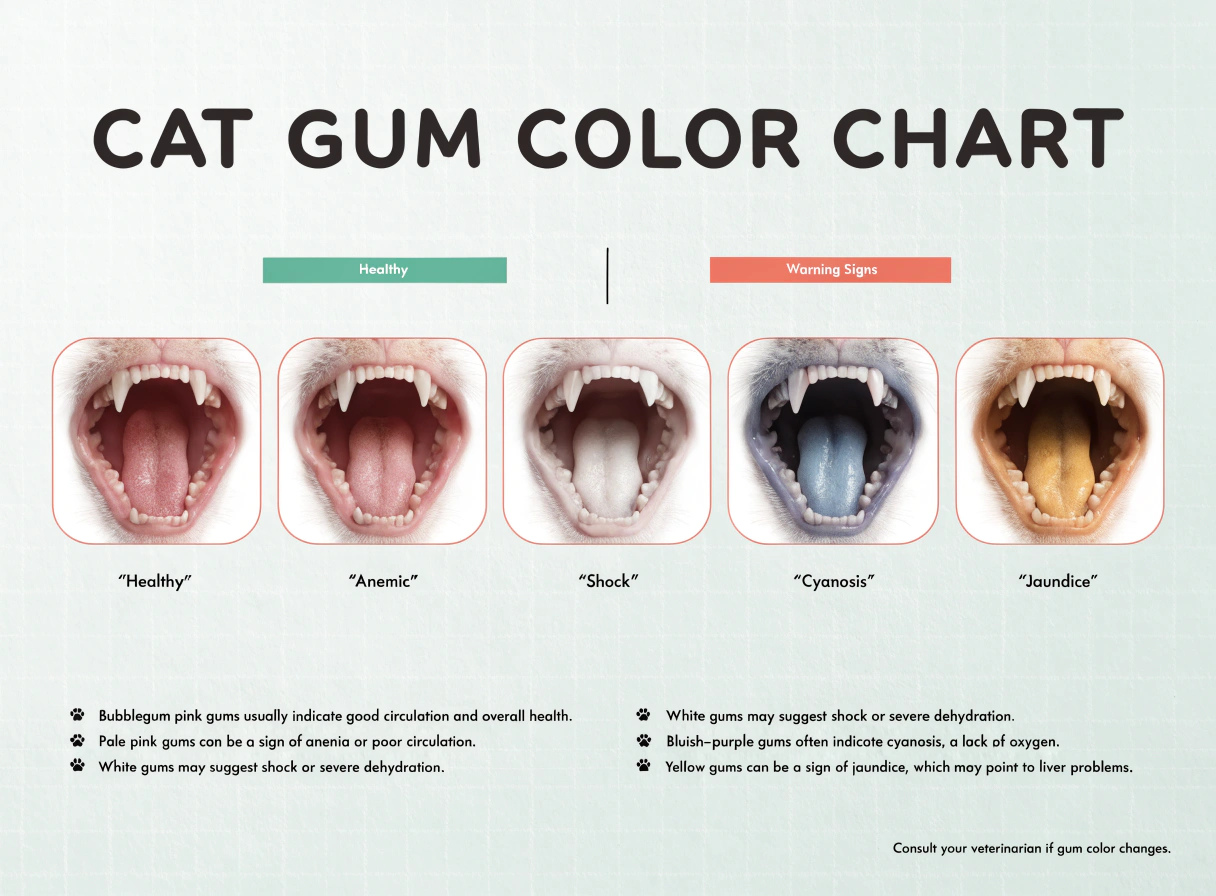
- Pale, blue, or gray gums
- Breathing trouble
- Suspected toxin exposure
- Possible string or foreign-object ingestion
Kittens, elderly cats, pregnant/nursing cats, medicated cats, and cats with underlying health issues should have quicker access to care.
Tests Your Vet May Perform
Your vet will inquire about the duration of the vomiting, frequency of vomiting, diet of your cat, and any change in its feces, thirst, weight, or behavior.
Your vet will check your cat's hydration, gums, temperature, weight, and abdomen. For ongoingcat care, tests that may be performed include:
- Blood tests
- Urine tests
- Stool tests
- X-rays
- Ultrasound
- Endoscopy or biopsy in some long-term cases
A guide to testing for vomitingexplains that history and a physical examination come first, followed by tests chosen for the individual cat. Treatment depends on the cause. It may include fluids, medicine prescribed for cats, diet changes, parasite treatment, or surgery when a blockage is present.
How to reduce preventable vomiting
|
You cannot prevent every cause, but these steps may reduce avoidable episodes |
|
FAQs
What color vomit is most concerning in cats?
Red or pink vomit may contain fresh blood, while black or coffee-ground-like material may contain digested blood. Contact a veterinarian promptly and seek urgent care when blood appears with weakness, pale gums, pain, collapse or repeated vomiting.
Is yellow vomit normal for cats?
Yellow vomit normally contains bile and tends to occur when there is a large time period between two meals. If the yellow vomiting occurs frequently or accompanies other signs, contact your veterinarian.
Is any type of cat vomit considered healthy?
No type of vomit is considered healthy. One isolated episode may not indicate a serious problem when the cat immediately returns to normal, but recurrence or additional symptoms need veterinary advice.
How do I know if my cat’s vomit is bad?
Consult a veterinarian about vomiting with blood, frequent episodes, associated with pain, weakness, diarrhea, appetite loss, weight loss, excessive thirst, or change in behavior.
How often is too often for a cat to vomit?
A repeating pattern should not be dismissed as normal. Cornell advises veterinary evaluation when vomiting occurs more than once per week or appears with lethargy, weakness, appetite loss, blood, diarrhea, or changes in thirst or urination.
How can I tell vomiting from regurgitation?
Vomiting usually involves nausea, retching and abdominal contractions. Regurgitation is more passive, often happens soon after eating, and may bring up undigested food in a tube-like shape.
Should I withhold food after my cat vomits?
Do not start prolonged fasting or a home treatment plan without veterinary guidance, especially for kittens, seniors or cats with medical conditions. Ask a veterinarian what and when to feed after vomiting.
Sources
You may also like


AutoScooper Waste Bags


Further reading

Publication Draft Open vs. Closed Automatic Litter Boxes: Which Style Does Your Cat Prefer?
Cat Vomit Color Chart: Common Causes and When to Call a Vet
Cat Gum Color Chart: What Healthy and Unhealthy Gums May Mean