Clumping vs Non-Clumping Cat Litter: Which Is Better?

About the Author
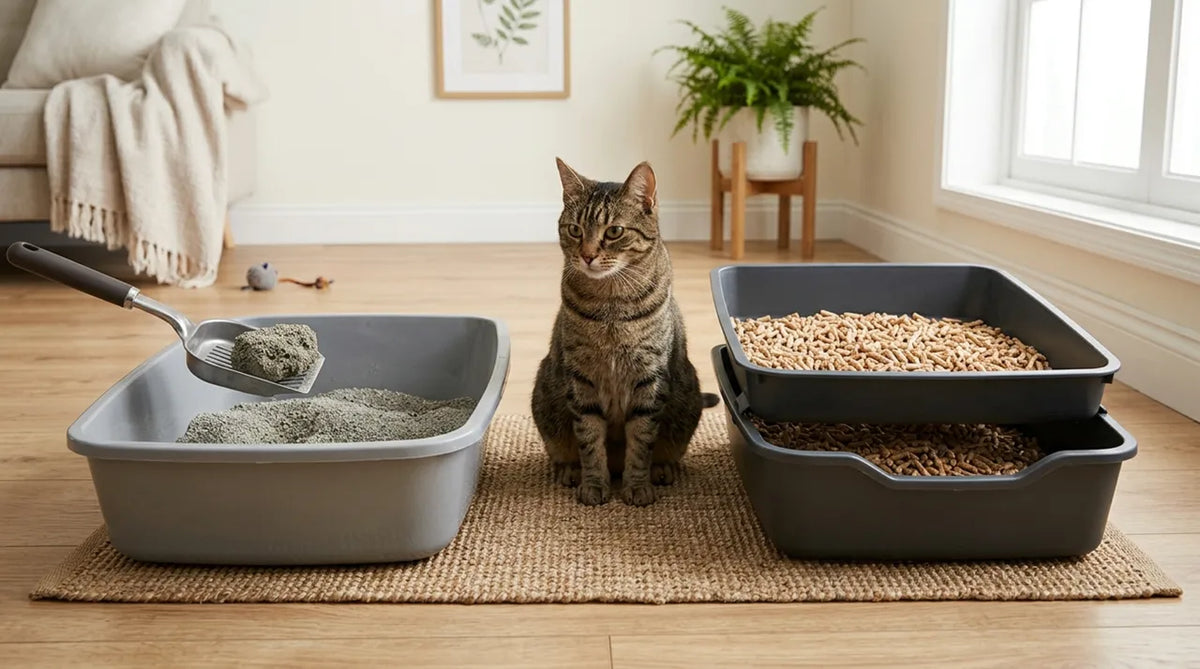
Clumping litter forms solid lumps around urine that you can scoop out, while non-clumping litter soaks the urine up and holds it until you change the whole box or a sifting tray separates it. Neither one is better for every cat. Clumping is usually easier for daily cleaning, but non-clumping can make more sense for young kittens, some litter box systems, tight budgets and cats that just prefer it. If you've ever scooped non-clumping litter and watched the wet grains fall right back through the slots, you already know the two can't be cleaned the same way. Below we compare the two so you can pick what suits your kitty. What's the Difference Between Clumping and non-clumping Cat Litter? The main difference in clumping vs non-clumping cat litter is what happens to urine once it hits the box. Here's how they compare side by side: Feature Clumping litter non-clumping litter Urine handling Forms removable clumps Absorbs urine without solid clumps Daily cleaning Scoop poop and urine clumps Remove poop, then clean based on the material Full replacement Usually less often with regular scooping Often more often, depending on material Odor control Removing urine clumps helps Depends on absorbency and replacement Common materials Bentonite clay, tofu, corn, wheat Clay, silica crystals, pine, paper Cost Varies, clumping clay may cost more Basic clay is often cheaper, silica may cost more Tracking Depends on grain size Depends on material and texture Cat preference Fine grain options are familiar Pellets or crystals may feel unfamiliar 1. How Does Clumping Litter Deal With Urine? Clumping litter usually contains sodium bentonite clay that expands and clumps up when wet, but some types of tofu, corn, or wheat litters can clump up as well. The wet litter forms a solid clump that can be scooped out of the box, leaving dry litter behind. 2. How non-clumping Litter Manages Urine The non-clumping litter disperses the urine among its granules, pellets or crystals, and retains it till the entire material is saturated. It is not always true that the urine stays in the litter box till all the litter gets disposed off. The wet pine pellets dissolve to form saw dust which falls down to the bottom layer in the sifting tray. What Are the Pros and Cons of Clumping Cat Litter? It's the most popular type for a reason, but it has a few daily annoyances. 1. Benefits of Clumping Cat Litter The biggest advantage is that you can remove the urine along with the poop without emptying the whole box. You top up what you took out and go longer between full changes. Cat urine clumps will also tell you approximately how much your cat urinates, and any significant changes in the size or quantity of urine clumps can be easily noticed compared to litter absorbing the pee. 2. Disadvantages of Clumping Cat Litter Clay clumping litter is heavy to carry, and many formulas are dusty and easy to track around the house. Clumps can also break apart if you scoop before they've set, or if another cat steps on them first, which leaves wet bits mixed in with clean litter. If your cat digs down to the plastic or pees against the side, it can also set into a hard patch you have to scrape off. And it isn't meant to be eaten, which matters for kittens and cats that chew litter. What Are the Pros and Cons of non-clumping Cat Litter? It isn't just a worse version of clumping litter, since it works differently. 1. Benefits of non-clumping Cat Litter Basic non-clumping clay is often cheaper per bag, and paper or wood pellets are much lighter to carry. Pellets and crystals give cats a different texture, and some litter systems are built around them. Owners of long haired cats also like that wet litter doesn't harden into clumps on damp fur or paws, which can be a real struggle to clean off. 2. Disadvantages of non-clumping Cat Litter The pee that is absorbed stays trapped in the litter until you either change it or it is sifted out of it using a tray. It will also be difficult to tell when the cat urinates. It tends to feel frustrating with an ordinary slotted scoop, but the same product can be much easier to live with in a system designed for that material. Why Do People Still Use non-clumping Cat Litter? If it leaves urine behind, why buy it? A lot of new owners ask exactly that. 1. It's Not Always About Easier Scooping Price is one reason, since basic non-clumping clay usually costs less. Texture is another. Some cats prefer paper or wood pellets, or won't use certain clumping formulas at all, and if your cat is happy with a litter, easier scooping alone may not be worth the switch. 2. Some non-clumping Materials Work Differently From Clay Silica crystals pull urine into tiny pores and hold it until they're saturated. Pine pellets turn into sawdust when wet, and that sawdust can be sifted away from the clean pellets. Neither works well if you try to scoop them like clumping clay, and as one owner put it, judging non-clumping litter that way is like complaining that a towel isn't a t-shirt. 3. Certain Cats and Litter Box Systems Need Different Options non-clumping litter is often suggested for young kittens that might eat litter, depending on the material and your vet's advice. Some owners also find it easier to collect a urine sample from a non-clumping or pellet setup when their vet asks them to check a cat's urine at home. Some boxes only fit pellets or crystals which do not form clumps; hence, the litter type depends on the box type. How Do You Clean non-clumping Litter Without Wasting It? Treat each substance the right way it should be treated and not in one generic way. Litter Daily When to replace non-clumping clay Remove poop, lift wet patches if you can When it smells or feels damp throughout Silica crystals Remove poop, stir if the maker says to When crystals stay damp, yellow or smell Pine pellets in a sifting tray Remove poop, sift sawdust down Empty the sawdust tray every few days 1. Cleaning Old-fashioned non-clumping Clay Litter Get rid of poop every day and monitor the degree of saturation of your litter. One long-time user uses the clay no deeper than an inch and uses a solid rather than slotted scoop, so the wet spot remains just at the bottom of the box and is removed all together. New litter laid over the top will not help eliminate the soaked-in urine under it, so full cleanings remain necessary anyway. Our guide on how often to change cat litter explains how schedules differ by material. 2. Cleaning of non-clumping Silica Crystals Poop should be removed on a daily basis, crystals should be stirred as per the instructions. Also, the entire batch of crystals should be replaced if they get damp or smell. Our guide to silica cat litter goes into more detail. 3. Cleaning Pine Pellets Using a Sifting Litter Box As pine pellets become wet, they turn into sawdust. This is where the use of two-layered sifting trays comes in handy since they allow the sawdust to pass through. You remove the wet material from below instead of hunting for urine clumps. Some owners put a puppy pad in the bottom tray, so the wet sawdust lands on it and can be thrown away every few days with the pad. Which Litter Controls Urine Odor Better? Clumping is always an advantage since the urine leaves the litter box, although a good silica or pine system could work too. 1. Why Removing Urine Clumps Helps When most of the urine comes out with each scoop, less of it stays behind to turn into that ammonia smell. The catch is weak clumping. If wet pieces crumble through the scoop, they stay mixed with clean litter and can start smelling within a few days. 2. Reasoning as to why some non-clumping litters work well in reducing odor The crystals will trap the moisture into their pores and the pine will absorb the urine and its own smell will help mask the odor. An owner who changed from pine to crystals stated that the litterbox remained fresh for approximately three and a half weeks per bag provided that she scooped each day. 3. What If They Are Both Foul? Tick the box before laying the blame on the litter. It is possible for urine to accumulate on the edges or under the thin layer of litter. Furthermore, aged plastic litter pans have the tendency to retain smell in the scratches. For guidelines on litter pan cleanliness, refer to the animal welfare literature. Our guide to keeping the litter box from smelling covers the rest. Which Type of Cat Litter Creates Less Dust and Tracking? Dust and tracking depend more on the material and particle size than on whether a litter clumps. 1. Dust Levels Depend on the Formula Some clay puffs up a cloud when you pour or stir, while low dust clay, paper and crystals usually make less. None are fully dust free, since granules wear down over time. 2. Why Pellet Litter May Track Less Bigger pellets don't wedge between toes as easily, and one owner with carpet throughout the house said pine pellets barely track at all compared with the clumping litter that ended up on her couch. Another owner said the opposite, because the sawdust from wet pellets got everywhere. Some cats also dislike walking on hard pellets. Our guide to cutting down on litter tracking has more ideas. Is Clumping or non-clumping Litter Safer for Kittens? non-clumping litter is often recommended for young kittens, mainly because of what could happen if they swallow clumping clay. That doesn't make every clumping litter dangerous or every non-clumping one harmless. 1. Why Young Kittens May Eat Litter Kittens explore with their mouths, so they may nibble litter while digging or swallow bits stuck to their paws and fur while grooming. It's worth watching yours in the box for the first few weeks. 2. Why Some Vets Recommend non-clumping Litter Clumping clay swells and binds when it's wet, and the worry is that a kitten swallowing enough of it could end up with digestive trouble or a blockage. Several owners say their vet told them to start kittens on non-clumping litter for this reason. Still, crystals, clay and plant pellets all behave differently, and none of them are meant to be eaten. 3. When Can Kittens Switch to Clumping Litter? Not all kittens should be introduced at the same age. There are some products recommending waiting until four months of age, but when it comes to switching to clumping litter it is a matter of both individual product and individual cat, so you can always consult the package instruction and your veterinarian. Check the label and ask your vet if you're unsure, and our guide on how to litter train a kitten covers choosing litter during early training. What If Your Cat Eats Litter or Has Sensitive Paws? Adult cats may also be problematic in this regard, and a change to a new bag is not necessarily the solution. A problem adult cat which constantly eats litter should see a veterinarian because such behavior may be an indication of some kind of illness. The problem with sensitive paws is entirely a separate one. Clumping litter that is fine-grained may become hardened in places on long hair or paws in between toes after stepping into some wet area, and according to one owner of a long-haired kitten on clumping litter – never again. If your cat stop using the box after switching litter types, the problem could be simply the feel of the litter, but it is also an indication that there might be a health problem at hand, and the advice from veterinarians for house soiling is to rule out such a possibility first. If you want to retain the yellow "Check with your vet" callout box in the article, place it immediately following the first paragraph, where it will be relevant to the constipation discussion. Check with your vet If your cat eats litter more than once, vomits, stops eating or strains in the box, call your vet. Veterinary guidance on constipation lists eating indigestible material among the causes. Which Litter Works Better for Cats That Pee a Lot? Heavy urination can turn clumping litter into a chore. 1. Why Clumping Litter Can Form Giant Blocks Cats often go in the same spot, and several large pees in one area can merge into a single solid mass. One owner whose cat developed kidney disease said that by the time she got home from work, one side of the box was one big clump glued to the tray. If the litter is too shallow, urine reaches the plastic before it's absorbed, which makes the sticking worse. 2. When non-clumping Systems May Be Easier to Manage The same owner used a sifting litter box that had non-clumping litter, where the wet litter just fell into the bottom layer of litter, enabling her cat to use the litter box even though she could not immediately clean it. The non-clumping litter also absorbs the urine without creating big chunks. 3. When Increased Urination Warrants a Veterinary Visit When your cat is urinating much more than before or visiting the litter box frequently, do not only attribute it to litter box issues. This might be an indication of some health problems like kidney disease or diabetes, and you should visit a vet in addition to making changes to the arrangement. Get help right away Seek help immediately If your cat is straining to urinate and urinating very little, it can be suffering from urinary blockages, which is an emergency situation. Take it to a vet as soon as possible. Which Type of Litter Actually Costs Less? The bag price alone doesn't tell you much. 1. Why Clumping Litter May Last Longer Because you only scoop out the wet clumps and poop, the dry litter around them stays in the box. You top up instead of dumping, which can stretch a higher priced bag further. 2. Why non-clumping Litter Can Still Be Affordable Basic clay is cheap, and some owners buy pine horse bedding pellets in large bags for much less than cat litter costs. One pine pellet user said they pay a lot less than most people. 3. Comparison of Usage per Month, Not Only the Bag Cost Calculate your usage by keeping track of the number of bags you use, how frequently you change your litter, and how much you dispose of within a month period. Clumping litter is disposed of in smaller amounts each day, whereas non-clumping litter is disposed of in larger amounts, less frequently. Can You Use Clumping or non-clumping Litter in an Automatic Litter Box? Both can work, but usually not in the same machine, since it depends on how the box separates waste. 1. Automatic Boxes That Require Clumping Litter Self-cleaning containers utilize either a turning cylinder or sieve to trap hard lumps which fall into the waste drawer. non-clumping litter just falls through the screen with the clean litter, so the urine stays in the box. 2. Systems Designed for non-clumping Litter Some automatic boxes use non-clumping crystals with disposable trays, and others have a separate compartment that collects urine under the pellets. Pine pellet sifting trays work on a similar idea, though most of them aren't automatic. 3. Why You Should Check the Manufacturer's Instructions A litter may fit into a machine yet prevent the machine from cleaning well due to the size of the grain, its binding properties, and the sensors. Prior to the change, be sure to look through the recommended types of litter for your box. If you use the AutoScooper 12 Lite or any other automatic box, follow its litter guidance, and our guide to which litters work in an automatic box explains what to look for. If you use the AutoScooper 12 Lite or any other automatic box, follow its litter guidance, and our guide to which litters work in an automatic box explains what to look for. How to Switch Between Clumping and non-clumping Litter Cats notice texture changes right away, so go slowly. 1. Begin by Introducing Small Amounts of New Litter Introduce small amounts of the new litter to the existing litter, or introduce another box containing the new litter beside the regular box. In case you wish to introduce a different box as well as the new litter, do it separately; otherwise it will be difficult to identify the problem. 2. Look for Changes in Litter Box Behavior Observe if the cat enters without any hesitation, and also if it scratches and buries as normal. Cats perched on the edge, scratching outside the litter box or accidents outside the box indicate that the new litter has not been accepted. 3. What Do You Do When Your Cat Does Not Accept the Change? Take things slowly, and do not remove the old litter altogether – leave it in at least one of the boxes. As one person noted, she kept trying to change her cats' litter from the non-clumping variety to clumping and back a few times, but they would refuse it and created a lot of mess. Which Should You Choose: Clumping or non-clumping Litter? The right pick is the one your cat uses happily and you can keep clean. Your situation Usually the better fit You want to scoop urine and poop daily Clumping litter Adult cat used to fine grain litter Clumping litter Young kitten that may eat litter non-clumping, with your vet's advice Pine pellet sifting tray or crystal system The non-clumping litter it's designed for Long haired cat with litter stuck to fur non-clumping or a larger grain Automatic box with a sifting screen Whatever clumping litter the maker approves 1. Choose Clumping Litter If... You'd rather scoop urine and poop every day than replace the whole box often, and your cat is happy with fine grain litter. Veterinary advice on litter box training notes that most cats prefer an unscented, fine clumping litter, so it's a sensible default for many adult cats. 2. Choose non-clumping Litter If... You have a young kitten that may eat litter and your vet suggests it, you use a pine pellet or crystal system, or your cat simply prefers pellets or crystals over clumping clay. 3. When Neither Option Is Working Well If the box still smells, litter is everywhere or your cat avoids it, the clumping question may not be the real problem. Check texture, dust, litter depth and box placement, since fixing the setup sometimes helps more than changing litter. FAQs Is clumping or non-clumping cat litter better? Neither is better for every cat. Clumping litter is easier for daily cleaning because you can scoop out urine, while non-clumping can suit kittens, sifting systems and cats that prefer pellets or crystals. The best one is the litter your cat uses reliably. Do vets recommend clumping or non-clumping litter? It depends on the cat. Many vets are fine with clumping litter for healthy adults, and most cats prefer a fine, unscented clumping texture. non-clumping is often suggested for young kittens or cats that eat litter, so ask your vet about yours. Why is non-clumping litter recommended for kittens? Kittens often taste litter, and clumping clay swells when wet, so swallowing enough of it could cause digestive trouble. non-clumping litter is seen as a lower risk choice, though it still isn't meant to be eaten. Follow the product's age guidance and your vet's advice. Does non-clumping litter smell worse? It can if you don't replace it often enough, because the urine stays in the litter. Silica crystals and pine pellets in a sifting tray can control odor well, as long as you remove poop daily and change saturated litter on time. How often should you change non-clumping litter? It depends on the material and how many cats use the box. Basic clay usually needs changing more often than silica crystals, while pine pellet sawdust is emptied every few days. Replace any litter that smells, stays damp or stops absorbing. Can you mix clumping and non-clumping litter? You can mix them briefly while switching your cat over, but not long term. The non-clumping part weakens the clumps, so urine is harder to scoop out and the box may smell sooner. Is non-clumping litter cheaper than clumping litter? The bag is often cheaper, but you may throw out more litter at once. Compare what you spend in a month, including full changes, rather than the price per bag. Pine pellets bought in bulk are one of the cheaper options. Can you use non-clumping litter in an automatic litter box? Only if the box is designed for it. Many automatic boxes need firm clumps to work, so non-clumping litter would leave urine behind. Always check the maker's list of approved litters first.
What's the Difference Between Clumping and non-clumping Cat Litter?
|
Feature
|
Clumping litter
|
non-clumping litter
|
|
Urine handling
|
Forms removable clumps
|
Absorbs urine without solid clumps
|
|
Daily cleaning
|
Scoop poop and urine clumps
|
Remove poop, then clean based on the material
|
|
Full replacement
|
Usually less often with regular scooping
|
Often more often, depending on material
|
|
Odor control
|
Removing urine clumps helps
|
Depends on absorbency and replacement
|
|
Common materials
|
Bentonite clay, tofu, corn, wheat
|
Clay, silica crystals, pine, paper
|
|
Cost
|
Varies, clumping clay may cost more
|
Basic clay is often cheaper, silica may cost more
|
|
Tracking
|
Depends on grain size
|
Depends on material and texture
|
|
Cat preference
|
Fine grain options are familiar
|
Pellets or crystals may feel unfamiliar
|
1. How Does Clumping Litter Deal With Urine?

2. How non-clumping Litter Manages Urine
What Are the Pros and Cons of Clumping Cat Litter?
1. Benefits of Clumping Cat Litter
2. Disadvantages of Clumping Cat Litter
What Are the Pros and Cons of non-clumping Cat Litter?
1. Benefits of non-clumping Cat Litter
2. Disadvantages of non-clumping Cat Litter
Why Do People Still Use non-clumping Cat Litter?
1. It's Not Always About Easier Scooping
2. Some non-clumping Materials Work Differently From Clay
3. Certain Cats and Litter Box Systems Need Different Options
How Do You Clean non-clumping Litter Without Wasting It?
|
Litter
|
Daily
|
When to replace
|
|
non-clumping clay
|
Remove poop, lift wet patches if you can
|
When it smells or feels damp throughout
|
|
Silica crystals
|
Remove poop, stir if the maker says to
|
When crystals stay damp, yellow or smell
|
|
Pine pellets in a sifting tray
|
Remove poop, sift sawdust down
|
Empty the sawdust tray every few days
|
1. Cleaning Old-fashioned non-clumping Clay Litter
2. Cleaning of non-clumping Silica Crystals
3. Cleaning Pine Pellets Using a Sifting Litter Box

Which Litter Controls Urine Odor Better?
1. Why Removing Urine Clumps Helps
2. Reasoning as to why some non-clumping litters work well in reducing odor
3. What If They Are Both Foul?
Which Type of Cat Litter Creates Less Dust and Tracking?
1. Dust Levels Depend on the Formula
2. Why Pellet Litter May Track Less
Is Clumping or non-clumping Litter Safer for Kittens?

1. Why Young Kittens May Eat Litter
2. Why Some Vets Recommend non-clumping Litter
3. When Can Kittens Switch to Clumping Litter?
What If Your Cat Eats Litter or Has Sensitive Paws?
|
Check with your vet
If your cat eats litter more than once, vomits, stops eating or strains in the box, call your vet. Veterinary guidance on constipation lists eating indigestible material among the causes.
|
Which Litter Works Better for Cats That Pee a Lot?
1. Why Clumping Litter Can Form Giant Blocks
2. When non-clumping Systems May Be Easier to Manage
3. When Increased Urination Warrants a Veterinary Visit
|
Get help right away
Seek help immediately
If your cat is straining to urinate and urinating very little, it can be suffering from urinary blockages, which is an emergency situation. Take it to a vet as soon as possible.
|
Which Type of Litter Actually Costs Less?
1. Why Clumping Litter May Last Longer
2. Why non-clumping Litter Can Still Be Affordable
3. Comparison of Usage per Month, Not Only the Bag Cost
Can You Use Clumping or non-clumping Litter in an Automatic Litter Box?

1. Automatic Boxes That Require Clumping Litter
2. Systems Designed for non-clumping Litter
3. Why You Should Check the Manufacturer's Instructions
How to Switch Between Clumping and non-clumping Litter
1. Begin by Introducing Small Amounts of New Litter
2. Look for Changes in Litter Box Behavior
3. What Do You Do When Your Cat Does Not Accept the Change?
Which Should You Choose: Clumping or non-clumping Litter?
|
Your situation
|
Usually the better fit
|
|
You want to scoop urine and poop daily
|
Clumping litter
|
|
Adult cat used to fine grain litter
|
Clumping litter
|
|
Young kitten that may eat litter
|
non-clumping, with your vet's advice
|
|
Pine pellet sifting tray or crystal system
|
The non-clumping litter it's designed for
|
|
Long haired cat with litter stuck to fur
|
non-clumping or a larger grain
|
|
Automatic box with a sifting screen
|
Whatever clumping litter the maker approves
|
1. Choose Clumping Litter If...
2. Choose non-clumping Litter If...
3. When Neither Option Is Working Well
FAQs
Is clumping or non-clumping cat litter better?
Do vets recommend clumping or non-clumping litter?
Why is non-clumping litter recommended for kittens?
Does non-clumping litter smell worse?
How often should you change non-clumping litter?
Can you mix clumping and non-clumping litter?
Is non-clumping litter cheaper than clumping litter?
Can you use non-clumping litter in an automatic litter box?
You may also like


AutoScooper 11 Cat Litter Box

AutoScooper 11 Cat Litter Box

AutoScooper 11 Cat Litter Box

AutoScooper 11 Cat Litter Box

Further reading
PetPivot Litter Box Bags: Sizes, Fit and Replacement Schedule
How to Clean a PetPivot Litter Box: AutoScooper Deep Clean Steps
Best Litter for PetPivot AutoScooper: What Works and What to Avoid