Best Litter for Automatic Litter Boxes: Clumping, Dust, Tracking and Odor

About the Author
Quick answer: The best litter for an automatic litter box is one the current model permits, the cat accepts and the mechanism can separate consistently. Prioritize firm clumps, compatible particle size, controlled dust, manageable tracking and reliable odor performance. Do not buy from a broad "works with automatic boxes" label without checking the exact manual. One litter cannot be best for every mechanism. A rake needs waste that can be pulled without smearing. A sifting screen needs particles that pass correctly while clumps remain intact. A rotating chamber needs the right weight, depth and flow. The model guide is the first filter; the cat's preference and real-cycle results are the second. Litter type Possible advantage Common automatic-box concern Decision Clumping mineral or bentonite Often forms firm, fast clumps Weight and dust vary Strong candidate when the model permits it Plant-based clumping litter Lighter and may track differently Pellets or weak clumps may not sift correctly Use only in permitted size and form Crystal litter Absorbs moisture without standard clumps Many sifting systems cannot remove urine as a clump Use only when the model specifically supports it Non-clumping litter Simple substrate for some manual boxes Wet material may stay in the clean litter bed Usually unsuitable for clump-separation systems Lightweight clumping litter Easier to carry Can create dust, scatter or weak clumps in some units Test only if the model permits it Proprietary tray or cartridge Designed for a specific system Recurring cost and limited choice Compare total ownership cost Compatibility comes before marketing claims Read the current manual and product page for: required clumping behavior; permitted material; particle size or shape; excluded pellets, strips or crystals; minimum and maximum fill level; whether the litter must be added through a specific process; any leveling or weight-reset control; cleaning delay before separation. If the manufacturer does not publish litter requirements, ask support before buying a large supply. An incompatible litter can create poor cleaning, excess waste, odor, alerts or mechanical obstruction. The best litter is compatible with the exact machine and acceptable to the cat. 1. Clump strength The clump must form firmly enough to move through the cleaning cycle without breaking, but it should not bond aggressively to the litter bed. A practical home test: Use the litter at the model's correct depth. Add a measured small amount of water to a test tray, not the machine. Wait for the model's normal clumping delay. Lift the clump with a scoop. Note whether it remains whole, crumbles or sticks. This test does not duplicate urine chemistry or every machine movement, but it can screen out very weak or slow clumping. In the actual unit, inspect the first several cycles. Small damp fragments in the clean litter indicate that the advertised clump strength is not producing a clean result in that setup. 2. Particle size and shape Particle size controls how litter passes through a screen or around a rake. Very large pellets may not move through the intended path. Very fine particles may escape into tracks or create dust. Long strips can bridge an opening. Do not grind, cut or mix an excluded litter to make it fit. Use a permitted product in its normal form. For AutoScooper 12, the current PetPivot AutoScooper user guide specifies small-piece clumping mineral or bentonite litter and says the unit is not suitable for long-strip tofu or crystal litter. Those instructions are specific to AutoScooper 12. 3. Dust Dust affects the cat, the room and the machine. It can coat the litter area, visible sensors and nearby floors. A bag labeled low dust may still release a cloud when poured or during rotation. Compare dust by: pouring slowly from the same height over a dark card; observing the air and surrounding surface after a normal cycle; checking the chamber and visible owner-accessible sensor areas; watching whether the cat coughs, sneezes or avoids digging; choosing an alternative with veterinary guidance for a cat with respiratory disease. Do not create a dust test near the cat's face. Pour gently and follow normal respiratory precautions. The dedicated low-dust article should own brand comparisons and sensitive-home criteria. This guide uses dust only as one compatibility factor. 4. Tracking Tracking depends on particle weight, shape, static, paw fur, digging behavior, exit design and the mat. A litter that tracks less in one home may track more with a long-haired cat or a different entry. Measure real tracking: place a clean washable mat at the exit; photograph the area before use; count or weigh tracked particles over a consistent period; keep litter depth and cleaning frequency stable; compare the same route and cat. Do not choose a large pellet solely to reduce tracking when the automatic mechanism excludes that particle size. 5. Odor performance Odor-control claims often combine absorption, fragrance, charcoal or other additives. The most important automatic-box question is whether the litter forms a complete removable clump. A scented litter can smell fresh to the owner while the cat dislikes the fragrance. An additive cannot compensate for: urine reaching the litter-bed surface; broken clumps; a full waste container; residue on the chamber; poor ventilation; delayed cleaning. Choose unscented or lightly formulated options when the cat prefers them, and assess odor after normal use rather than from the unopened bag. 6. Cat acceptance Compatibility with the machine is not enough. A cat may reject a texture, scent or depth. Preserve the accepted litter when possible. If a change is required, introduce it gradually in a static box before combining it with automatic movement. Signs of poor acceptance include: hesitation at the box; perching on the edge; reduced digging; hurried exit; use of another surface; urine or stool beside the box. Sudden avoidance or elimination changes also require veterinary attention. Do not assume the litter is the only cause. 7. Litter waste and total cost An automatic cycle can discard clean litter when clumps are oversized, sticky or surrounded by loose material. The cheapest bag may create higher monthly cost if the machine throws away more of it. Track: bag price and weight; amount added each week; clean litter found in the waste container; liner usage; cleaning frequency; dust cleanup and mat maintenance; whether a proprietary product is required. Compare cost per month in your actual household, not only cost per pound. A controlled litter test When the manual permits more than one litter: Choose one candidate that meets material and particle rules. Transition the cat gradually in a manual or static setup. Fill the automatic box only to the documented level. Use any required litter-added or calibration control. Observe several normal cycles. Record clump integrity, residue, clean-litter loss, dust, tracking and odor. Stop if the unit strains, alerts or leaves abnormal residue. Change one litter variable at a time. Do not mix several products and then try to infer which one caused the result. Do not mix incompatible litters or change several variables in the same test. How to read a litter label critically Useful label information includes: material; clumping or non-clumping; particle format; added fragrance; dust claim and test method when provided; bag weight; disposal instructions; safety warnings. "Designed for automatic litter boxes" is not a compatibility guarantee. The manufacturer of the machine remains the authority for the mechanism. PetPivot model notes For AutoScooper 12, use small-piece clumping mineral or bentonite litter, keep it between the MIN and MAX lines and avoid long-strip tofu and crystal litter according to the current guide. After adding litter, use the documented Litter Added function. For AutoScooper 11, rely on its approved current manual or support confirmation. Litter compatibility varies by model. Follow the compatible-litter instructions in your AutoScooper model guide. Review AutoScooper 11 product details, AutoScooper 12 Lite product details and the PetPivot AutoScooper user guide. AutoScooper 11 AutoScooper 12 Lite Official PetPivot product images. Refer to the current product page and model guide for specifications and use instructions. Litter selection scorecard Criterion Pass Caution Fail Manual compatibility Exact material and size allowed Wording is unclear Material is excluded Clump integrity Firm after normal delay Some edge breakage Smears or crumbles Separation Waste removed cleanly Small residue remains Frequent failed cycles Dust Light residue and cat tolerates it Visible cloud or sensor coating Cat reacts or unit repeatedly alerts Tracking Manageable with normal mat More cleanup than expected Household cannot maintain it Odor Clean clumps and manageable waste area Fragrance masks residue Persistent odor despite correct maintenance Cat acceptance Normal entry, digging and elimination Hesitation Avoidance or house soiling Ready to compare the machines before choosing litter? Browse PetPivot automatic litter boxes, then confirm the current model instructions. Frequently Asked Questions What is the best litter for an automatic litter box? The best option is a model-approved litter that forms firm removable clumps, moves correctly through the mechanism, controls dust and tracking, and is accepted by the cat. Does every automatic litter box need clumping litter? No. Some systems use proprietary trays or other materials. Many sifting or rake systems do require clumping litter. Follow the exact model guide. Can I use crystal litter? Only when the model specifically supports it. Crystal litter does not form standard urine clumps and is excluded by many mechanisms, including current AutoScooper 12 guidance. Can I use tofu litter? It depends on particle shape and model rules. Current AutoScooper 12 guidance excludes long-strip tofu litter. Do not generalize that rule to every product or assume all tofu litter works. Is low-dust litter always better? Lower dust can reduce room and equipment residue, but the litter must still clump and separate correctly. A low-dust label does not override mechanism compatibility. How do I reduce tracking? Use a compatible particle format, maintain the correct depth, place a washable mat at the exit and measure real tracking. Do not switch to an excluded large pellet solely for tracking. Can I mix two litters? Only when the manufacturer permits it and the cat is being transitioned gradually. Mixing can change particle size, clump strength and separation, making problems harder to diagnose. Sources and Evidence Notes PetPivot AutoScooper User Guide - Current AutoScooper 12 setup, litter, transition, maintenance, indicators and operating limits. PetPivot AutoScooper 11 product page - Official product page and original product image. PetPivot AutoScooper 12 Lite product page - Official product page and original product image. FelineVMA: 2014 AAFP/ISFM House-Soiling Guidelines - Clinical framework for optimizing litter-box setup and feline environmental needs.
Quick answer: The best litter for an automatic litter box is one the current model permits, the cat accepts and the mechanism can separate consistently. Prioritize firm clumps, compatible particle size, controlled dust, manageable tracking and reliable odor performance. Do not buy from a broad "works with automatic boxes" label without checking the exact manual.
One litter cannot be best for every mechanism. A rake needs waste that can be pulled without smearing. A sifting screen needs particles that pass correctly while clumps remain intact. A rotating chamber needs the right weight, depth and flow. The model guide is the first filter; the cat's preference and real-cycle results are the second.
|
Litter type |
Possible advantage |
Common automatic-box concern |
Decision |
|
Clumping mineral or bentonite |
Often forms firm, fast clumps |
Weight and dust vary |
Strong candidate when the model permits it |
|
Plant-based clumping litter |
Lighter and may track differently |
Pellets or weak clumps may not sift correctly |
Use only in permitted size and form |
|
Crystal litter |
Absorbs moisture without standard clumps |
Many sifting systems cannot remove urine as a clump |
Use only when the model specifically supports it |
|
Non-clumping litter |
Simple substrate for some manual boxes |
Wet material may stay in the clean litter bed |
Usually unsuitable for clump-separation systems |
|
Lightweight clumping litter |
Easier to carry |
Can create dust, scatter or weak clumps in some units |
Test only if the model permits it |
|
Proprietary tray or cartridge |
Designed for a specific system |
Recurring cost and limited choice |
Compare total ownership cost |
Compatibility comes before marketing claims
Read the current manual and product page for:
- required clumping behavior;
- permitted material;
- particle size or shape;
- excluded pellets, strips or crystals;
- minimum and maximum fill level;
- whether the litter must be added through a specific process;
- any leveling or weight-reset control;
- cleaning delay before separation.
If the manufacturer does not publish litter requirements, ask support before buying a large supply. An incompatible litter can create poor cleaning, excess waste, odor, alerts or mechanical obstruction.

The best litter is compatible with the exact machine and acceptable to the cat.
1. Clump strength
The clump must form firmly enough to move through the cleaning cycle without breaking, but it should not bond aggressively to the litter bed.
A practical home test:
- Use the litter at the model's correct depth.
- Add a measured small amount of water to a test tray, not the machine.
- Wait for the model's normal clumping delay.
- Lift the clump with a scoop.
- Note whether it remains whole, crumbles or sticks.
This test does not duplicate urine chemistry or every machine movement, but it can screen out very weak or slow clumping.
In the actual unit, inspect the first several cycles. Small damp fragments in the clean litter indicate that the advertised clump strength is not producing a clean result in that setup.
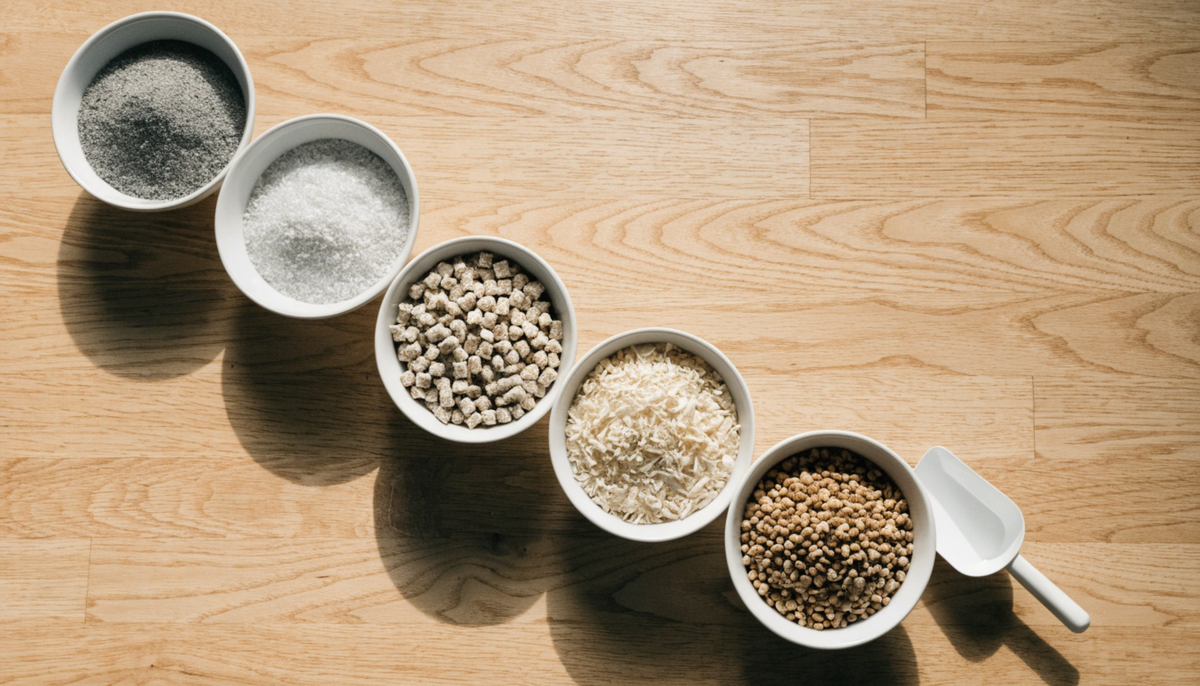
2. Particle size and shape
Particle size controls how litter passes through a screen or around a rake. Very large pellets may not move through the intended path. Very fine particles may escape into tracks or create dust. Long strips can bridge an opening.
Do not grind, cut or mix an excluded litter to make it fit. Use a permitted product in its normal form.
For AutoScooper 12, the current PetPivot AutoScooper user guide specifies small-piece clumping mineral or bentonite litter and says the unit is not suitable for long-strip tofu or crystal litter. Those instructions are specific to AutoScooper 12.
3. Dust
Dust affects the cat, the room and the machine. It can coat the litter area, visible sensors and nearby floors. A bag labeled low dust may still release a cloud when poured or during rotation.
Compare dust by:
- pouring slowly from the same height over a dark card;
- observing the air and surrounding surface after a normal cycle;
- checking the chamber and visible owner-accessible sensor areas;
- watching whether the cat coughs, sneezes or avoids digging;
- choosing an alternative with veterinary guidance for a cat with respiratory disease.
Do not create a dust test near the cat's face. Pour gently and follow normal respiratory precautions.
The dedicated low-dust article should own brand comparisons and sensitive-home criteria. This guide uses dust only as one compatibility factor.
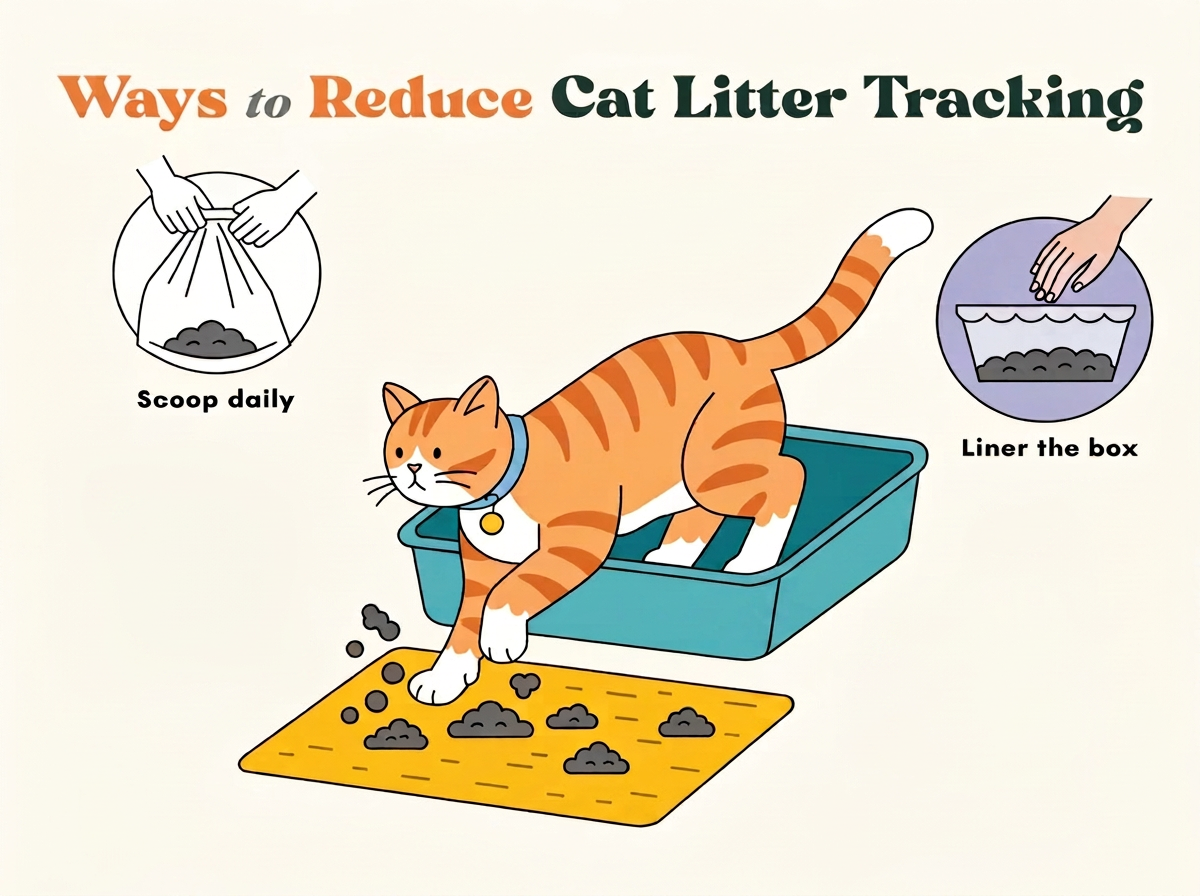
4. Tracking
Tracking depends on particle weight, shape, static, paw fur, digging behavior, exit design and the mat. A litter that tracks less in one home may track more with a long-haired cat or a different entry.
Measure real tracking:
- place a clean washable mat at the exit;
- photograph the area before use;
- count or weigh tracked particles over a consistent period;
- keep litter depth and cleaning frequency stable;
- compare the same route and cat.
Do not choose a large pellet solely to reduce tracking when the automatic mechanism excludes that particle size.
5. Odor performance
Odor-control claims often combine absorption, fragrance, charcoal or other additives. The most important automatic-box question is whether the litter forms a complete removable clump.
A scented litter can smell fresh to the owner while the cat dislikes the fragrance. An additive cannot compensate for:
- urine reaching the litter-bed surface;
- broken clumps;
- a full waste container;
- residue on the chamber;
- poor ventilation;
- delayed cleaning.
Choose unscented or lightly formulated options when the cat prefers them, and assess odor after normal use rather than from the unopened bag.
6. Cat acceptance
Compatibility with the machine is not enough. A cat may reject a texture, scent or depth. Preserve the accepted litter when possible. If a change is required, introduce it gradually in a static box before combining it with automatic movement.
Signs of poor acceptance include:
- hesitation at the box;
- perching on the edge;
- reduced digging;
- hurried exit;
- use of another surface;
- urine or stool beside the box.
Sudden avoidance or elimination changes also require veterinary attention. Do not assume the litter is the only cause.
7. Litter waste and total cost
An automatic cycle can discard clean litter when clumps are oversized, sticky or surrounded by loose material. The cheapest bag may create higher monthly cost if the machine throws away more of it.
Track:
- bag price and weight;
- amount added each week;
- clean litter found in the waste container;
- liner usage;
- cleaning frequency;
- dust cleanup and mat maintenance;
- whether a proprietary product is required.
Compare cost per month in your actual household, not only cost per pound.
A controlled litter test
When the manual permits more than one litter:
- Choose one candidate that meets material and particle rules.
- Transition the cat gradually in a manual or static setup.
- Fill the automatic box only to the documented level.
- Use any required litter-added or calibration control.
- Observe several normal cycles.
- Record clump integrity, residue, clean-litter loss, dust, tracking and odor.
- Stop if the unit strains, alerts or leaves abnormal residue.
- Change one litter variable at a time.
Do not mix several products and then try to infer which one caused the result.

Do not mix incompatible litters or change several variables in the same test.
How to read a litter label critically
Useful label information includes:
- material;
- clumping or non-clumping;
- particle format;
- added fragrance;
- dust claim and test method when provided;
- bag weight;
- disposal instructions;
- safety warnings.
"Designed for automatic litter boxes" is not a compatibility guarantee. The manufacturer of the machine remains the authority for the mechanism.
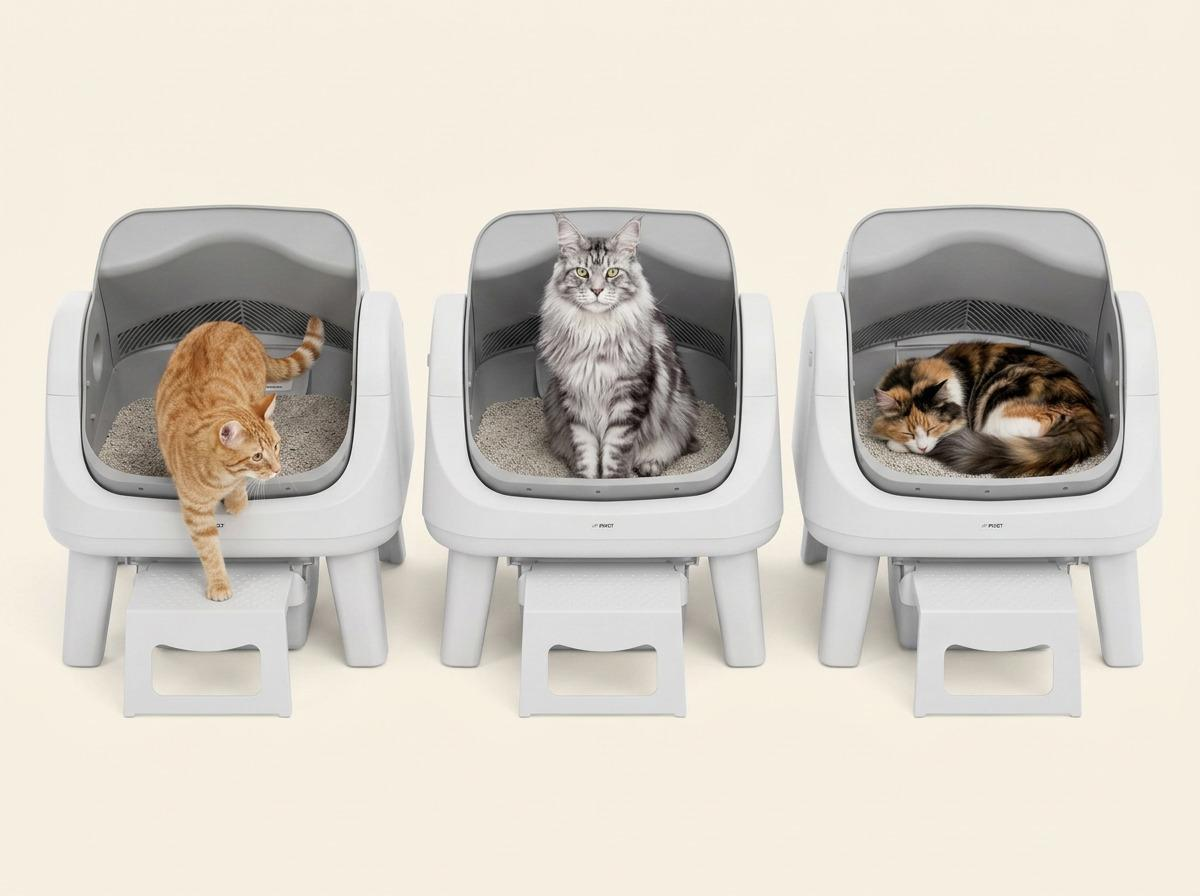
PetPivot model notes
For AutoScooper 12, use small-piece clumping mineral or bentonite litter, keep it between the MIN and MAX lines and avoid long-strip tofu and crystal litter according to the current guide. After adding litter, use the documented Litter Added function.
For AutoScooper 11, rely on its approved current manual or support confirmation. Litter compatibility varies by model. Follow the compatible-litter instructions in your AutoScooper model guide.
Review AutoScooper 11 product details, AutoScooper 12 Lite product details and the PetPivot AutoScooper user guide.
|
|
|


Official PetPivot product images. Refer to the current product page and model guide for specifications and use instructions.
Litter selection scorecard
|
Criterion |
Pass |
Caution |
Fail |
|
Manual compatibility |
Exact material and size allowed |
Wording is unclear |
Material is excluded |
|
Clump integrity |
Firm after normal delay |
Some edge breakage |
Smears or crumbles |
|
Separation |
Waste removed cleanly |
Small residue remains |
Frequent failed cycles |
|
Dust |
Light residue and cat tolerates it |
Visible cloud or sensor coating |
Cat reacts or unit repeatedly alerts |
|
Tracking |
Manageable with normal mat |
More cleanup than expected |
Household cannot maintain it |
|
Odor |
Clean clumps and manageable waste area |
Fragrance masks residue |
Persistent odor despite correct maintenance |
|
Cat acceptance |
Normal entry, digging and elimination |
Hesitation |
Avoidance or house soiling |
Ready to compare the machines before choosing litter? Browse PetPivot automatic litter boxes, then confirm the current model instructions.
Frequently Asked Questions
What is the best litter for an automatic litter box?
The best option is a model-approved litter that forms firm removable clumps, moves correctly through the mechanism, controls dust and tracking, and is accepted by the cat.
Does every automatic litter box need clumping litter?
No. Some systems use proprietary trays or other materials. Many sifting or rake systems do require clumping litter. Follow the exact model guide.
Can I use crystal litter?
Only when the model specifically supports it. Crystal litter does not form standard urine clumps and is excluded by many mechanisms, including current AutoScooper 12 guidance.
Can I use tofu litter?
It depends on particle shape and model rules. Current AutoScooper 12 guidance excludes long-strip tofu litter. Do not generalize that rule to every product or assume all tofu litter works.
Is low-dust litter always better?
Lower dust can reduce room and equipment residue, but the litter must still clump and separate correctly. A low-dust label does not override mechanism compatibility.
How do I reduce tracking?
Use a compatible particle format, maintain the correct depth, place a washable mat at the exit and measure real tracking. Do not switch to an excluded large pellet solely for tracking.
Can I mix two litters?
Only when the manufacturer permits it and the cat is being transitioned gradually. Mixing can change particle size, clump strength and separation, making problems harder to diagnose.
Sources and Evidence Notes
- PetPivot AutoScooper User Guide - Current AutoScooper 12 setup, litter, transition, maintenance, indicators and operating limits.
- PetPivot AutoScooper 11 product page - Official product page and original product image.
- PetPivot AutoScooper 12 Lite product page - Official product page and original product image.
- FelineVMA: 2014 AAFP/ISFM House-Soiling Guidelines - Clinical framework for optimizing litter-box setup and feline environmental needs.

You may also like

AutoScooper 11 Litter Base Bed – 2 Pack

AutoScooper 11 Waste Bags – 60 Count


AutoScooper 12 Lite Cat Litter Box

AutoScooper 12 Lite Cat Litter Box

AutoScooper 12 Lite Cat Litter Box
Further reading
8 Best Cat Litters for Odor Control in 2026
Automatic Litter Box for Multiple Cats: Size and Capacity Guide
Automatic Litter Box Odor Control Test: What to Measure Before You Trust Reviews