How Many Litter Boxes for Multiple Cats? Setup Guide

About the Author
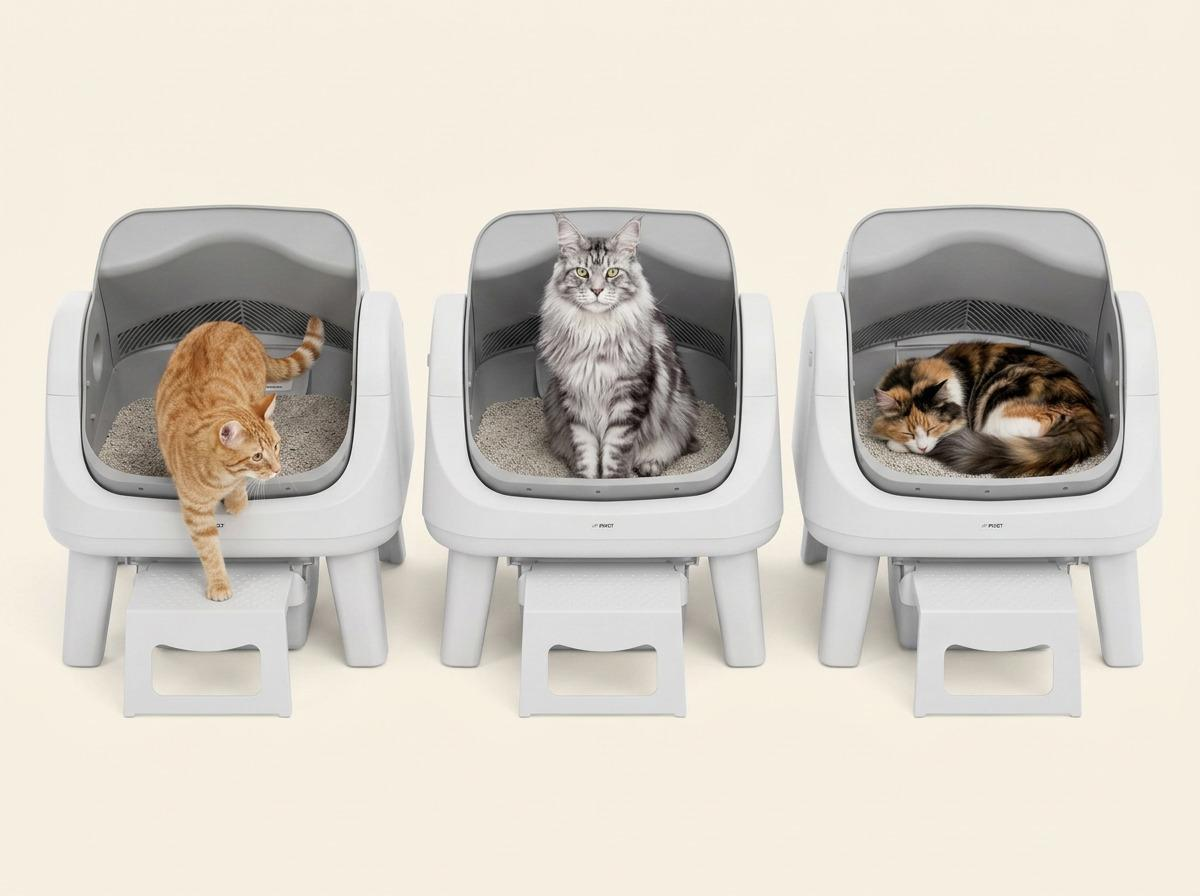
In a multi-cat home, give each cat its own litter box, then add one more. Two cats need three boxes, three cats need four, and it climbs from there. That spare box matters because your cats will not always want the same spot at the same time. Think of the formula as a baseline, not a test you have to pass. One simple test tells you it is working: every cat can reach a clean box without waiting, getting chased, or hunting for another place to go. Number of cats Recommended starting point 1 cat 2 litter boxes 2 cats 3 litter boxes 3 cats 4 litter boxes 4 cats 5 litter boxes What Does the One-Cat-Plus-One Rule Actually Mean? The rule is simple to state and easy to get wrong. Vet's guidance on feline house soiling recommends one box per cat plus one, in more than one location, so a cat always finds a vacant, clean box. Two relaxed cats in a small apartment may do fine with two large, clean boxes in separate spots, while another pair needs more because one cat guards a doorway or dislikes a certain box. If the household's social groups are clearly known, veterinary guidance also allows one box per social group plus one extra. This is a behavior-dependent option, not a way to cut back on boxes: placement, access, and signs of tension still determine whether that setup is working. When you are unsure how your cats group, default to one box per cat plus one. 1. It Gives Every Cat Another Option The extra box covers ordinary moments. Maybe one box has a fresh clump. Maybe another cat is already using the favorite, or a washing machine kicks on and spoils a usual spot. Cats are picky about where they go, and that can change from one trip to the next. A spare box hands them another good option instead of the rug or the bathtub. 2. It Reduces Competition Conflict around boxes is often invisible. A cat does not have to hiss or fight to block another. A stare from a doorway, a seat in the hallway, or a slow follow out of the box can be enough to make a timid cat steer clear. AAFP and ISFM house-soiling guidelines treat litter boxes as territorial resources, which is exactly why boxes in different parts of the home make that control harder. 3. The Extra Box Can Work as a Backup Do not expect every box to get equal use. Many cats pick a favorite and visit the others only now and then, and that does not make the less-used ones pointless. Veterinary behavior guidance recommends one box per cat plus one precisely so a vacant, clean box is always available, whether or not the cats use them evenly. Can Two Cats Share One Litter Box? They can, but one shared box leaves very little room for problems. If both cats are comfortable together, the box is large, and you scoop often, sharing may seem to work. The catch is that there is no second option when the box is dirty, one cat is using it, or one cat starts making the other uneasy. 1. Sharing May Work When Sharing tends to hold up under a specific set of conditions: Each cat walks up and goes without pausing to check on the other. Nobody guards the entrance, tails the other one out, or blocks the way. The box is large enough for either cat to turn, dig, and cover comfortably. You scoop often enough that it never stays dirty for long. Both are comfortable with the same litter, box style, and entry height. 2. Sharing Is More Likely to Fail When Watch for the signs that one box is not enough: You catch one cat hesitating at the box, or picking a different spot. The box gets dirty faster than your cleaning routine can keep up. A senior or injured cat needs a lower, easier box than the other. Real homes vary. Some two-cat households do manage with one large box and frequent scooping, while others find that two or three keep things calmer. Rather than forcing a fixed number, let your cats' behavior tell you whether a reduced setup is working. What If You Do Not Have Space for N+1 Litter Boxes? This is where the rule meets real apartment life. Fitting three boxes for two cats into a small home is genuinely hard. If you cannot make the full number work, do not cram extra trays into one corner just to hit the target. Aim for the best setup your space can support. 1. Keep as Many Separate Boxes as You Can Realistically Fit Two boxes in two rooms beat three boxes crammed together. Separate, reachable locations are what count, not the raw number in one spot. Adjacent boxes function as a single litter-box station. 2. Use Larger Boxes When Space Is Tight If you can only fit two boxes, make them big. A larger box gives each cat more room to turn and dig, and it stays usable longer between scoops. Size still does not replace having a second location. 3. Use Furniture to Hide Boxes in Plain Sight An enclosure, a cabinet, or a bench can hide a box in a living area with no visible tray. Now you can put a box where the room would not otherwise allow one. Just keep the entrance easy and leave room inside. 4. Increase Cleaning Frequency If You Use Fewer Boxes Fewer boxes get dirty faster, so scoop more often. Twice a day is better than once. Some cats avoid a box once it becomes soiled, so a reduced setup may require more frequent scooping; cleanliness still cannot replace a second accessible location when cats compete or guard resources. 5. Do Not Reduce the Box Count During Another Major Change Do not cut boxes right when you move, add a pet, or bring home a baby. Change one thing at a time. If the cats start avoiding the boxes, you will actually know why. Where Should You Put Litter Boxes for Multiple Cats? Placement does as much work as the number. The goal is that no cat can control access to every box at once. Spread Boxes Across Different Areas: Put boxes in separate rooms or zones, not lined up together. Separate spots give each cat a real choice. They also stop one cat from guarding the whole supply from a single perch. Give Cats More Than One Approach and Exit: A box a cat can only reach down one narrow path is easy to guard. The ASPCA's guidance on litter box problems suggests placing boxes where a cat can see who is coming and has more than one way out. That way it never feels cornered heading in or out. Put at Least One Box on Each Regularly Used Floor: In a multi-level home, keep at least one box on every floor the cats use. A shy cat blocked from the downstairs box still needs an option upstairs. And a senior should never have to climb stairs just to reach one. Keep Boxes Easy to Reach: Boxes should sit somewhere quiet, but not remote. Bury one behind clutter, a door that shuts, or a long detour, and the cats simply skip it. Easy access is what turns a box into a real option. Where Should You Not Put a Cat Litter Box? Some spots quietly discourage use. Keep boxes away from food and water bowls, which cats prefer to keep separate from where they eliminate. Avoid noisy appliances like washers and dryers, tight corners and dead-end nooks a cat can be trapped in, and busy walkways where people or dogs interrupt. Cornell’s guidance on house soiling also notes that many cats dislike covered boxes, since covers trap odor inside. Also, do not place litter boxes side by side. To a cat, two boxes touching read as one big box, not two options. That lets a dominant cat guard both at once. Separate them across different areas instead. If space is really tight, even opposite sides of the same room beats lining them up. How Big Should Litter Boxes Be for Multiple Cats? Size is the other half of a good setup. Bigger is usually better, and if you are weighing options, an automatic cat litter box can help you plan around the space a larger unit needs. 1. Give Each Cat Enough Room to Turn and Dig A box should let a cat step in, turn, dig, and cover without brushing the sides. As a rough guide, make it about one and a half times your largest cat's length, nose to tail base. Cramped boxes push cats to go over the edge, or somewhere else entirely. 2. Bigger Boxes Help, but They Do Not Replace Extra Locations A large box holds more waste and gives more room. But one big box in one spot is still a single location a cat can guard. Size and number solve different problems. Use both, rather than trading one for the other. 3. Match Entry Height to the Cat High sides hold litter in, but a tall entry shuts out kittens, seniors, and cats with sore joints. Give a less mobile cat a low entry. In a home where ages and abilities differ, always keep at least one easy-entry box available. Are Automatic Litter Boxes Good for Multiple Cats? ✓ Automatic boxes can help in a multi-cat home, but they are not a shortcut around the rule. They manage waste, not territory. 1. Automatic Cleaning Can Reduce Waste Buildup A self-cleaning box removes clumps between visits, which can keep a heavily used litter bed more consistently available. TheAutoScooper 12 Lite automatic litter box moves waste into a closed drawer and includes a front entry step, but it remains one litter-box location and should not be presented as a replacement for separate resources. Caption (The official AutoScooper 12 Lite clears waste into a sealed drawer between visits, but it is still one box in one spot. Pair it with at least one separate backup box, since one unit cannot replace boxes in different areas.) 2. It Does Not Solve Territorial Blocking A machine cannot stop one cat from guarding it. A dominant cat can sit by a single automatic box and control access just as it would a manual one. Cleaner litter does not add a second location, and location is what eases competition. 3. Keep a Backup Box Always pair an automatic box with at least one ordinary box. It gives cats a familiar option during a cleaning cycle, a power cut, or a mechanical fault, and it keeps you inside the one-per-cat-plus-one count rather than replacing several boxes with one machine. How to Tell If You Have Enough Litter Boxes The cats will tell you, if you watch for the right signs. Signs the Current Number May Be Working Good signs are quiet ones: every cat uses the boxes without hesitation, no cat waits or guards, the boxes stay manageable between scoops, and there are no accidents outside the box. Some boxes getting more use than others is normal and fine. Signs You Probably Need Another Box Add a box when a cat starts going outside it. Add one when a cat guards or ambushes another near a box, or when a box stays dirty no matter how often you scoop. A cat that waits or paces before going is telling you the same thing. New accidents after a change deserve a vet check first, to rule out a medical cause. How Often Should You Clean Litter Boxes in a Multi-Cat Home? More cats mean more waste, so cleaning has to keep pace or the extra boxes stop counting as options. Scoop every box at least once a day, and twice is better in a busy home. Cats avoid a box that already holds waste, so daily scooping is what keeps each box a genuinely available choice. Shared Boxes May Need More Frequent Scooping. A box two or more cats share fills faster than a solo one. If your cats share, scoop that box more often. It reaches the too-dirty point well before a single-cat box would. Clean the Box Itself Regularly. Beyond daily scooping, wash each box and refresh the litter on a regular schedule. Odor builds in the plastic over time. A box that smells used to a cat, even a freshly scooped one, can quietly drop out of rotation. What If One Cat Refuses to Use the Same Boxes as the Others? First, separate behavior from health. If a cat suddenly stops using a box it liked, or strains, cries, or goes right beside it, Vet’s guidance on feline house soiling is your cue to see a vet and rule out a medical cause before you treat it as preference. Once health checks out, the usual fixes help. Try a private box in that cat's own area, a different litter or box style, an easier entry, and more distance from the other cats' boxes. Does Having More Cats Mean You Always Need More Litter Boxes? Usually, as a starting point yes! Each cat you add raises the recommended number by one, because every cat is its own individual with its own preferences, and every cat is one more that might compete for a box. The real reason is not just the extra waste. It is the social pressure between cats. So more cats usually means more boxes in more separate places, not just one bigger box What Not to Do A few common mistakes you should avoid. Do Not Cluster Every Box Together Boxes grouped in one room act as a single location a cat can guard. Spread them out so each is a real, separate option. Do Not Assume Bonded Cats Always Want to Share Even cats that groom and sleep together may not want to share a box. Give them the full count and let them choose, rather than assuming closeness means shared bathrooms. Do Not Remove Unused Boxes Too Quickly A box that looks idle may be a quiet cat's backup. Watch over time before removing any box, since taking one away can trigger the exact problem it was preventing. Do Not Force a Senior Cat to Travel Far An older or arthritic cat should not have to climb stairs or cross the house to reach a box. Keep an easy, low-entry box close to where that cat spends its time. Do Not Change Everything at Once Adjust one thing at a time, whether box count, litter, or location. Change too much together and you cannot tell what worked or what set off a new problem. FAQs Can I Have 3 Cats and 2 Litter Boxes? You can, but it is below the recommended setup, which is four boxes for three cats. Two may hold up if the cats are relaxed together, the boxes are large and in separate spots, and you scoop at least twice a day. Add a box the moment you notice waiting, guarding, or accidents. Will Automatic Litter Boxes Reduce the Number Needed? Not necessarily. While an automatic litter box is self-cleaning between uses, it still only constitutes one litter box in one location. An automatic litter box will not help resolve one cat monopolizing one litter box or give the other cat another location to use, so it is important to have one litter box for each cat plus one. Should More Than One Litter Box Be Placed in One Room? This is not recommended. Two litter boxes placed next to each other will look like one huge litter box, and thus one cat can monopolize both. This can be avoided when placing boxes in one room, provided that boxes are located at opposite ends of the room or around a corner. How Will I Recognize If My Cats Are Preventing One Another from Accessing the Box? It will be pretty subtle and doesn't usually amount to a fight. Look for a cat who sits by or watches a box while another comes out of it or waits until it is clear. Your blocked kitty will usually show hesitation or stop using a litter box she once used or go somewhere else. Adding another box in an entirely different place works wonders.. What Type of Litter Box Is Best for Multiple Cats? A large, uncovered box works best in most multi-cat homes: Large, uncovered: the best choice, since it gives room to turn and dig and lets the cat see what is around it Covered or hooded: usually best to avoid, because it traps odor and lets one cat corner another at the single opening Low-entry: keep at least one, since it is easier for kittens, seniors, and cats with sore joints If your cats disagree on style, put out a few types and let them choose. Sources Veterinary behavior team, VCA Animal Hospitals — Cat Behavior Problems: House Soiling in Cats Feline health faculty, Cornell Feline Health Center, Cornell University College of Veterinary Medicine — Feline Behavior Problems: House Soiling Hazel Carney and colleagues, American Association of Feline Practitioners and ISFM (via PubMed Central) — AAFP and ISFM Guidelines for Diagnosing and Solving House-Soiling Behavior in Cats Behavior team, ASPCA — Litter Box Problems
|
Number of cats
|
Recommended starting point
|
|
1 cat
|
2 litter boxes
|
|
2 cats
|
3 litter boxes
|
|
3 cats
|
4 litter boxes
|
|
4 cats
|
5 litter boxes
|
What Does the One-Cat-Plus-One Rule Actually Mean?
1. It Gives Every Cat Another Option
2. It Reduces Competition
3. The Extra Box Can Work as a Backup
Can Two Cats Share One Litter Box?

1. Sharing May Work When
-
Each cat walks up and goes without pausing to check on the other.
-
Nobody guards the entrance, tails the other one out, or blocks the way.
-
The box is large enough for either cat to turn, dig, and cover comfortably.
-
You scoop often enough that it never stays dirty for long.
-
Both are comfortable with the same litter, box style, and entry height.
2. Sharing Is More Likely to Fail When
-
You catch one cat hesitating at the box, or picking a different spot.
-
The box gets dirty faster than your cleaning routine can keep up.
-
A senior or injured cat needs a lower, easier box than the other.
What If You Do Not Have Space for N+1 Litter Boxes?
1. Keep as Many Separate Boxes as You Can Realistically Fit
2. Use Larger Boxes When Space Is Tight
3. Use Furniture to Hide Boxes in Plain Sight
4. Increase Cleaning Frequency If You Use Fewer Boxes
5. Do Not Reduce the Box Count During Another Major Change
Where Should You Put Litter Boxes for Multiple Cats?

-
Spread Boxes Across Different Areas: Put boxes in separate rooms or zones, not lined up together. Separate spots give each cat a real choice. They also stop one cat from guarding the whole supply from a single perch.
-
Give Cats More Than One Approach and Exit: A box a cat can only reach down one narrow path is easy to guard. The ASPCA's guidance on litter box problems suggests placing boxes where a cat can see who is coming and has more than one way out. That way it never feels cornered heading in or out.
-
Put at Least One Box on Each Regularly Used Floor: In a multi-level home, keep at least one box on every floor the cats use. A shy cat blocked from the downstairs box still needs an option upstairs. And a senior should never have to climb stairs just to reach one.
-
Keep Boxes Easy to Reach: Boxes should sit somewhere quiet, but not remote. Bury one behind clutter, a door that shuts, or a long detour, and the cats simply skip it. Easy access is what turns a box into a real option.
Where Should You Not Put a Cat Litter Box?
How Big Should Litter Boxes Be for Multiple Cats?
1. Give Each Cat Enough Room to Turn and Dig
2. Bigger Boxes Help, but They Do Not Replace Extra Locations
3. Match Entry Height to the Cat
Are Automatic Litter Boxes Good for Multiple Cats?
|
✓ Automatic boxes can help in a multi-cat home, but they are not a shortcut around the rule. They manage waste, not territory.
|
1. Automatic Cleaning Can Reduce Waste Buildup

2. It Does Not Solve Territorial Blocking
3. Keep a Backup Box
How to Tell If You Have Enough Litter Boxes
Signs the Current Number May Be Working
Signs You Probably Need Another Box
How Often Should You Clean Litter Boxes in a Multi-Cat Home?

What If One Cat Refuses to Use the Same Boxes as the Others?
Does Having More Cats Mean You Always Need More Litter Boxes?
What Not to Do
-
Do Not Cluster Every Box Together
-
Do Not Assume Bonded Cats Always Want to Share
-
Do Not Remove Unused Boxes Too Quickly
-
Do Not Force a Senior Cat to Travel Far
-
Do Not Change Everything at Once
FAQs
Can I Have 3 Cats and 2 Litter Boxes?
Will Automatic Litter Boxes Reduce the Number Needed?
Should More Than One Litter Box Be Placed in One Room?
How Will I Recognize If My Cats Are Preventing One Another from Accessing the Box?
What Type of Litter Box Is Best for Multiple Cats?
A large, uncovered box works best in most multi-cat homes:
-
Large, uncovered: the best choice, since it gives room to turn and dig and lets the cat see what is around it
-
Covered or hooded: usually best to avoid, because it traps odor and lets one cat corner another at the single opening
-
Low-entry: keep at least one, since it is easier for kittens, seniors, and cats with sore joints
Sources
- Veterinary behavior team, VCA Animal Hospitals — Cat Behavior Problems: House Soiling in Cats
- Feline health faculty, Cornell Feline Health Center, Cornell University College of Veterinary Medicine — Feline Behavior Problems: House Soiling
- Hazel Carney and colleagues, American Association of Feline Practitioners and ISFM (via PubMed Central) — AAFP and ISFM Guidelines for Diagnosing and Solving House-Soiling Behavior in Cats
- Behavior team, ASPCA — Litter Box Problems


You may also like

AutoScooper 11 Cat Litter Box

AutoScooper 11 Cat Litter Box

AutoScooper 11 Cat Litter Box


AutoScooper 11 Litter Base Bed – 2 Pack

AutoScooper 11 Waste Bags – 60 Count
Further reading

8 Best Cat Litters for Odor Control in 2026
Automatic Litter Box for Multiple Cats: Size and Capacity Guide
Automatic Litter Box Odor Control Test: What to Measure Before You Trust Reviews