Automatic Litter Box Odor Control Test: What to Measure Before You Trust Reviews

About the Author
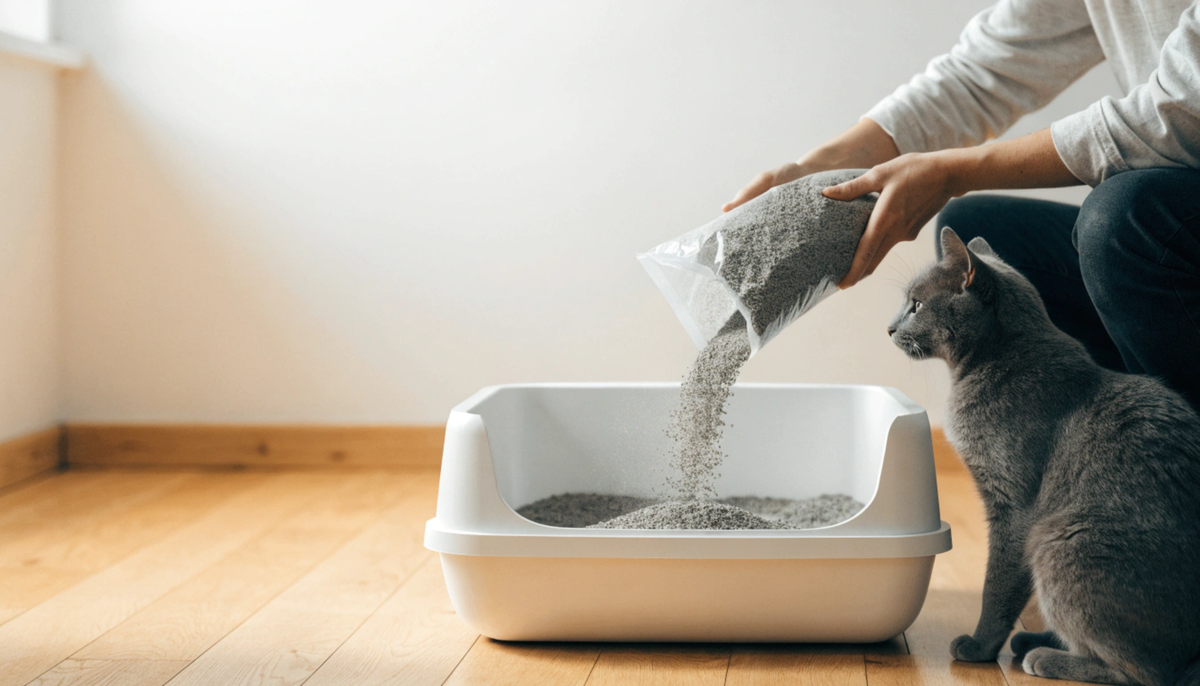
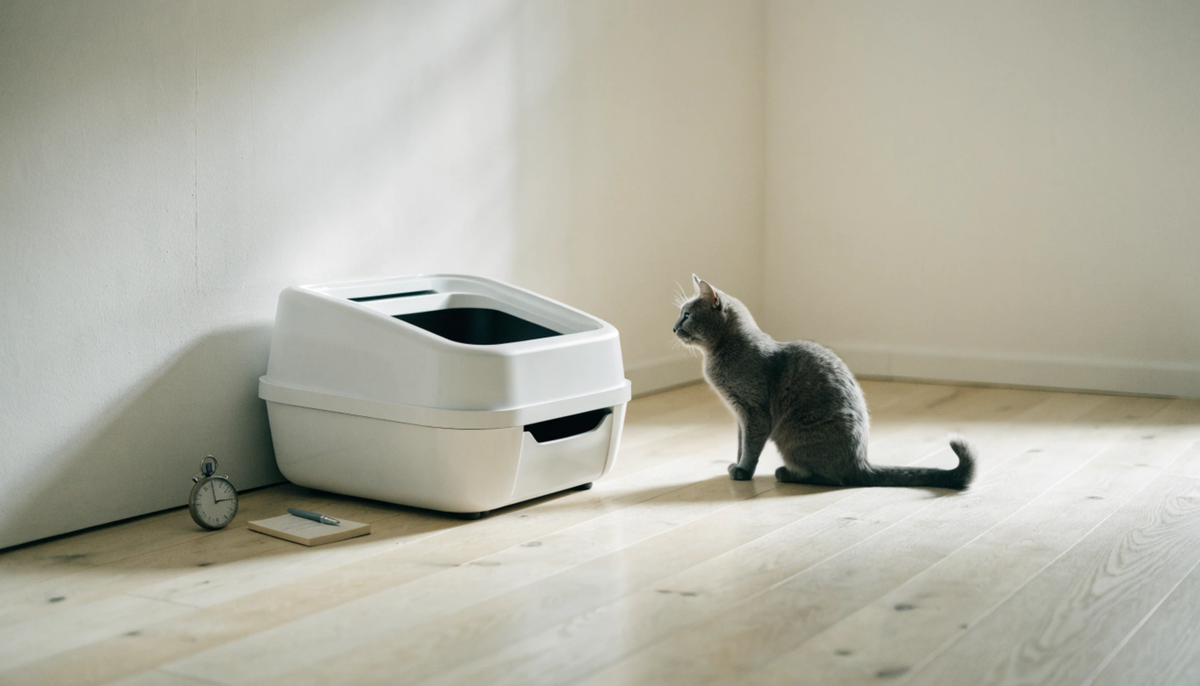
AutomaticAlmost every odor claim in this category comes from the brand selling the box. Third-party lab numbers get quoted, the machine is new, and nobody smells it again at week six. You can test it yourself. It takes a stopwatch, a nose, and about four weeks, and it tells you more than any spec sheet. Odor control in an automatic litter box comes down to two things: how long waste sits exposed, and how well the drawer holds it afterward. Filters help at the margin. They do not fix a leaking seal. The Ohio State Indoor Pet Initiative advises scooping at least once a day and notes that cats avoid boxes that are not kept clean, which is the whole argument for automation in the first place. Below: what to measure, why boxes still smell, how to fix one that already does, and how to run the test before your return window closes. Quick answer: what actually controls the smell Fast cycling cuts room odor. A sealed drawer cuts stored odor. You need both, and most machines only do one well. A box that scoops in three minutes but drops clumps into a loose plastic bucket will still smell every time the motor turns. A perfectly sealed drawer on a machine that waits twenty minutes to cycle lets the room fill up first. Everything else- carbon filters, fans, ionizers, scented litter- works at the edges of those two. The eight things worth measuring This is the scorecard. Run it on any machine, yours or one you are considering. What to measure How to measure it A good result looks like Waste exposure time Stopwatch from cat exit to end of cycle Under 5 minutes, still safe Drawer seal Smell around the closed drawer edge Nothing until you pull it open Odor during rotation Stand beside it through one full cycle A brief note, not a wave Moisture Look for damp litter or condensation Dry clumps, dry drawer walls Clump strength Lift a day-old clump with a scoop Holds together, no crumbs Residue on the path Wipe the sifter and chute after a week Clean cloth, no smear Filter life Sniff the filter at week four Neutral, not sour Long term retention Empty and air it, then smell at 24 hours No stale plastic note Notice what is missing. Nothing here rewards a machine for having a filter. A filter is a component, not a result. How to run the test at home Keep the variables fixed Same litter, same depth, same room, same cat. Change one thing at a time, or the test tells you nothing. Time the cycle Start a stopwatch the moment your cat steps out. Stop it when the cycle finishes. That number is your waste exposure time, and it is the single most useful figure you will collect. Smell at three heights. At the drawer seam. At the litter bed opening. Then standing in the middle of the room. A box can pass the third test and fail the first badly. Test fresh and test aged. Day one tells you about cycling. Day six tells you about the drawer. Most machines feel excellent for the first week, which is exactly why first week reviews are worthless. Note temperature and humidity. Waste smells far worse when it stays damp. A humid laundry room and a dry hallway give different results from the same machine. Run it in your real conditions. One cat and three cats are separate tests. If you have a multi-cat home, do not judge the machine on a quiet weekend. If you want to compare formats rather than models, our automatic litter box range sits in the open top category, which behaves differently from enclosed drums under exactly this test. Why automatic litter boxes still smell Waste sits before the cycle. Every machine waits. Safety demands it. That delay is dead time with fresh waste open to the room. The chute opens on every rotation. This is the one almost nobody mentions. To drop a clump into the drawer, the machine has to open the path to the drawer. For a few seconds each cycle, whatever is stored down there is connected to your room. The drawer is not really sealed. Look for a gasket and a positive catch. A lid resting on a rim is not a seal. Our own replacement latches and filters exist because a worn rear latch stops the drawer from closing tight, and that is a common cause of a machine that used to be fine. Soft clumps break apart. A weak clump crumbles as it crosses the sifter. The pieces stay in the bed. That is not an odor control failure; it is a litter failure, and people constantly blame the wrong thing. Moisture builds in the drawer. Damp waste in a warm sealed box ferments and eventually attracts flies. One of our own owners found that out after stretching the interval past two weeks. Dry waste barely smells, which is why the drawer needs air movement or regular emptying, not just a tighter lid. Urine reaches the seams. Pee that misses the litter runs down the plastic joints and dries there. No cycle will ever reach it. Speed or seal: which matters more? Depends what is bothering you. If the room smells right after your cat goes, that is exposure time. Shorten the delay if your machine allows it, and check that the litter clumps fast enough to trap urine on contact. If the smell hits when you walk past a machine nobody has used for hours, that is the drawer. A tighter seal or a shorter emptying schedule fixes it. If the smell comes in waves as it cycles, that is the chute, and there is no setting for it. Empty the drawer more often instead. Where drawer design goes wrong Capacity is not the same as containment. A 10 liter bin only helps if it closes properly. Big and loose is worse than small and tight, because a big loose bin encourages you to leave it longer. Liners that break the seal A bag bunched over the rim holds the lid open by a millimeter. That gap is enough. Seat the liner flat, inside the lip. Smooth beats textured Ribbed plastic holds residue in every groove. When you compare machines, run a finger inside the drawer and ask yourself how you would clean that. The 10L sealed drawer model in our range pulls out on a rail and only opens when you pull it, with carbon filtration and airflow circulation on the chamber rather than a filter clipped to a lid. Do carbon filters and fans actually work? Carbon adsorbs some odor molecules. It works, within limits, and it saturates. A filter that has been in place for two months is doing nothing. Sniff it at week four. If it smells sour, it stopped working before that. Fans are more interesting. Moving air through a carbon filter before releasing it helps. Moving air around inside a sealed drum without filtering it just distributes the smell more evenly. Fragrance is the weakest option. It masks rather than removes, and heavy scent can put cats off the box, creating a bigger problem than the one it hides. Does the litter change the result? In many homes, more than the machine does. Clump strength beats everything. A litter that seals urine into a hard clump within minutes gives the machine something it can actually remove. A litter that forms a soft patty leaves half of it behind on every cycle. What works in a sifting machine Hard clumping mineral or bentonite, fine grain. Crystals and long strip tofu jam sifters. Plant-based litters clump loosely and need cleaning more often. Our hard clumping mineral litter is screened for a sifting cycle, though any well-made clumping mineral formula will do the job. Cats get a vote Strong fragrance and unfamiliar texture both cause avoidance. International Cat Care notes that cats generally prefer a fine, sand-like, unscented substrate, and a cat that stops using the box creates far worse odor problems than the litter ever solved. Urine smell and stool smell are different problems Treating them as one is why people buy the wrong fix. Stool odor is sharp, immediate, and mostly solved by fast cycling. Get it into the drawer quickly, and the room recovers. Urine odor is slower and nastier. Bacteria break down urea over hours, and the result smells like ammonia. That is a storage and moisture problem, not a cycling one. A sudden strong ammonia smell from a cat that was normal last week is worth a call. VCA Animal Hospitals can help identify medical causes behind changes in urination. Fixing a box that already smells Start with the drawer. Empty it, then smell the empty drawer. If it still smells, the problem is residue, not volume. Check the seal and the latch. Close it and run a finger round the seam. Any gap you can feel is a gap air is using. Wipe the sifter and the chute. This is where Smear lives. Use a cloth and warm water; no bleach near the plastic. Replace the filter Do not clean it. Carbon does not wash. Top the litter to the fill line Shallow litter means urine hits the bed instead of clumping above it. Then deep clean Strip it, rinse, dry fully, reassemble. Keep water off the motor housing. Our deep-clean routine sets the interval by cat count. If it still smells after all of that, something is leaking or cracked. Stop hunting for a better deodorizer. Can plastic hold odor forever? Not really, and this is where the internet gets it wrong. What people call stagnant plastic smell is almost always urine sitting in scratches, seams, and under a worn liner. Fresh ABS does not absorb much of anything. Scratched plastic is a different story. Once the surface is scored, residue collects in the grooves, and no wipe reaches it. That is when a litter bed or a drawer needs replacing rather than scrubbing. Harsh cleaners make it worse by etching the surface and perishing the gaskets. Warm water and mild soap, always. Test it before the return window closes. This is the part that saves you 600 dollars. Week one, run the manufacturer default delay and time it. Week two, empty on their recommended schedule and smell the drawer daily. Week three, stop emptying and see when it breaks. Week four, deep clean and check whether the smell actually goes. Also check the boring thing: does your cat use it reliably? A machine with perfect odor control that your cat boycotts is the most expensive litter holder you will ever own. Trial lengths differ by brand, from 30 to 90 days. Ours are set out in the return window terms, and whichever machine you buy, put the end date in your calendar on day one. Final takeaway The best automatic litter box for odor control is not the one with the most filters. It is the one that removes waste quickly, closes it behind a seal you can feel, keeps it dry, and lets you reach every surface it touches. Enclosed drums contain smell well until you open them, and they trap humidity. Open-top machines vent constantly and rely more on the drawer. Neither wins outright, which we cover in more depth in our enclosed drums versus open trays comparison. For one or two cats, the 8L version empties less often than you would think. For three or more, size up. Run the test. Trust your own nose over a lab number you cannot reproduce. FAQS How do I get an automatic litter box to stop smelling? Empty the drawer, then smell it while empty. If the odor remains, the cause is residue rather than volume, so wipe the sifter, chute, and drawer walls, replace the carbon filter, and top the litter to the fill line. Deep clean if that fails. Persistent smell after a full clean usually means a worn seal or a cracked part. What is the best litter box for odor control? The one with the shortest safe cycling delay and a genuinely sealed waste drawer, in a size that suits your cat count. Filters and fans help at the margins. Ignore odor claims measured on a brand new machine in a lab, and test whichever box you buy in your own home during the return period. Are automatic litter boxes safe? Modern units pause the cycle when infrared or weight sensors detect a cat, and better designs add a mechanical limiter as a second layer. Most require cats to be at least six months old and 3 lbs. Test the sensors by hand before letting your cat near the machine, and stop using any unit that misfires. How can I stop my cat litter box from smelling? Scoop or cycle daily, use a hard clumping litter that traps urine on contact, empty the waste container before it fills, and keep the room ventilated. Wash the box regularly, since dried urine in seams causes more lasting odor than waste sitting in the bed. What kills cat urine smell permanently? Use an enzymatic cleaner made for pet urine on a surface that has been physically cleaned first. Enzymes break down the compounds that produce the ammonia smell rather than covering them. Bleach and ammonia-based cleaners make things worse, and scented sprays only delay the problem. What is the best odor eliminator for an automatic litter box? A fresh activated carbon filter plus a shorter emptying schedule. That combination beats every spray and additive we have seen. Carbon saturates within about four to six weeks depending on use, so replacing it on time matters more than which brand you buy. Why does my self-cleaning litter box stink even though it cycles? Usually the waste drawer rather than the litter bed. Check the seal, the latch, and the liner seating, since a bag bunched over the rim holds the lid open just enough for air to escape. Damp waste and a saturated filter are the next two suspects. What absorbs litter box smell? Activated carbon in a filter, and the litter itself when it clumps hard enough to seal urine away. Loose baking soda is not worth it, since it adds dust and does little once buried. Airflow and dryness do more than any absorber, because damp waste is what produces most of the smell. Do open-top automatic litter boxes smell more than enclosed ones? Not necessarily. Enclosed drums contain odor better between cycles but trap humidity, and damp waste smells worse over time. Open-top machines vent continuously and depend almost entirely on the sealed drawer below. Either format can pass or fail this test, so judge the drawer, not the shape. How often should I empty the waste drawer? One cat, roughly every five to seven days. Two cats, weekly at most. Three or more, every two to three days. Treat any advertised interval as a single cat figure and halve it for a multi-cat home. Waiting for the smell to appear is waiting too long, and it invites flies. This article covers odor and maintenance, not veterinary advice. A sudden change in your cat's urine, stool, or litter box habits should be checked by a licensed veterinarian. Sources The Ohio State University Indoor Pet Initiative, Litter Boxes (2024) International Cat Care, Choosing a Litter Tray for Your Cat (2024) Cornell Feline Health Center, Choosing and Caring for Your New Cat (2024) VCA Animal Hospitals, Cat Behavior Problems: House Soiling (2024) American Association of Feline Practitioners, AAFP and ISFM Feline Environmental Needs Guidelines (2013) Journal of Feline Medicine and Surgery, AAFP and ISFM Feline Environmental Needs Guidelines (2013) National Library of Medicine, AAFP and ISFM Guidelines for Diagnosing and Solving House Soiling Behavior in Cats (2024)
Quick answer: what actually controls the smell
The eight things worth measuring

|
What to measure
|
How to measure it
|
A good result looks like
|
|
Waste exposure time
|
Stopwatch from cat exit to end of cycle
|
Under 5 minutes, still safe
|
|
Drawer seal
|
Smell around the closed drawer edge
|
Nothing until you pull it open
|
|
Odor during rotation
|
Stand beside it through one full cycle
|
A brief note, not a wave
|
|
Moisture
|
Look for damp litter or condensation
|
Dry clumps, dry drawer walls
|
|
Clump strength
|
Lift a day-old clump with a scoop
|
Holds together, no crumbs
|
|
Residue on the path
|
Wipe the sifter and chute after a week
|
Clean cloth, no smear
|
|
Filter life
|
Sniff the filter at week four
|
Neutral, not sour
|
|
Long term retention
|
Empty and air it, then smell at 24 hours
|
No stale plastic note
|
How to run the test at home
Keep the variables fixed
Time the cycle

Smell at three heights.
Test fresh and test aged.
Note temperature and humidity.
Run it in your real conditions.

Why automatic litter boxes still smell
Waste sits before the cycle.
The chute opens on every rotation.

The drawer is not really sealed.

Soft clumps break apart.
Moisture builds in the drawer.
Urine reaches the seams.
Speed or seal: which matters more?
Where drawer design goes wrong
Capacity is not the same as containment.
Liners that break the seal

Smooth beats textured

Do carbon filters and fans actually work?

Does the litter change the result?
Clump strength beats everything.

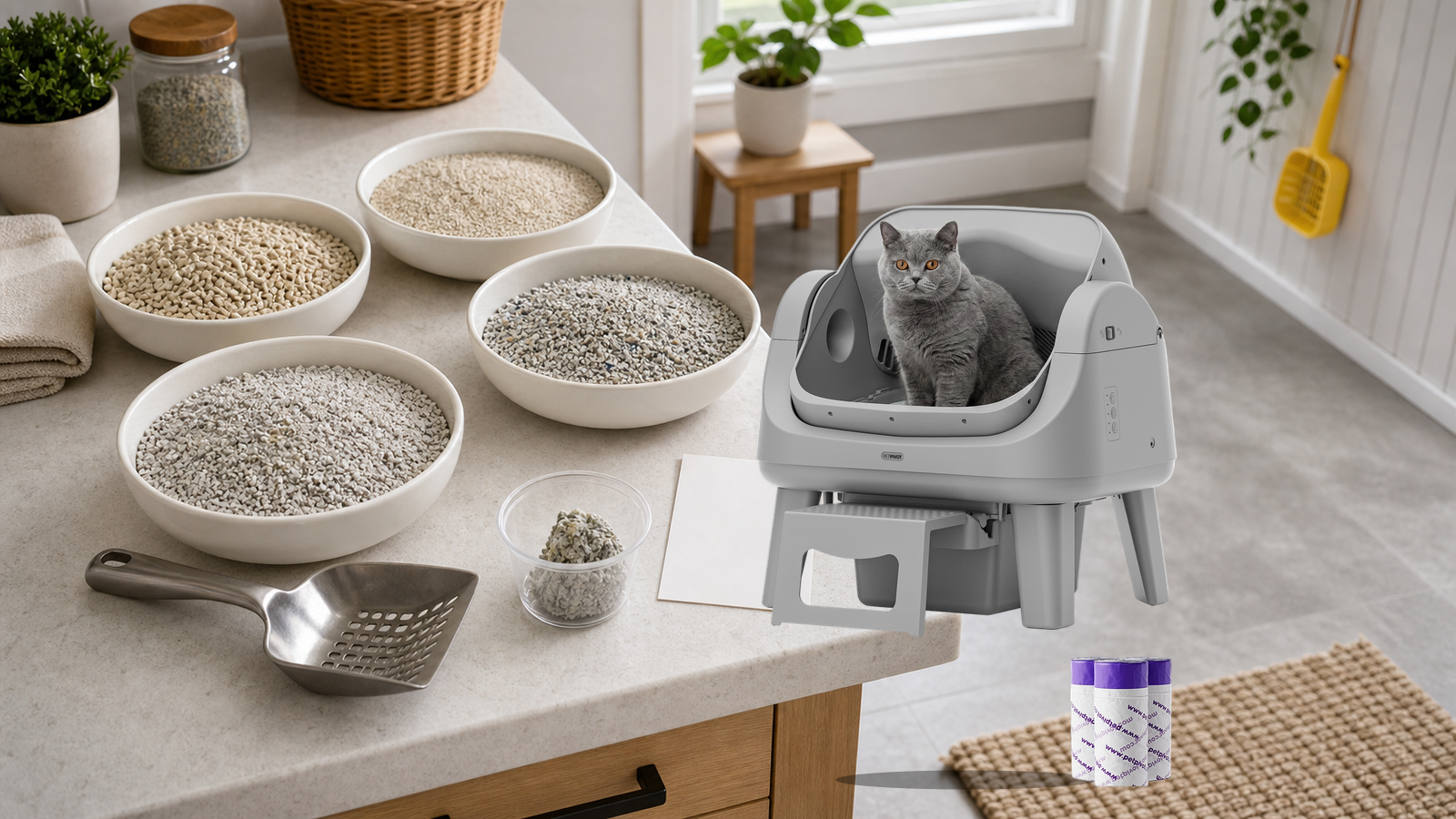
What works in a sifting machine

Cats get a vote
Urine smell and stool smell are different problems
Fixing a box that already smells

Start with the drawer.
Check the seal and the latch.
Wipe the sifter and the chute.
Replace the filter
Top the litter to the fill line
Then deep clean
Can plastic hold odor forever?
Test it before the return window closes.

Final takeaway

FAQS
How do I get an automatic litter box to stop smelling?
What is the best litter box for odor control?
Are automatic litter boxes safe?
How can I stop my cat litter box from smelling?
What kills cat urine smell permanently?
What is the best odor eliminator for an automatic litter box?
Why does my self-cleaning litter box stink even though it cycles?
What absorbs litter box smell?
Do open-top automatic litter boxes smell more than enclosed ones?
How often should I empty the waste drawer?
Sources
- The Ohio State University Indoor Pet Initiative, Litter Boxes (2024)
- International Cat Care, Choosing a Litter Tray for Your Cat (2024)
- Cornell Feline Health Center, Choosing and Caring for Your New Cat (2024)
- VCA Animal Hospitals, Cat Behavior Problems: House Soiling (2024)
- American Association of Feline Practitioners, AAFP and ISFM Feline Environmental Needs Guidelines (2013)
- Journal of Feline Medicine and Surgery, AAFP and ISFM Feline Environmental Needs Guidelines (2013)
- National Library of Medicine, AAFP and ISFM Guidelines for Diagnosing and Solving House Soiling Behavior in Cats (2024)

You may also like


AutoScooper 11 Cat Litter Box

AutoScooper 11 Cat Litter Box

AutoScooper 11 Cat Litter Box

AutoScooper 11 Cat Litter Box

Further reading

8 Best Cat Litters for Odor Control in 2026
Automatic Litter Box for Multiple Cats: Size and Capacity Guide
Automatic Litter Box Odor Control Test: What to Measure Before You Trust Reviews