Automatic Litter Box Noise Test: What Is Normal and What Is Not

About the Author
An automatic litter box noise test tells you one thing quickly. Whether the sound you hear is the machine working or struggling. A soft hum and sliding litter are normal. Grinding, repeated clicking, and stalling are not. Most owners never test it. They just live with the noise and hope. Below is a repeatable way to measure the noise at home, a list of sounds matched to likely causes, and a fix-it order. A spec sheet decibel figure does not describe what your cat hears, because A-weighted measurements are tuned to human hearing. Which Sounds Are Normal? A healthy cleaning cycle makes four predictable sounds. A soft motor hum as the drive comes up to speed. Litter sliding through the sieve or across the rake. One click at the start and one at the end, as the mechanism locks or releases. A dull thud as clumps drop into the waste drawer. Those sounds should be steady and roughly the same every cycle. Consistency matters more than volume. A new sound is the real signal. If it did not do that last week, something has changed. Trust that instinct. You know your machine better than any spec sheet does. How to Run Your Own Noise Test Most published numbers are unverifiable because nobody states the distance or the litter used. Do it yourself instead. Measure background noise first. Note the room reading with everything off. This is your baseline. Stand one meter away. Not against the housing. Surface readings massively overstate what anyone actually hears. Hold the meter low. Around cat ear height, not chest height. Sound differs a lot between the two. Record average and peak. The waste drop is often louder than the motor, and an average hides it. Repeat on a mat. Test on the bare floor, then on a rubber mat, and compare. Phone apps vary by several decibels between handsets. NIOSH publishes a free sound level meter app, and CDC guidance is to calibrate a meter before and after measuring. Measuring a known steady source such as a fan gives you a rough check. Run the same test again in three months. The change is what matters, not the absolute figure. Write both numbers down somewhere. A note on your phone is enough. What Decibel Numbers Actually Mean The scale is logarithmic. A small number change is a big loudness change, which is why 45 dB and 55 dB are not close. Reading Everyday comparison What it suggests 30 dB Whisper Very quiet cycle 40 dB Quiet library Typical for a well-kept unit 50 dB Moderate rainfall Noticeable in a quiet room 60 dB Normal conversation Investigate the mechanism Why a dBA Figure Does Not Describe What Your Cat Hears This is where almost every noise comparison goes wrong. A-weighting deliberately reduces the weight given to very high frequencies, because people hear those poorly. Cats do not have that limitation. Behavioural testing found the cat hearing range runs from about 48 Hz to 85 kHz, one of the broadest of any mammal. A high-pitched motor whine can therefore sit well inside your cat's hearing range while barely moving a dBA reading. Treat the number as a rough guide. Watch your cat for the real answer. A unit rated at 35 dB is not automatically gentler on a cat than one rated at 42 dB. The frequency content matters, and no spec sheet reports it. Sounds That Suggest a Problem Match the sound character to the likely cause before you take anything apart. Grinding or Harsh Scraping Usually litter granules trapped between moving parts. The most common cause of a suddenly loud unit, and normally the easiest to fix. Repeated Clicking or Tapping A loose panel, an unseated waste drawer, or a clump wedged in the mechanism. One click per cycle is fine. Repeated clicking is not. Squeaking During Rotation Often dry bearings or wear, and it tends to appear after a year or more of use. Check the manual before applying any lubricant. Thumping or Banging The litter level is too high, or the unit is standing on an uneven floor. A slight wobble amplifies everything. Straining, Stalling or Reversing The motor is meeting resistance it cannot overcome. Stop using it and inspect. Continuing risks damaging the drive. Cycling That Never Stops Usually a dusty or blocked sensor, so the unit believes the cat is still inside. Wipe the sensor eyes with a dry cloth and reset. Sensor positions differ between models, and the PetPivot support pages cover where they sit on the AutoScooper range. What Makes a Quiet Unit Turn Noisy Machines rarely get louder for no reason. Six causes account for most cases. Litter above the maximum fill line Granules or dust in the track and gear area An overfull or misaligned waste drawer A loose panel, rake or fastener A resonant floor, or a unit that is not level Bearing or gear wear after long service Litter type matters too. Fine clumping clay moves quietly. Pellets and crystals rattle against plastic. Switching litter is worth a try before assuming the motor is failing. How to Fix a Noisy Automatic Litter Box Work through this in order. Stop when the noise disappears. Switch off and unplug. Never inspect a mechanism that can start moving. Note when the sound happens. Whether it starts in the middle or occurs at the end, record the cause immediately. Check the litter level. Bring it back between the minimum and maximum marks. Empty the waste drawer. Then reseat it properly and listen again. Clear the mechanism. Remove trapped granules and clumps with a brush. Clean the sensors. Dry cloth only. Reset or recalibrate. This clears a surprising number of cycle and detection faults. Re-measure. Compare against your original baseline reading. If it still grinds, stalls, or will not complete a cycle, stop and contact support. Do not open sealed motor housings. How to Make Any Unit Quieter These changes cost little and often add several decibels of quiet. Put the unit on a flat, solid surface. Hollow floors and cabinets act like a drum. A thin rubber or foam mat underneath noticeably cuts vibration transfer. Leave clearance around it. A tight corner reflects sound straight back at you. Six inches from the wall is usually enough to hear a difference. Use the litter the maker recommends, keep the fill level correct, and clean the removable parts monthly. Design helps too, since open-top units avoid the resonance enclosed drums create. The AutoScooper 12 Lite automatic litter box uses an open-top layout for that reason. Where a model offers scheduling or a sleep mode, shift cycles into daytime hours. Can the Noise Bother Your Cat? It can. Being honest about what is known matters here. No published study sets a decibel level at which cats reject a litter box. Articles that quote a hard cutoff are stating an opinion, not a finding. Owners consistently report that suddenness and unfamiliar movement matter more than average volume. A cycle starting while a cat is nearby is more startling than a slightly louder cycle in an empty room. Watch for hesitation at the entrance, faster exits, or fewer visits. Those are your real measurements. When Avoidance Is a Medical Problem Do not assume noise is the cause. Changes in litter box use can signal illness, and Cornell Feline Health Center lists medical conditions among the causes of house soiling. Straining, frequent trips producing little urine, or crying in the box need same-day veterinary attention. AVMA guidance on feline lower urinary tract disease explains why a blocked cat is an emergency. Fix the machine, but rule out the cat first. A quiet unit will not help a cat that is unwell. What to Look for in a Quiet Model Judge the specification sheet skeptically. A stated dB figure with a stated measuring distance Both average and peak numbers, not just the quietest moment A brushless motor and a gradual start rather than a jolt A delay before cleaning begins after the cat leaves Removable parts you can actually clean Available spares and a real support route Serviceability is the one people forget. A unit you can strip and clean in five minutes stays quiet for years, while a sealed design gets gradually louder. Compare the open-top litter box range on those terms rather than on the headline number alone. Final Verdict Steady humming, sliding litter, one click each end and a soft thud are normal. Judge by consistency. Grinding, repeated clicking, squealing, stalling or endless cycling means inspect before the next use. Measure at one meter, at cat height, and keep your baseline. The Changeser time tells you far more than any number printed on a box. FAQs Why is my automatic litter box making a loud noise? Trapped litter granules in the mechanism are the usual cause, followed by an overfilled litter bed and a full waste drawer. Empty the drawer, bring the litter back to the marked level, clear the mechanism, then run a test cycle. Do vets recommend automatic litter boxes? Vets have mixed opinions about them. Veterinary guidance focuses on keeping boxes clean, providing enough of them, and watching for changes in output. An automatic box can help with cleanliness, but it should never reduce how closely you monitor your cat. Where are the sensors on an automatic cat litter box? Most units place presence sensors around the entry and weight or position sensors under the litter bed or drum. Exact placement varies by model, so check your manual before wiping anything. Use a dry cloth only. How effective are automatic litter boxes? They remove waste after each use, which keeps the litter bed cleaner between manual cleans. They do not eliminate maintenance. You still empty the drawer, top up litter, and deep-clean the unit regularly. How long does an automatic litter box last? Lifespan depends on build quality, cleaning frequency and how many cats use it. Motors and bearings are the usual wear points. Regular cleaning and correct litter levels extend service life more than anything else. Are cats scared of automatic litter boxes? Some are at first; some never react. Sudden movement and unfamiliar sounds trigger them, not the litter alone. Introducing the unit switched off for a few days, then enabling cleaning while you are present, usually helps. How do I fix my automatic litter box? Unplug it, check the litter level, empty and reseat the waste drawer, clear trapped granules, wipe the sensors and reset. If it still stalls or grinds after that, stop using it and contact the manufacturer rather than opening the motor housing. Can cats get hurt in an automatic litter box? Injuries are rare but not impossible, which is why models include entry sensors, weight detection and pause functions. Keep sensors clean, follow the maker weight and age guidance, and supervise kittens. Stop using any unit whose safety stop is not working. Sources Heffner and Heffner, Hearing Research (via PubMed) – Hearing Range of the Domestic Cat Occupational Safety and Health Administration – Occupational Noise Exposure: Overview CDC, National Institute for Occupational Safety and Health – Understand Noise Exposure CDC, National Institute for Occupational Safety and Health – Noise and Hearing Loss: About Noise Cornell Feline Health Center – Feline Behavior Problems: House Soiling American Veterinary Medical Association – Feline Lower Urinary Tract Disease Client Brochure
Which Sounds Are Normal?

-
A soft motor hum as the drive comes up to speed.
-
Litter sliding through the sieve or across the rake.
-
One click at the start and one at the end, as the mechanism locks or releases.
-
A dull thud as clumps drop into the waste drawer.
How to Run Your Own Noise Test

-
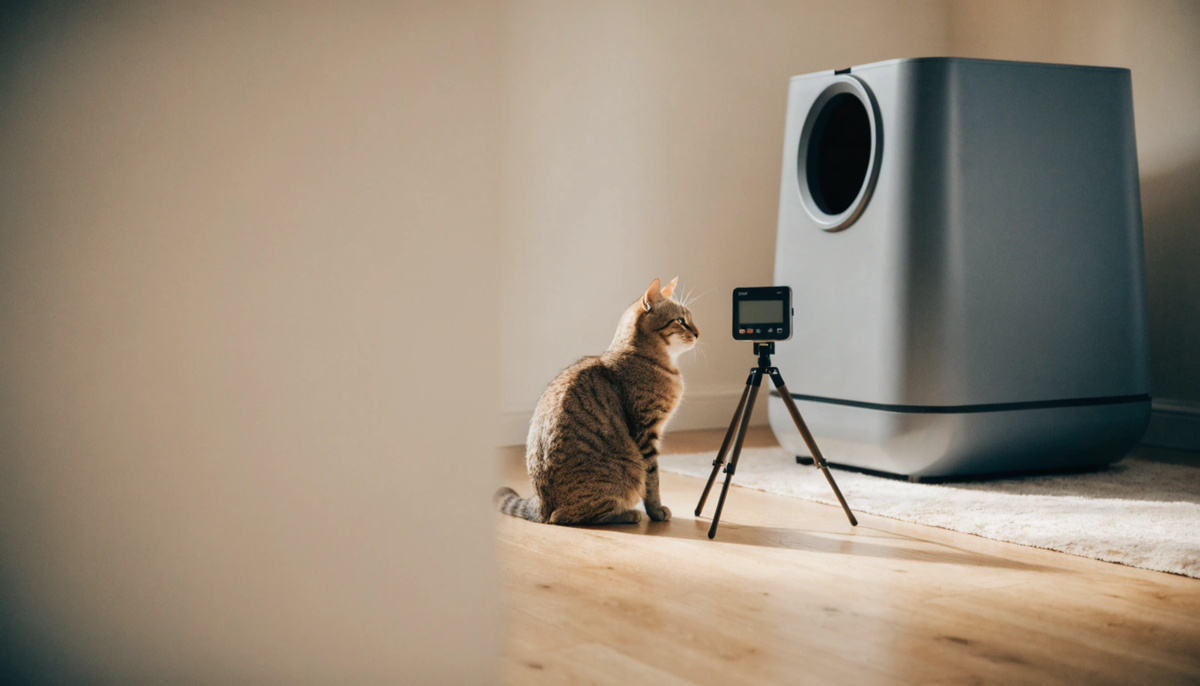
Measure background noise first. Note the room reading with everything off. This is your baseline.
-
Stand one meter away. Not against the housing. Surface readings massively overstate what anyone actually hears.
-
Hold the meter low. Around cat ear height, not chest height. Sound differs a lot between the two.
-
Record average and peak. The waste drop is often louder than the motor, and an average hides it.
-
Repeat on a mat. Test on the bare floor, then on a rubber mat, and compare.
What Decibel Numbers Actually Mean
|
Reading
|
Everyday comparison
|
What it suggests
|
|
30 dB
|
Whisper
|
Very quiet cycle
|
|
40 dB
|
Quiet library
|
Typical for a well-kept unit
|
|
50 dB
|
Moderate rainfall
|
Noticeable in a quiet room
|
|
60 dB
|
Normal conversation
|
Investigate the mechanism
|
Why a dBA Figure Does Not Describe What Your Cat Hears

Sounds That Suggest a Problem

Grinding or Harsh Scraping
Repeated Clicking or Tapping
Squeaking During Rotation
Thumping or Banging
Straining, Stalling or Reversing
Cycling That Never Stops
What Makes a Quiet Unit Turn Noisy
-
Litter above the maximum fill line
-
Granules or dust in the track and gear area
-
An overfull or misaligned waste drawer
-
A loose panel, rake or fastener
-
A resonant floor, or a unit that is not level
-
Bearing or gear wear after long service
How to Fix a Noisy Automatic Litter Box

-
Switch off and unplug. Never inspect a mechanism that can start moving.
-
Note when the sound happens. Whether it starts in the middle or occurs at the end, record the cause immediately.
-
Check the litter level. Bring it back between the minimum and maximum marks.
-
Empty the waste drawer. Then reseat it properly and listen again.
-
Clear the mechanism. Remove trapped granules and clumps with a brush.
-
Clean the sensors. Dry cloth only.
-
Reset or recalibrate. This clears a surprising number of cycle and detection faults.
-
Re-measure. Compare against your original baseline reading.
How to Make Any Unit Quieter

Can the Noise Bother Your Cat?

When Avoidance Is a Medical Problem
What to Look for in a Quiet Model

-
A stated dB figure with a stated measuring distance
-
Both average and peak numbers, not just the quietest moment
-
A brushless motor and a gradual start rather than a jolt
-
A delay before cleaning begins after the cat leaves
-
Removable parts you can actually clean
-
Available spares and a real support route
Final Verdict
FAQs
Why is my automatic litter box making a loud noise?
Do vets recommend automatic litter boxes?
Where are the sensors on an automatic cat litter box?
How effective are automatic litter boxes?
How long does an automatic litter box last?
Are cats scared of automatic litter boxes?
How do I fix my automatic litter box?
Can cats get hurt in an automatic litter box?
Sources
- Heffner and Heffner, Hearing Research (via PubMed) – Hearing Range of the Domestic Cat
- Occupational Safety and Health Administration – Occupational Noise Exposure: Overview
- CDC, National Institute for Occupational Safety and Health – Understand Noise Exposure
- CDC, National Institute for Occupational Safety and Health – Noise and Hearing Loss: About Noise
- Cornell Feline Health Center – Feline Behavior Problems: House Soiling
- American Veterinary Medical Association – Feline Lower Urinary Tract Disease Client Brochure
You may also like

AutoScooper 11 Litter Base Bed – 2 Pack

AutoScooper 11 Waste Bags – 60 Count


AutoScooper 12 Lite Cat Litter Box

AutoScooper 12 Lite Cat Litter Box

AutoScooper 12 Lite Cat Litter Box
Further reading
Smart Litter Box Trends in 2026: AI Cameras, Health Data and Simpler Automation
Automatic Litter Box Noise Test: What Is Normal and What Is Not
Smart Litter Box Privacy: What the Box Knows and What Your Cat Needs