
Cat Health Monitoring Litter Box: How It Works and What It Really Detects

About the Author
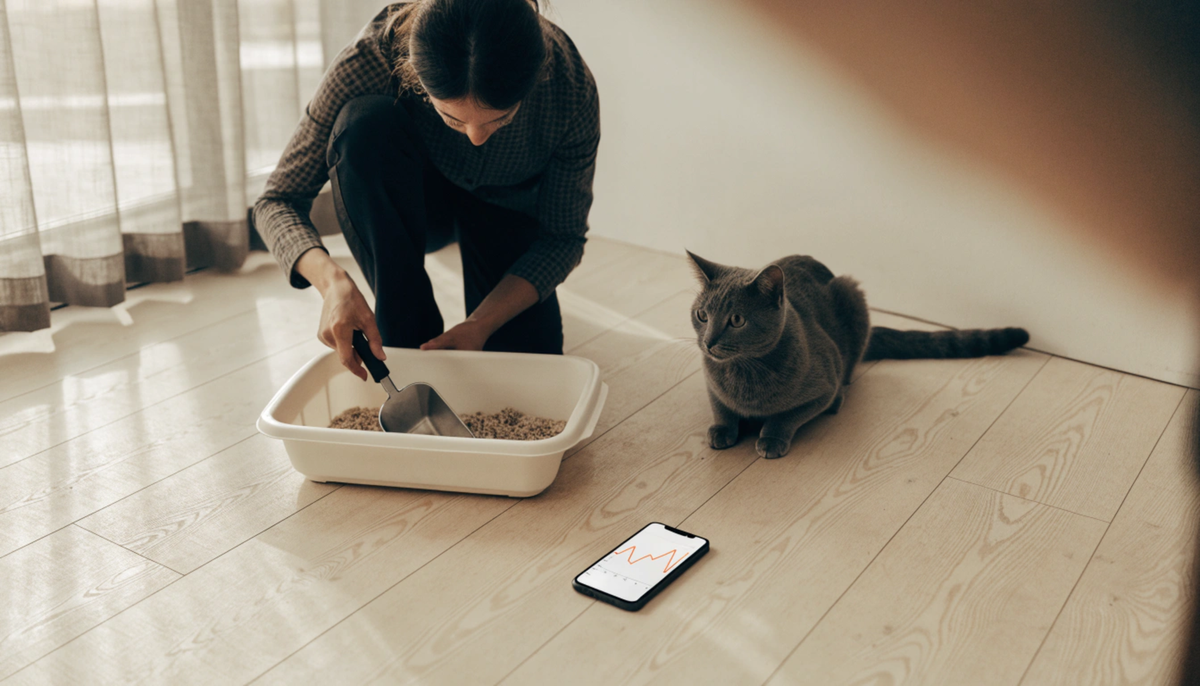
Cats hide pain. That is the whole problem, and it's why a cat health monitoring litter box exists at all. These systems monitor urine, body weight, or toilet habits and alert you when something changes. They do not diagnose. Nothing sold in this category does. Three separate technologies share the same label. Color-changing litter. Weight-sensing mats. Automatic boxes with a camera inside. The packaging rarely makes clear that they measure completely different things. Urinary trouble is common in cats. The Cornell Feline Health Center calls lower urinary tract disease the number one reason cats visit a veterinary practice. What follows: how each system works, what the colors mean, how far you can trust them, why an automatic litter box quietly hides your best evidence, and the signs that mean today rather than tomorrow. What is a cat health monitoring litter box? Not one product. Three of them, sold under the same phrase, and not one replaces a urinalysis. Color-changing litter Silica crystal or clay, treated with an indicator. Urine lands on it and the granule shifts color. Some formulas respond to pH, others to blood: no wiring, no app, no account to set up. Sensor mats and smart scales A pad or a scale that slides under an ordinary tray. It weighs your cat on every visit and logs how often they go and how long they stay. Purina Petivity is the one most owners have heard of. AI camera litter boxes Automatic units with a camera inside. They sort waste by type and learn to tell your cats apart. They also cost several hundred dollars more than a plain machine doing the same scooping. What none of them can do? None can confirm a urinary tract infection, kidney disease, or bladder stones. They hand you observations. Your vet hands you a diagnosis. How color-changing cat litter works Urine hits the granule. An indicator reacts. That is all of it. pH indicators Normal cat urine sits inside a fairly narrow band. Push it noticeably more acidic or more alkaline, and the indicator changes shade. Food and water intake also affect pH, which is why a single reading proves nothing. Blood indicators Other formulas react to hemoglobin rather than pH, turning blue where blood is present but you can't see it with the naked eye. Results usually appear within a couple of minutes. Crystal versus clumping Crystal litter pulls urine down and holds it, keeping color visible longer. Clumping versions seal urine inside a clump instead, so you read the clump surface. Fresh reads best Color fades and shifts as urine dries and oxidizes. Checking once daily at roughly the same time gives you comparable results. How a smart litter box monitor works No chemistry involved. These watch behavior. Weight on every visit Load sensors under each corner weigh the cat each time it steps in. Daily weight noise is normal. A slow downward trend over weeks is the signal that matters. Pattern recognition Purina researchers cataloged 39 distinct litter box behaviors and trained a model on more than 300,000 recorded visits, as Scientific American reported. The system builds a signature for each cat from weight plus habit. Individual profiles in multi-cat homes Identification works well until two cats sit within a pound of each other with similar routines. Then it guesses. Manufacturers generally suggest a maximum of five cats per unit. Alerts, not answers The app flags deviation from that cat baseline. Interpretation is still yours, and then your vet. What each system can track Pick by the question you actually have. What it does Color-changing litter Sensor mat or scale AI camera litter box Main measurement Urine chemistry Weight and visit data Behavior and waste images Shows urine pH Yes No No Flags possible blood Some formulas No No Tracks body weight No Yes Usually Separates several cats Hard Sometimes, by weight Often, by face Needs an app No Yes Yes Ongoing cost Litter refills Possible subscription Consumables and fees Can diagnose illness No No No Color-changing litter tells you what the urine looks like. Sensors tell you whether anything is drifting over weeks. Two different questions, and most households have only one. What do the colors mean? Charts differ by brand. Read the packaging, not a chart you found online, including this one. Typical range Most pH products show a yellow-to-olive shade as normal. That is the baseline, not a clean bill of health. Blue On pH formulas, more alkaline than usual, which is sometimes linked to crystal formation. On blood-detecting formulas, blue means the opposite: possible blood: same color, different meaning, different product. Orange or red Orange usually indicates acidity. Red on pH formulas may suggest blood. Either way, look for repetition, not a single event. Photograph before you scoop Take a picture with something for scale. A dated photo is far more useful to a vet than your recollection of a shade of blue, and this is the step almost everyone skips. How accurate is health monitoring litter? Decent at what it measures. People constantly misread it. Diet and water intake move pH Switching from dry to wet food can shift readings within days, even when nothing is wrong. Old urine misleads A color sitting in the box since yesterday is not comparable to a fresh one. Age changes it. Mixing litters hides results. Diluting indicator granules with ordinary litter weakens the reaction and masks changes. Follow the depth and mixing instructions exactly. Shared boxes destroy attribution. With three cats and one tray, a red patch tells you something is wrong in your household but not which animal. That is the single biggest weakness of chemical monitoring. The catch with automatic litter boxes Most articles on this topic skip this part. It applies to our own machines too. Self-cleaning boxes clear waste minutes after your cat steps out. Good for the chore. Bad for looking at anything, because the clump is sealed inside a drawer before you get near it. So the machine that saves you scooping also cuts your chances of spotting a color. Our 10-liter capacity model is no exception, and we would rather say so than pretend. Litter compatibility comes first. Most color-changing products use silica crystals, and silica crystals aren't compatible with AutoScooper machines. Our units need clumping mineral or bentonite litter, like the litter we make for sifting machines. Some clay-based health monitoring formulas do clump and state automatic box compatibility on the pack, so check that line before buying. Keep one manual tray. The one box per cat plus one guideline gives you a spare anyway. Make the spare a plain tray with monitoring litter. You get automation for the daily chore and a window for observation. Use manual mode during a watch period. If your vet asks you to monitor for a fortnight, switch the machine to manual cycling so clumps sit visible until you check them. Our cleaning schedule explains how that changes the emptying interval. Consider a sensor mat instead. Weight and visit tracking work underneath a tray without touching the litter, so they sidestep the compatibility problem completely. How to use health monitoring litter properly Set a baseline first Spend the first week learning what normal looks like for your cat. Without that, every reading is meaningless. Start clean Wash and dry the tray fully. Residue from strong cleaners can interfere with indicators. Check at the same time daily. Morning works for most households, since overnight urine has been sitting the shortest time before your first check. Write it down Date, color, and anything unusual about behavior or appetite. Three lines a day. Patterns only become visible on paper. Watch behavior alongside color. A normal color with a cat straining in the box still means call the vet. Our everyday cat health checks cover the physical signs worth watching between visits. Who gets the most from it? Senior cats, where urinary and kidney problems become more common. Cats with a previous urinary episode, since recurrence is frequent. Cats on a new prescription diet, where your vet wants to see whether anything shifts—households where one cat has already been diagnosed and needs tracking. First-time owners get reassurance, which has real value. Multi-cat homes get the least, unless they separate boxes or use per-cat recognition. Signs that need a vet today If any of these happen, stop watching the litter and pick up the phone. Straining with little or nothing produced Repeated trips to the box with no result, especially in a male cat, can mean a urethral blockage. That is an emergency, and it can become fatal within a day. Crying in the box Vocalizing while urinating is pain. It is not something to monitor. Visible blood, or urinating outside the box Both warrant a call. Sudden house soiling in a previously reliable cat is a medical question before it is a behavioral one. Weight loss, vomiting, hiding Any of these alongside a change in litter box habits moves the appointment forward. Our vomit color chart sets out which appearances are worth describing to your vet. Common mistakes Treating a color as a diagnosis. It is a prompt to look closer, nothing more. Reacting to a single reading. Diet, hydration, and timing all move the result. Assuming a normal color rules illness out. Plenty of conditions produce no visible urine change, and this false reassurance is the real risk with these products. Mixing litter types against instructions, and letting the box go two days between checks. Both make the data useless. Waiting for an app alert during an emergency. The alert may never come. Symptoms outrank software, every time. Our support FAQ page answers the machine questions, not the medical ones. Final takeaway Good early warning. Poor diagnostics. Used every day, a cat health monitoring litter box gets you through the vet door sooner, and sooner is what changes the outcome in kidney and urinary disease. Want to see the urine itself? Color-changing litter. After weight and visit trends instead? A sensor mat. If you already have a diagnosed cat you're tracking, get both. Running an automatic box already? Keep a plain monitoring tray beside it. Owners of our compact open-top machine do this all the time, and it costs them one spare tray. The litter never makes the call. Your vet does. FAQS Does health monitoring cat litter work? Yes, for the one thing it measures. Indicator granules react reliably enough to urine pH or hemoglobin, as long as you use the right depth and read them fresh. What comes back is an observation. Not a diagnosis. And it is worth very little until you know what normal looks like for your own cat. Is there a cat litter that can detect blood in urine? There is. Several formulas turn color when hemoglobin shows up, including amounts far too small for you to see. False readings happen both ways. Treat a color change as a reason to book a urinalysis, and remember that a clean result does not clear your cat of anything. How often should a healthy cat use the litter box? Two to four pees a day and roughly one bowel movement. Age shifts that. So do food, water intake, and medication. The number matters less than the change from what your cat has always done, and catching that change is the point of these systems. Can cat litter detect urinary tract infections? No. It can show you alkaline urine or possible blood, and both of those turn up with infections, with stones, and with idiopathic cystitis. Sorting out which one you are dealing with takes a urinalysis and a vet with hands on your cat. What are the side effects of smelling cat litter? Dust, fragrance, and ammonia off a box left too long will irritate eyes and airways. Worse if you have asthma or allergies. Worse again for a cat with a sensitive chest. Scoop daily, use a low-dust litter, get some air moving through the room. If symptoms stick around, ask your doctor. Do vets recommend covered litter boxes? Depends on the cat. Covers keep scatter and smell down. Plenty of cats would rather have an open tray with room to turn and a clear view of the door. Arthritic and anxious cats nearly always do better with open access. Watch which one yours picks. Is it safe to sleep in a room with cat litter? Usually fine if the box is clean and air moves through the room. Another room is better when you have one going spare. Skip it altogether if you have breathing problems, and never leave waste sitting there overnight. If you are pregnant, hand the scoop to somebody else. Do cats notice who cleans their litter box? They know who you are. They also notice a fresh tray. Whether they join those two facts together and feel grateful, there is no good evidence either way. What changes their behavior is the state of the box, not who cleaned it. Can I use health monitoring litter in an automatic litter box? Only if it clumps and the maker says so on the pack. Most color-changing litters are silica crystal, and crystals do not work in sifting machines, AutoScooper units included. Check the litter bag and your machine specs before you spend anything. Or keep a separate manual tray and sidestep the whole problem. How long before I can trust the readings? Two weeks of daily checks. Week one shows you what normal looks like. Week two shows whether anything has changed. Readings taken before that baseline exists are close to worthless, which is why so many owners quit these products within a fortnight. General information here, not veterinary advice. If your cat's urine, weight, appetite, or litter box habits change and stay changed, see a licensed veterinarian. Sources Cornell Feline Health Center, Feline Lower Urinary Tract Disease (2024) Applied Animal Behavior Science, Development of an ethogram and AI monitoring of feline litter box behavior (2025) Scientific American, Scientists Turned 300,000 Litter Box Visits into an AI-Powered Cat Health Monitor (2025) Chemical and Engineering News, Health Monitoring Cat Litter (2022) The Ohio State University Indoor Pet Initiative, Informed Owners (2024) American Association of Feline Practitioners, AAFP and ISFM Feline Environmental Needs Guidelines (2013) International Cat Care, Soiling Indoors (2025)
What is a cat health monitoring litter box?

Color-changing litter
Sensor mats and smart scales
AI camera litter boxes
What none of them can do?
How color-changing cat litter works

pH indicators
Blood indicators
Crystal versus clumping
Fresh reads best
How a smart litter box monitor works

Weight on every visit
Pattern recognition
Individual profiles in multi-cat homes
Alerts, not answers
What each system can track
|
What it does
|
Color-changing litter
|
Sensor mat or scale
|
AI camera litter box
|
|
Main measurement
|
Urine chemistry
|
Weight and visit data
|
Behavior and waste images
|
|
Shows urine pH
|
Yes
|
No
|
No
|
|
Flags possible blood
|
Some formulas
|
No
|
No
|
|
Tracks body weight
|
No
|
Yes
|
Usually
|
|
Separates several cats
|
Hard
|
Sometimes, by weight
|
Often, by face
|
|
Needs an app
|
No
|
Yes
|
Yes
|
|
Ongoing cost
|
Litter refills
|
Possible subscription
|
Consumables and fees
|
|
Can diagnose illness
|
No
|
No
|
No
|
What do the colors mean?

Typical range
Blue
Orange or red
Photograph before you scoop
How accurate is health monitoring litter?
Diet and water intake move pH
Old urine misleads
Mixing litters hides results.
Shared boxes destroy attribution.
The catch with automatic litter boxes

Litter compatibility comes first.

Keep one manual tray.
Use manual mode during a watch period.
Consider a sensor mat instead.
How to use health monitoring litter properly
Set a baseline first
Start clean
Check at the same time daily.
Write it down

Watch behavior alongside color.
Who gets the most from it?
Signs that need a vet today

Straining with little or nothing produced
Crying in the box
Visible blood, or urinating outside the box
Weight loss, vomiting, hiding

Common mistakes
Final takeaway

FAQS
Does health monitoring cat litter work?
Is there a cat litter that can detect blood in urine?
How often should a healthy cat use the litter box?
Can cat litter detect urinary tract infections?
What are the side effects of smelling cat litter?
Do vets recommend covered litter boxes?
Is it safe to sleep in a room with cat litter?
Do cats notice who cleans their litter box?
Can I use health monitoring litter in an automatic litter box?
How long before I can trust the readings?
Sources
- Cornell Feline Health Center, Feline Lower Urinary Tract Disease (2024)
- Applied Animal Behavior Science, Development of an ethogram and AI monitoring of feline litter box behavior (2025)
- Scientific American, Scientists Turned 300,000 Litter Box Visits into an AI-Powered Cat Health Monitor (2025)
- Chemical and Engineering News, Health Monitoring Cat Litter (2022)
- The Ohio State University Indoor Pet Initiative, Informed Owners (2024)
- American Association of Feline Practitioners, AAFP and ISFM Feline Environmental Needs Guidelines (2013)
- International Cat Care, Soiling Indoors (2025)
You may also like

AutoScooper 12 Litter Base Bed – 2 Pack

AutoScooper 12 Waste Bags – 60 Count


Further reading
Smart Litter Box Trends in 2026: AI Cameras, Health Data and Simpler Automation
Automatic Litter Box Noise Test: What Is Normal and What Is Not
Smart Litter Box Privacy: What the Box Knows and What Your Cat Needs