8 Best AI Cat Litter Boxes in 2026: Automatic Litter Box Buying Guide

About the Author
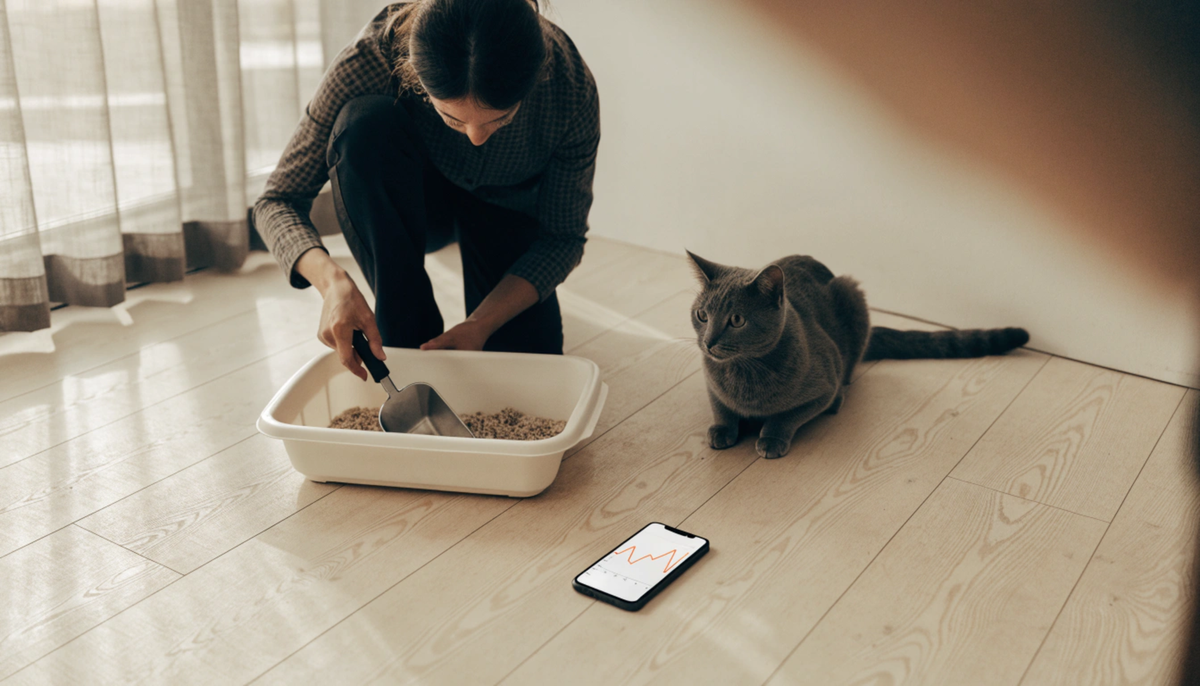
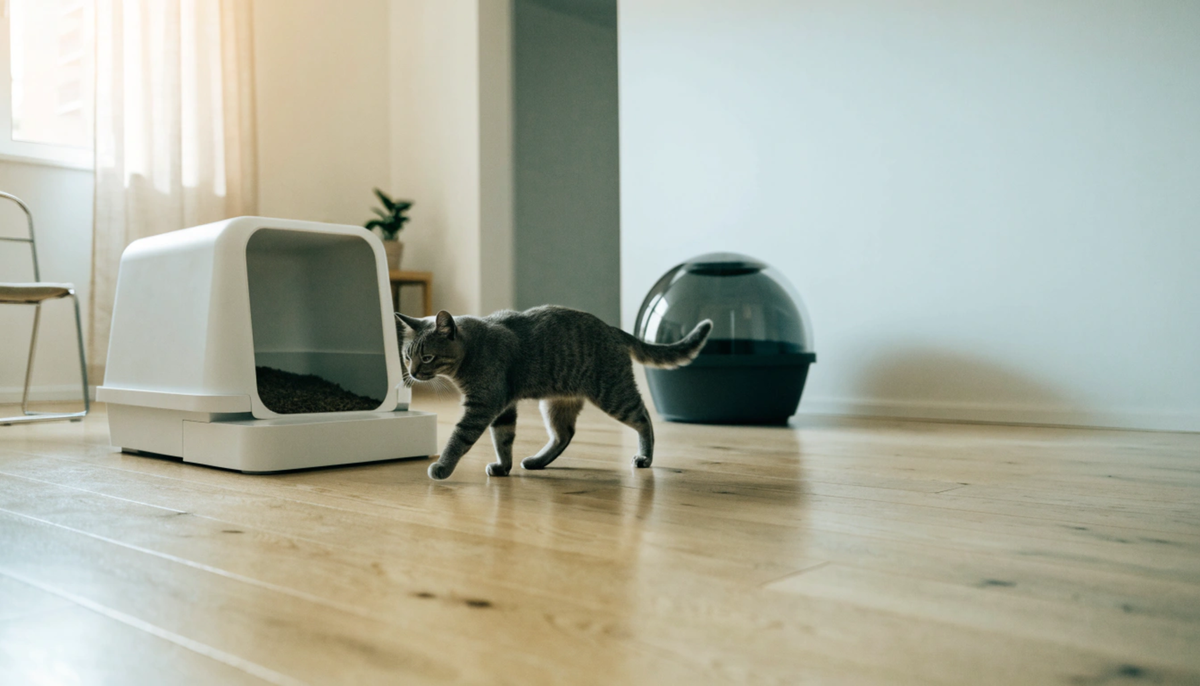
An AI cat litter box adds a camera, weight sensors, and a phone app on top of automatic scooping. Some of that data is useful. Most of the price increase is not. We compared eight automatic litter boxes on safety, interior space, odor control, litter compatibility and running cost. Prices range from about $ 179 to about $ 899 for the same core job. Our best overall pick is an open-top automatic litter box with no app at all, and that is deliberate. Most cats prefer an open tray. The Cornell Feline Health Center notes that cats generally favor simple boxes without hoods and fine-textured unscented litter. Every model below links straight to its manufacturer page so you can check current pricing and buy without hunting. We list honest limitations for all eight, including ours. Best AI cat litter boxes at a glance Three of these use real camera-based AI. The rest use weight and motion sensors with an app, which manufacturers still market as smart. Award Model Best for Best overall PetPivot AutoScooper 11 Reliable automatic scooping without paying for cameras Best premium AI Litter Robot 5 Pro Dual camera monitoring and long-term insights Best for health data PETKIT Purobot Max Pro 2 Facial recognition and per-cat records Best open-top AI box PETLIBRO Luma Camera monitoring without an enclosed drum Best proven design Litter Robot 4 Repairability and mature support Best open top for large breeds CATLINK Scooper Open X Maine Coons and other big cats Best low entry smart box PetSafe ScoopFree SmartSpin Kittens over the weight limit, seniors, cats to 25 lbs Best for litter containment PetSnowy SNOW plus Keeping granules off the floor Prices move constantly in this category. Open the link before you decide, because discounting is heavy and near constant. How we picked these eight We ranked them on what matters in a real home, not feature counts. Safety first, features second. Presence detection has to work from every angle, the cycle has to stop on contact, and a mechanical limit should hold even if a sensor fails—two layers, not one. Usable interior, not exterior size We looked at entry width, entry height, and turning room. A 48-pound machine with a narrow porthole is worse for a Maine Coon than a lighter open tray. What it costs over three years Purchase price plus bags, filters, litter beds and any paid app tier. An 899-dollar unit with a subscription is a different product from a 179-dollar unit and a 25-dollar bag pack. Whether the data changes anything Weight trends and visit counts can flag a problem early. Video of your cat using the toilet mostly does not. We weighted the first heavily and the second barely at all. 1. PetPivot AutoScooper 11, best overall Our top pick is the PetPivot AutoScooper 11 open-top litter box, around $ 179. No camera, no wifi, no app, and it still handles the daily job better than machines costing four times more. Why it wins It automates what matters: removing waste after every visit and sealing it away. Everything else in this category is a data layer sitting on top of that same function. It has a 4.8 rating from 861 reviews on the product page. Several owners, including Tracy, describe returning a pricier enclosed unit that kept throwing errors before switching to this one. Safety system Four layers: infrared sensors, weight detection, an anti-pinch structure, and motion monitoring. Rotation pauses the moment a cat approaches or steps in, and a mechanical limiter caps unsafe full rotation independently of the sensors. The AutoScooper safety system page breaks down each layer. Space and cat size The entryway measures 15.35 by 15.35 inches. The unit stands 24 inches high by 21.25 inches wide by 16.33 inches deep and needs about 2.6 square feet of floor space. Joe reports a 16-pound Maine Coon fitting comfortably and settling in within two days. Open entry means no squeezing through a porthole, which is the main complaint about globes from owners of large and senior cats. Odor and waste handling The 10-liter sealed bin runs three stages: activated carbon filtration, ion purification, and airflow circulation. The drawer only opens when you pull it, so ammonia stays contained between emptyings. Two cats usually means emptying weekly rather than daily. Kindle reports at least seven days with two cats before the bag needs changing. Noise and build Under 35 dB on a brushless motor, roughly 20 lbs, ABS plus PC. Quiet enough for a living room, which matters because a loud cycle is a common reason cats abandon a machine. What we like Three physical buttons and a child lock. Fully detachable drum for deep cleaning. Bags, litter pad, support legs, and a litter remover in the box. Free contiguous US shipping from Chicago, a 30 day in home trial and a one year warranty. What could be better There is no waste-bin full indicator, so you have to check it yourself. Rachel notes that when a second cat enters mid-cycle, the machine completes the paused cycle after they leave, which can smear soft waste. The entry sits fairly high for arthritic seniors. Beth solved it with a small step stool, which works, but it is a real gap for mobility-limited cats. Best for One to four cats, homes that want automation without connectivity, owners of large breeds, and anyone who cannot justify the premium band. Read the 30-day in-home trial terms before ordering. 2. Litter Robot 5 Pro, best premium AI box Around 899 dollars. The Litter Robot 5 Pro is the most advanced automatic litter box you can buy right now, and the price reflects it. What it does well Dual AI cameras, waste identification, weight sensing, and long-term activity trends. In a multi-cat home, it separates who did what, which weight alone cannot always manage reliably. Whisker has the strongest brand trust and resale value in the category, a 90-day in-home trial, and a mature service channel. What could be better Enclosed globe. Some cats never accept the entry, and large breeds can find it tight. Check which insights are included and which need a paid tier before you assume the data comes free. Best for Owners who genuinely want the health data, have the budget, and whose cats already tolerate an enclosed box. 3. PETKIT Purobot Max Pro 2, best for health data Listed at around 499 dollars against a 599-dollar regular price. The PETKIT Purobot Max Pro 2 has an AI camera, precision weight sensors, and multi-cat facial recognition, and PETKIT cites a Microsoft AI Innovation Award at CES 2026. What it does well Facial recognition tracks each cat individually instead of inferring from weight, which is where cheaper systems fail when two cats weigh the same. The entry is larger than earlier PETKIT drums. What could be better Still an enclosed unit with a rotating drum. A camera in a litter box raises privacy questions worth thinking through, and none of the data diagnoses anything. Best for Multi-cat homes where knowing which cat produced what genuinely matters, for example when one cat has a urinary history. 4. PETLIBRO Luma, best open-top AI box The PETLIBRO Luma pairs a downward-facing AI camera with a wide open top format, which is unusual. It has a 4.2 rating from 392 Amazon reviews. What it does well Waste analysis that separates urine from stool and solid from loose—recognition for up to 10 cats logged by name. An 11-liter sealed drawer holds roughly 14 days for one cat or seven for two. Triple sensors combine visual, weight, and infrared detection. PETLIBRO cites third-party lab testing behind its 97 percent odor reduction figure, and the unit accepts clumping clay, tofu and mixed litter, which is broader compatibility than most sifting machines allow. What could be better It is large at 23.3 by 22.5 by 28.1 inches and 33.1 lbs. Weight sensing needs hard flooring, so it cannot sit on carpet. Some functions depend on the app, and cloud features may cost extra. Best for Buyers who want camera-based monitoring but whose cat has already rejected an enclosed globe. 5. Litter Robot 4, best proven design The Litter Robot 4 is the previous-generation flagship and is still widely sold—no built-in camera, but weight-based tracking through the app and a long track record. What it does well Replacement parts are available, the community knowledge base is deep, and the cleaning cycle is well understood after years in the field. It ships with a 90-day in-home trial and a one-year warranty. What could be better Enclosed globe again, premium pricing, 2.4 GHz wifi only, and owners report that older units develop odor and sensor faults over time. Our comparison of open versus enclosed automatic designs covers the format trade-off in detail. Best for Buyers who value repairability and support over the newest sensor package. 6. CATLINK Scooper Open X, best open top for large breeds The CATLINK Scooper Open X is an open-top sifting machine built around big cats, with a 12-liter sealed waste drawer and dual-band Wi-Fi. What it does well Entrance height is 13.8 inches, and the tray is genuinely wide, so Maine Coons and heavy shorthairs fit without contorting. One cat can go up to about 15 days between drawer changes. Free US shipping and a 90-day return window. It works with any clumping litter and tracks individual cats by weight through the CATLINK app. What could be better It is a big machine at 25.6 by 23.6 by 27.5 inches and roughly 48.5 lbs packaged, and it needs six inches of clearance on every side. The single-cat version charges a one-time $30 unlock for multi-cat recognition, which is a paywall for a feature most buyers assume is included. Best for Large-breed households with the floor space who want an open format plus app tracking. 7. PetSafe ScoopFree SmartSpin, best low-entry smart box The PetSafe ScoopFree SmartSpin sifts waste into a sealed six-liter drawer and logs weight and visits through the PetSafe app. What it does well The opening sits about 12 inches from the ground, the lowest entry on this list and the best fit for arthritic seniors, kittens over the weight minimum, and cats up to 25 lbs. Cycling is quiet, the interior has no grooves for litter to catch in, and PetSafe support is easy to reach. It accepts any litter, though a premium clumping formula performs best in the sifter. What could be better Six liters is the smallest drawer here, so a multi-cat home empties it far more often than the two-week claim suggests. The app requires a 2.4 GHz network. Best for One- or two-cat homes that want app records without a camera, and any household with a cat that struggles to climb. 8. PetSnowy SNOW plus, best for litter containment The PetSnowy SNOW plus runs around $ 559 and focuses on containment, with a curved walkway entrance that knocks granules off paws before the cat reaches the floor. What it does well The waste bag seals itself through a purely mechanical action as you pull the drawer out, with no motor or sensor to fail at that step. A TiO2 system and a UV lamp handle odor and surface bacteria, and magnetic assembly makes deep cleaning quicker than most enclosed units. It includes a 30-day trial and up to four years of warranty coverage. What could be better The exterior footprint is large relative to the usable interior, and it is enclosed. If tracking is your only complaint, a mat and a deeper bed cost far less. Our guide on reasons owners switch to automated scooping covers which problems automation actually solves. Best for Hard flooring, houses where litter migration is the daily annoyance, and owners who want odor handled without an app. Specification comparison Compare formats rather than award labels. Every model links to its manufacturer page, and you should reconfirm every figure there before purchase. Model Design AI camera Waste bin App needed Price to verify Buy PetPivot AutoScooper 11 Open top No 10 L sealed No Around 179 USD View Litter Robot 5 Pro Enclosed globe Yes, dual Sealed drawer Yes Around 899 USD View PETKIT Purobot Max Pro 2 Enclosed drum Yes Sealed drawer Yes Around 500 USD View PETLIBRO Luma Open top Yes 11 L sealed Yes Premium band View Litter Robot 4 Enclosed globe No Sealed drawer Yes Premium band View CATLINK Scooper Open X Open top No 12 L sealed Yes Mid band View PetSafe ScoopFree SmartSpin Enclosed drum No 6 L sealed Yes Mid band View PetSnowy SNOW plus Enclosed No Auto sealing Optional Around 559 USD View What is an AI cat litter box, really? The term covers three different things, and the marketing rarely separates them. Automatic is not the same as smart. An automatic litter box senses that a cat has left and runs a cleaning cycle. That is a motion sensor and a motor. No intelligence is involved, and it still removes the daily chore. Smart usually just means an app. Connected units log cycles, weight, and visit counts to your phone. Useful, but this is data logging, not AI. AI means a camera and a model. True AI litter boxes analyze images to identify individual cats and classify waste. Only a handful do this, and they sit at the top of the price range. What AI cannot do It cannot diagnose. A camera can flag that visits doubled or that stool consistency changed, and that is a prompt to call your vet, not a result. Nothing in a litter box replaces a urinalysis. How to choose an automatic litter box Measure your cat, then the entry Length from nose to tail base, and shoulder height. Compare that against the entry opening and the litter bed, never against the exterior dimensions printed on the carton. Decide open top or enclosed before anything else. This one choice eliminates half the market. The Ohio State Indoor Pet Initiative notes that cats generally prefer large uncovered boxes because they are easier to enter and give more room to turn. Our page on multi-cat friendly design explains how entry format changes queuing behavior in busy homes. Check litter compatibility carefully. Most sifting machines need clumping mineral or bentonite litter. Non-clumping formulas, silica crystals, and long strip tofu jam rakes confuse sensors. Plant-based litters clump loosely and need more frequent cleaning. For a fine-grain formula matched to a sifting cycle, our clumping mineral litter for automatic boxes is screened for that purpose. Compare bin capacity in days, not liters. Six liters with one cat lasts longer than twelve with four. Advertised intervals assume one average cat. Halve the claim for a multi-cat household, and you will be closer. Separate free features from paid ones Ask what stops working without payment. Video history, advanced analysis, extended trends and, in one case, multi-cat recognition itself all sit behind an extra charge on some models. Add up the running costs. Waste bags, litter beds, carbon filters and litter. Budget roughly $ 25 for a bag pack and $ 50 for a two-pack of litter beds per year, and check the replacement waste bags and litter beds your model takes before you commit. Check the age and weight minimum. Most automatic litter boxes require a cat of at least 6 months and 3 lbs. Kittens under that need a plain low-sided tray and manual scooping. Are AI health features worth paying for? Sometimes. It depends on whether you will act on the data. Weight trends are the most useful signal. Steady weight loss over weeks is one of the earliest visible signs of several common feline conditions. A box that weighs your cat several times a day catches that sooner than an annual checkup. Visit frequency matters more than video. A cat suddenly visiting twice as often, or straining with nothing produced, is urgent. That pattern shows in a simple counter and needs no camera. Multi-cat accuracy is the weak point. Weight-based identification struggles when two cats sit within a pound of each other. Facial recognition solves it, and that is the strongest argument for the camera models. Expect false alerts Sensors misfire, cats sit in boxes without eliminating, and children trigger cycles. Treat alerts as prompts to look, not as findings. When to call a vet Straining, blood, no urine for 24 hours, or a sudden change in frequency. Call the same day, regardless of what any app says. VCA Animal Hospitals covers the medical causes behind sudden house soiling. Automatic litter box safety checklist Most buying guides skip this part. It matters more than any feature list. Before the first cycle Confirm the weight minimum for your model. Place the unit on firm, level flooring, because an uneven or soft surface throws off weight sensors and causes false cycles. Test every sensor by hand. Trigger a cycle, then interrupt it with your hand or an object. It should stop immediately. If it hesitates, do not let a cat near it. Run manual mode for the first week. Cycle it yourself while you watch. You learn how the machine behaves, and your cat learns the sound without being inside during rotation. Watch for pinch points. Check where the drum or rake meets the housing. Any gap a paw or tail could enter should close under sensor control, not just mechanical timing. Stop using it after repeated errors. An intermittently failing sensor is more dangerous than one that fails, because you stop checking. Contact support instead of working around it. Never treat automation as supervision. A self-cleaning litter box does not monitor your cat. If you travel, someone still needs to see the animal. How to introduce an automatic litter box Rushing this is the main reason these machines end up unused in garages. Put it where the old box was Same room, same corner. Change one variable at a time and leave the old box in place throughout. Leave it unplugged for two or three days. Let the cat use it as a plain tray first. Andrea, a verified buyer, describes exactly this, with treats placed around the machine before automation went on. Add used litter A scoop of the old litter carries familiar scent and speeds acceptance considerably. Run the first cycles from across the room. Let your cat hear it from a distance rather than while standing beside it. Our quick setup guide sets out the first 48 hours step by step. Expect days, sometimes weeks. Some cats use it within hours. Others take a month. Never place a cat inside the machine or force contact. How to maintain an automatic litter box Self-cleaning removes scooping. It does not remove maintenance. Empty on a schedule Do not wait for smell. Stretching the interval past two weeks invites flies and odor, as one owner found out. Top up litter to the fill line. Too little and waste sticks to the bed. Too much and the sifter struggles. The line exists for a reason. Wipe sensors weekly Dust on an infrared window causes exactly the misreads that make people distrust the machine. Deep clean every two weeks Detach the drum, rinse, dry fully, reassemble. Keep water away from the motor housing and the power inlet. Replace the bed and bags on time A scratched litter bed holds residue that no cycle will remove. Final verdict The PetPivot AutoScooper 11 is our best overall pick at around 179 dollars. It does the job every other machine here does, in an open format most cats accept faster, with no subscription and no connection to fail. If you want the deepest data, the Litter Robot 5 Pro is the strongest AI cat litter box available, and we would not argue with anyone who buys it. For per-cat health records, PETKIT. For open-format camera monitoring, PETLIBRO Luma. For a cat that cannot climb, PetSafe SmartSpin. With one or two cats and a smaller budget, the AutoScooper 12 Lite, at around $ 149, uses the same open format with an 8-liter bin. It depends on who you are. Data-driven owner with a cat that tolerates enclosure: buy the premium unit. Everyone else: the open-top machine at a quarter of the price will serve you better. Join our email list for the maintenance reminders and seasonal buying notes we send owners after the first month. FAQS What are the pros and cons of an automatic litter box? Pros: no daily scooping, a clean bed after every visit, sealed odor containment, and usually less litter used over a month. Cons: higher upfront cost, mechanical parts that can fail, cycle noise, a smaller usable interior than a large open tray, and some cats simply refuse them. How long can cat litter be used? In an automatic litter box, clumping litter typically lasts two to four weeks before a full change, provided you top up to the fill line and empty the waste drawer on schedule. Cat count, diet, and litter quality all shift that. Replace it sooner once clumps start breaking apart. How many cats can use one automatic litter box? Most machines are rated for three to four cats, and the AutoScooper 11 is the capacity model in our range. The real constraint is how often the drawer empties, which rises sharply with each cat. Standard litter box guidance still applies even when the box cleans itself. Why three litter boxes for two cats? The common guideline is one box per cat plus one spare. The extra box reduces competition, gives a cat somewhere to go when another is using the main box, and provides an alternative if one becomes soiled. Place them in separate locations rather than side by side. What is the golden rule for litter boxes? One litter box per cat, plus one. Beyond the count, boxes should be large enough for the cat to turn around in, kept clean, filled with unscented fine textured litter, and placed in quiet accessible spots away from food, appliances and dead end corners. Which type of cat litter is best for an automatic litter box? Hard clumping mineral or bentonite litter in a fine grain. Non-clumping formulas, silica crystals, and long-strip tofu are incompatible with most sifting mechanisms. Plant-based litters clump more loosely and need more frequent cleaning. Check the manufacturer specification before buying in bulk. How long should an automatic litter box last? There is no guaranteed lifespan. Motor and sensor durability, cycle frequency, cleaning habits, and litter type all matter. Look for published warranty terms, available replacement parts and a reachable support channel rather than a promised number of years. Regular deep cleaning extends service life more than anything else. Where should you not put a litter box? Avoid noisy corners near washing machines or boilers, high traffic hallways, damp or poorly ventilated rooms, anywhere beside food and water, and dead ends where a cat can be cornered. For weight-sensing models, also avoid carpet and uneven flooring, which distorts readings. Does an automatic litter box need wifi? No. Several models, including the AutoScooper range, run entirely on physical buttons, with no app, account, or connection. Wifi is only required if you want remote control, alerts, or health data logging on your phone. Are automatic litter boxes safe for cats? Modern units use infrared or weight detection to pause a cycle when a cat is present, and better designs add a mechanical limiter as a second layer. Safety depends on correct setup and maintenance. Test the sensors yourself before use, and stop using any unit that misfires. This guide is not veterinary advice. Any change in your cat litter box habits, appetite, or weight is a reason to contact a licensed veterinarian. Sources Cornell Feline Health Center, Choosing and Caring for Your New Cat (2024) The Ohio State University Indoor Pet Initiative, Litter Boxes (2024) American Association of Feline Practitioners, AAFP and ISFM Feline Environmental Needs Guidelines (2013) International Cat Care, Choosing a Litter Tray for Your Cat (2024) VCA Animal Hospitals, Cat Behavior Problems: House Soiling (2024) Journal of Feline Medicine and Surgery, AAFP and ISFM Feline Environmental Needs Guidelines (2013) National Library of Medicine, AAFP and ISFM Guidelines for Diagnosing and Solving House Soiling Behavior in Cats (2024)
Best AI cat litter boxes at a glance
|
Award
|
Model
|
Best for
|
|
Best overall
|
Reliable automatic scooping without paying for cameras
|
|
|
Best premium AI
|
Dual camera monitoring and long-term insights
|
|
|
Best for health data
|
Facial recognition and per-cat records
|
|
|
Best open-top AI box
|
Camera monitoring without an enclosed drum
|
|
|
Best proven design
|
Repairability and mature support
|
|
|
Best open top for large breeds
|
Maine Coons and other big cats
|
|
|
Best low entry smart box
|
Kittens over the weight limit, seniors, cats to 25 lbs
|
|
|
Best for litter containment
|
Keeping granules off the floor
|
How we picked these eight
Safety first, features second.
Usable interior, not exterior size

What it costs over three years
Whether the data changes anything
1. PetPivot AutoScooper 11, best overall

Why it wins
Safety system
Space and cat size
Odor and waste handling
Noise and build
What we like
What could be better
Best for
2. Litter Robot 5 Pro, best premium AI box

What it does well
What could be better
Best for
3. PETKIT Purobot Max Pro 2, best for health data

What it does well
What could be better
Best for
4. PETLIBRO Luma, best open-top AI box

What it does well
What could be better
Best for
5. Litter Robot 4, best proven design

What it does well
What could be better

Best for
6. CATLINK Scooper Open X, best open top for large breeds

What it does well
What could be better
Best for
7. PetSafe ScoopFree SmartSpin, best low-entry smart box
What it does well
What could be better
Best for
8. PetSnowy SNOW plus, best for litter containment

What it does well
What could be better

Best for
Specification comparison
|
Model
|
Design
|
AI camera
|
Waste bin
|
App needed
|
Price to verify
|
Buy
|
|
PetPivot AutoScooper 11
|
Open top
|
No
|
10 L sealed
|
No
|
Around 179 USD
|
|
|
Litter Robot 5 Pro
|
Enclosed globe
|
Yes, dual
|
Sealed drawer
|
Yes
|
Around 899 USD
|
|
|
PETKIT Purobot Max Pro 2
|
Enclosed drum
|
Yes
|
Sealed drawer
|
Yes
|
Around 500 USD
|
|
|
PETLIBRO Luma
|
Open top
|
Yes
|
11 L sealed
|
Yes
|
Premium band
|
|
|
Litter Robot 4
|
Enclosed globe
|
No
|
Sealed drawer
|
Yes
|
Premium band
|
|
|
CATLINK Scooper Open X
|
Open top
|
No
|
12 L sealed
|
Yes
|
Mid band
|
|
|
PetSafe ScoopFree SmartSpin
|
Enclosed drum
|
No
|
6 L sealed
|
Yes
|
Mid band
|
|
|
PetSnowy SNOW plus
|
Enclosed
|
No
|
Auto sealing
|
Optional
|
Around 559 USD
|
What is an AI cat litter box, really?

Automatic is not the same as smart.
Smart usually just means an app.
AI means a camera and a model.
What AI cannot do
How to choose an automatic litter box
Measure your cat, then the entry
Decide open top or enclosed before anything else.

Check litter compatibility carefully.

Compare bin capacity in days, not liters.
Separate free features from paid ones
Add up the running costs.

Check the age and weight minimum.
Are AI health features worth paying for?
Weight trends are the most useful signal.
Visit frequency matters more than video.
Multi-cat accuracy is the weak point.
Expect false alerts
When to call a vet
Automatic litter box safety checklist

Before the first cycle
Test every sensor by hand.
Run manual mode for the first week.
Watch for pinch points.
Stop using it after repeated errors.
Never treat automation as supervision.
How to introduce an automatic litter box
Put it where the old box was
Leave it unplugged for two or three days.

Add used litter
Run the first cycles from across the room.
Expect days, sometimes weeks.
How to maintain an automatic litter box
Empty on a schedule
Top up litter to the fill line.
Wipe sensors weekly
Deep clean every two weeks
Replace the bed and bags on time
Final verdict
FAQS
What are the pros and cons of an automatic litter box?
How long can cat litter be used?
How many cats can use one automatic litter box?
Why three litter boxes for two cats?
What is the golden rule for litter boxes?
Which type of cat litter is best for an automatic litter box?
How long should an automatic litter box last?
Where should you not put a litter box?
Does an automatic litter box need wifi?
Are automatic litter boxes safe for cats?
Sources
- Cornell Feline Health Center, Choosing and Caring for Your New Cat (2024)
- The Ohio State University Indoor Pet Initiative, Litter Boxes (2024)
- American Association of Feline Practitioners, AAFP and ISFM Feline Environmental Needs Guidelines (2013)
- International Cat Care, Choosing a Litter Tray for Your Cat (2024)
- VCA Animal Hospitals, Cat Behavior Problems: House Soiling (2024)
- Journal of Feline Medicine and Surgery, AAFP and ISFM Feline Environmental Needs Guidelines (2013)
- National Library of Medicine, AAFP and ISFM Guidelines for Diagnosing and Solving House Soiling Behavior in Cats (2024)
You may also like

AutoScooper 12 Lite Cat Litter Box

AutoScooper 12 Lite Cat Litter Box-Gray

AutoScooper 12 Litter Base Bed – 2 Pack

AutoScooper 12 Waste Bags – 60 Count


Further reading
Smart Litter Box Trends in 2026: AI Cameras, Health Data and Simpler Automation
Automatic Litter Box Noise Test: What Is Normal and What Is Not
Smart Litter Box Privacy: What the Box Knows and What Your Cat Needs