Smart Litter Box Privacy: What the Box Knows and What Your Cat Needs

About the Author
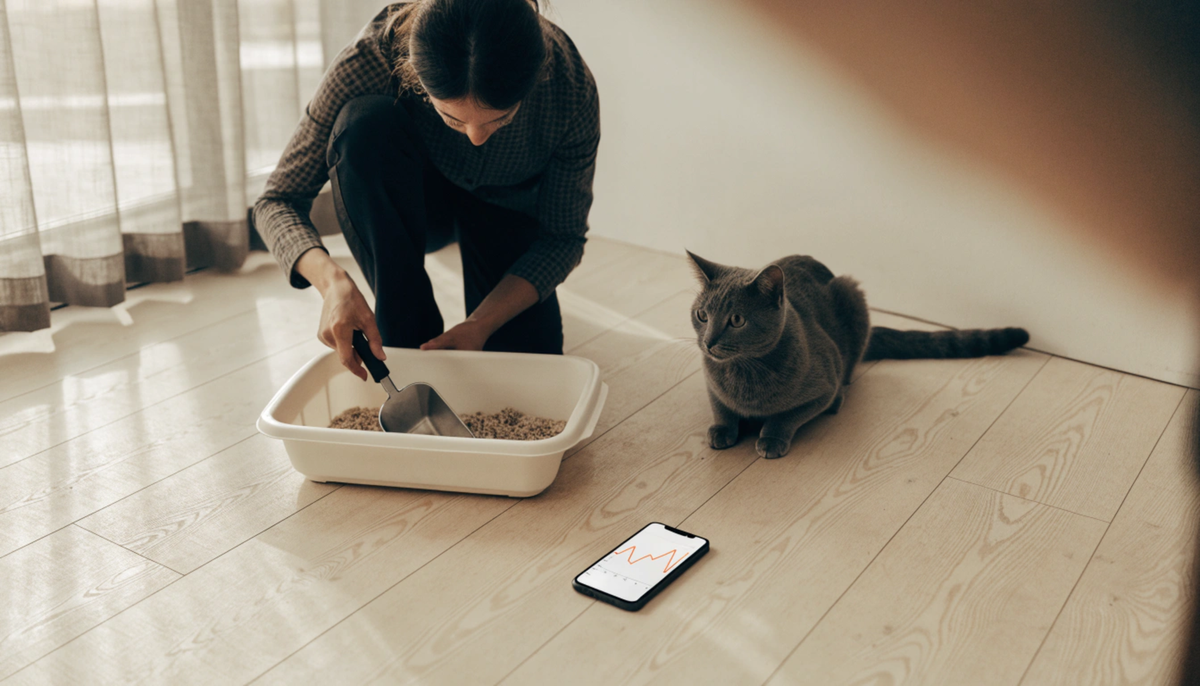
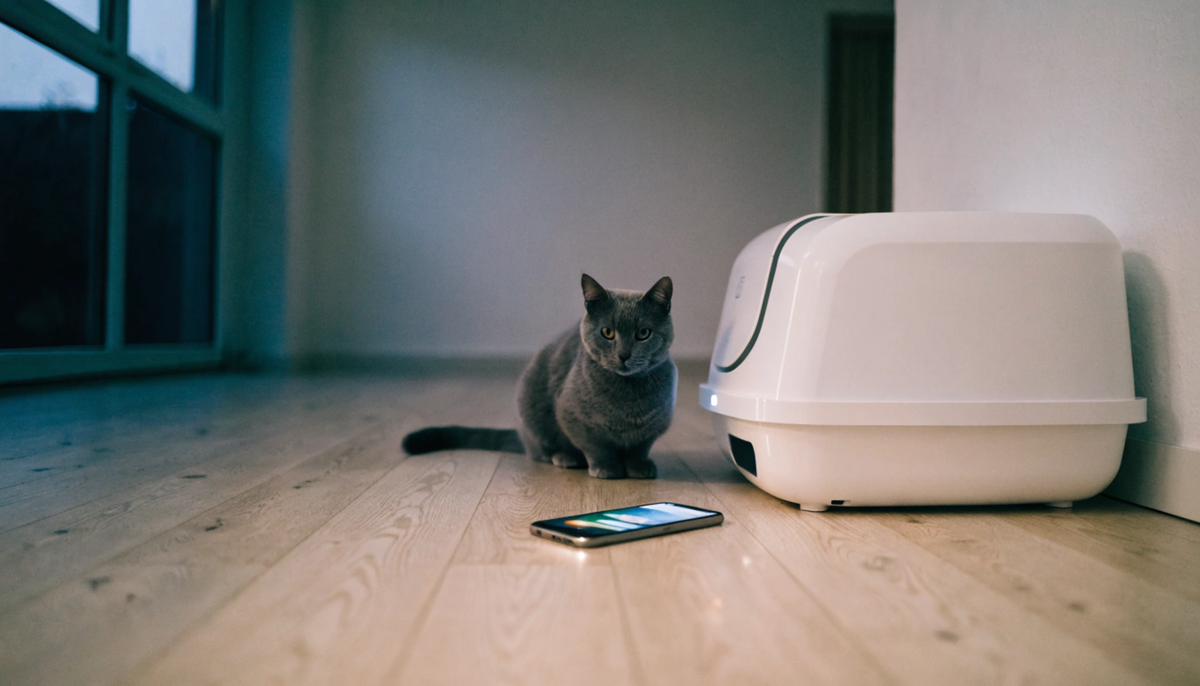
Smart litter box privacy means two different things at once. One is your household data, sitting on somebody else's server. The other is your cat wanting a quiet corner where nothing creeps up behind it. Both get called privacy. Only one of them shows up in the product listing. A connected litter box logs weight, visit times, and sometimes video, then sends it somewhere. The Federal Trade Commission warns that many home IP cameras are vulnerable to digital snooping, and a litter box camera is an IP camera in a room you would not normally point one at. This guide covers what these devices record, where it goes, how to lock one down, and how to give your cat physical privacy without blocking the box. What data does a smart litter box collect? More than most owners expect. The exact list depends on the model, but it generally includes: Timestamps and visit counts Entry time, exit time, how long your cat stayed. Every visit, logged and kept. Body weight Load cells weigh your cat each time. Some units record to the gram and build a trend line over months. Waste records Clump weight, sometimes urine volume estimates, sometimes stool consistency ratings from an image. Video and stills Camera models record clips of each visit. Some keep them for days, some for weeks, some until you delete them by hand. Cat identity A profile per animal, built from weight, habit or facial structure. That is biometric data about your pet, held under a name you typed in. Everything around the device Your network name, your IP address, your app account, your email, your approximate location. Standard for any connected appliance, rarely mentioned in the marketing. How litter box cameras work Not continuously, in most cases. Motion triggers the lens. The camera wakes when a cat enters and stops shortly after it leaves. Continuous streaming is usually optional and off by default. Inward facing by design. A well-designed lens points into the drum or over the litter bed. It should not frame your room. Should is doing work in that sentence, and wide-angle lenses do catch more than the brochure diagram suggests. Night vision Infrared fill light, because cats use the box at 3 am. That also means the camera sees in the dark, which matters if the box sits in a bathroom. Waste classification Software sorts urine from stool, solid from loose. Useful in a multi-cat home. Not a diagnosis, and no camera has ever ruled out kidney disease. Where does the data actually go? Two architectures, very different risk profiles. Factor Local or on device Cloud connected Needs internet Often no Almost always Remote viewing Limited or none Standard Data leaving your home Little to none Routine Who holds the risk You and your router You, your router and the vendor Subscription exposure Low Common If the company folds Usually keeps working Features may stop Deleting your data Wipe the device Depends on their policy Local processing keeps the analysis on the device. Cloud processing sends it to a server and returns it through the app. Most consumer units are cloud-based, because that is cheaper to build and it supports remote viewing. Neither is automatically safe. A local device with a default password is worse than a cloud device with two-factor authentication switched on. Is a litter box camera a real privacy risk? Some risk. Manageable risk. But not zero, and the honest answer depends on where you put it. What the lens actually sees Ask for the field of view in degrees, then look at where the box will sit. A 150 degree lens in an open living room sees a lot more than the same lens in a corner. The bathroom problem Most people put the litter box in a bathroom, a laundry room, or a spare toilet. Those are the rooms where an infrared camera pointing even slightly outward matters most. No competitor guide mentions this. Check this first. Account access, not hacking The real threat isn't a stranger breaking in. It is a shared login, an old housemate still on the account, or a reused password from a breached site. Vendor side exposure Footage sitting on a company server is only as private as that company. Check the access log in your app every few months and look for IP addresses or login times you don't recognize. Most owners never open it once. When to skip the camera If you cannot find a clear answer on retention, deletion and sharing within five minutes of searching, buy a model without a lens. That is not paranoia. That is a reasonable purchase filter. Reading the privacy policy in five minutes You do not have to read all of it. Search the document for these answers. Is video stored or only processed? Processed and discarded is very different from stored for 30 days. How long is anything kept? Look for a number. Vague wording about reasonable periods means no commitment. Who else touches it? Analytics providers, cloud hosts, marketing partners. Named third parties are a good sign. Unnamed categories are not. Can you delete everything? Not just the app account. The stored clips, the profiles, the history. There should be a button, not an email address. Where are the servers? Jurisdiction decides what rights you have. Worth knowing before you upload a year of household footage. Smart litter box security checklist Ten minutes of setup work removes most of the realistic risk. Change the default credentials First thing, before the device sees the internet. Use a unique password and turn on two-factor Reused passwords are how most consumer camera accounts get opened by strangers. Put it on a guest network. Most routers support one. It isolates the appliance from your laptops and phones and takes about two minutes to set up. Check what the app asked for Litter box apps request location and contacts more often than they should. Deny anything the machine does not need to run. Update the firmware Vendors patch security holes through updates. Skipping them leaves known problems open on a device inside your home. Delete old clips regularly Footage you never watch is pure liability. Clear it monthly. Wipe it before you sell it. Factory reset, then remove the device from your account, in that order. Secondhand smart appliances have been resold with the previous owner history still attached. The simplest privacy setting is no radio. A version of this problem solves itself. Buy a machine that was never online. CISA guidance on connected devices makes the point plainly: weigh whether continuous internet connectivity is actually necessary, and drop it when it is not. A box that scoops after every visit does not need a server to do it. That is the whole design brief behind our one-button automatic litter box. No app, no account, no wifi pairing, no camera, no firmware. Three physical buttons and a sealed drawer. The trade-off is real, and we will say it. You get no weight trends, no visit history, no alerts, and nothing to export for your vet. If you want that data, you have to accept the data trail that comes with it. Safety does not depend on the connection either. Infrared detection, weight sensing, and a mechanical rotation limiter all run on the device, and the sensor stack explains each layer. For a household with three or more cats, our multi-cat model uses the same offline approach with a 10 litre bin. Physical privacy: what your cat actually needs Cats want to see what is coming. That is the real requirement, and it is often the opposite of what looks private to us. Quiet, but not hidden A low-traffic corner beats a cupboard. The Ohio State Indoor Pet Initiative notes that cats generally prefer large uncovered boxes, and that a box tucked behind furniture or beside a noisy appliance often goes unused. Two ways out A cat that can be cornered in a dead end will stop using that spot, especially in a house with a dog or small children. Away from food and water Different room where possible. Cats do not eat next to the toilet, and neither do you. Watch for hesitation Pausing at the entrance, scratching the wall instead of the litter, shortened visits. All of that means the location is wrong. What stresses cats at home covers the rest of the signals. How to make a litter box privacy screen Cheap, quick, and better than an enclosed cabinet for most cats. Two panels, not four Screen the sightline from the doorway and leave the other sides open. A three-sided box removes the escape route and defeats the purpose. Measure the clearance first. You still need room to pull the waste drawer and lift the unit for cleaning. Add six inches on every working side before you cut anything. Washable, stable, not fabric Wipeable panel board on a weighted base. Fabric near a moving mechanism is a hazard, and it holds odor. Never block a sensor. Infrared windows, weight plates and camera lenses all need clear space. A screen resting against the housing can trigger false readings or stop cycles entirely—our setup walkthrough marks where the clearance has to stay. Wide entrance At least the full width of the box opening. Narrower, and you have built a tunnel, which is what most cats are trying to avoid. Final takeaway Smart litter box privacy comes down to one question: what are you actually getting for the data? Weight trends and per-cat identification are genuinely useful if you have a senior cat or several cats of similar size. That is worth an account and a locked-down network. Convenience alone is not. If you only want to stop scooping, a machine with no radio does that job and removes the privacy question completely. Owners choosing between formats can read our take on covered versus open designs before deciding. Whichever you buy, give your cat a corner with a clear view and two ways out. That part has not changed in ten thousand years. FAQS How does a smart litter box work? Sensors detect your cat entering, then a timer starts. Once the cat leaves, the machine waits a set delay and runs a cleaning cycle, sifting waste into a sealed drawer. Connected models also log weight and visit data to an app. The cleaning itself is mechanical and needs no internet. Is a smart litter box worth it? Depends what you want from it. For daily scooping, any decent automatic box works and connectivity adds nothing. For health trend data on a senior cat or in a multi-cat home, the tracking earns its keep. Weigh the running costs and the data trail against how much you will actually use the app. How do you make a litter box privacy screen? Two washable panels on a weighted base, placed to block the sightline from the doorway while leaving the other sides open. Keep the entrance at least as wide as the box opening, leave six inches of working clearance, and never rest a panel against a sensor window or a moving part. Is smart cat litter safe? Color-changing litter is a different product from a smart machine. The indicator formulas sold in the US are generally safe for adult cats when used as directed, but most are silica crystal and will not run in a sifting automatic box. Check the ingredients, dust level, and your machine's compatibility list. How do I get my cat to use a smart litter box? Put it exactly where the old box was, leave it unplugged for a few days, and add a scoop of used litter for familiar scent. Run the first cycles manually from across the room. Keep the old tray available throughout. Some cats take hours, some take a month. What is the golden rule for litter boxes? One box per cat plus one spare, in separate locations. A smart box counts as one box, not as a replacement for the rule. The spare matters more with a mechanical unit, because a jam or power cut leaves your cat with no option. How many times a day will a cat use a litter box? Roughly two to four urinations and about one bowel movement, though age, diet and water intake all move that. The number matters less than the change. A cat that suddenly doubles its visits, or stops going, needs a vet rather than another day of app watching. What is smart cat litter? Litter treated with an indicator that changes color in response to urine pH or possible blood. It is chemistry, not electronics. People often confuse it with a smart litter box, which is a machine that cleans itself and tracks behavior. The two solve completely different problems. Can a smart litter box work without wifi? Some can, some cannot. Units built around an app may refuse to run cycles or lose most functions when the connection drops. Others, including machines with no radio at all, work entirely from onboard buttons. Ask specifically whether cleaning continues during a router outage, because a box that stops scooping when your internet goes down is a problem you'll eventually face. Does an automatic litter box need a subscription? The machine itself, no. Advanced features on camera models often do. Video history, extended trend data, and per-cat analysis are usually paywalled. Confirm what stops working if you cancel, because losing alerts you thought you owned is a common complaint. What happens to my smart litter box if the company shuts down? Depends on how much of it lives on their server. If cycles only trigger through the app, a dead company can leave you with a dead machine. Ask before buying whether the box still scoots with the app uninstalled. Brands in this category do fold, and the hardware outlasts a lot of them. Who else can see my litter box camera footage? Anyone on the account, plus whoever the vendor allows internally. Family sharing is convenient until somebody moves out and nobody removes them. Audit the shared access list once a year, remove old logins, and check the app privacy settings after every major update. Details on our own machines sit on the support answers page. This article covers device privacy and litter box setup. It is not veterinary advice. A licensed veterinarian should check any lasting change in your cat's toilet habits, weight, or appetite. Sources Federal Trade Commission, Securing Your Internet-Connected Devices at Home (2024) Cybersecurity and Infrastructure Security Agency, Internet of Things Acquisition Guidance (2020) The Ohio State University Indoor Pet Initiative, Litter Boxes (2024) Cornell Feline Health Center, Choosing and Caring for Your New Cat (2024) International Cat Care, Choosing a Litter Tray for Your Cat (2024) American Association of Feline Practitioners, AAFP and ISFM Feline Environmental Needs Guidelines (2013) VCA Animal Hospitals, Cat Behavior Problems: House Soiling (2024)
What data does a smart litter box collect?

Timestamps and visit counts
Body weight
Waste records
Video and stills
Cat identity
Everything around the device
How litter box cameras work
Motion triggers the lens.
Inward facing by design.

Night vision
Waste classification
Where does the data actually go?

|
Factor
|
Local or on device
|
Cloud connected
|
|
Needs internet
|
Often no
|
Almost always
|
|
Remote viewing
|
Limited or none
|
Standard
|
|
Data leaving your home
|
Little to none
|
Routine
|
|
Who holds the risk
|
You and your router
|
You, your router and the vendor
|
|
Subscription exposure
|
Low
|
Common
|
|
If the company folds
|
Usually keeps working
|
Features may stop
|
|
Deleting your data
|
Wipe the device
|
Depends on their policy
|
Is a litter box camera a real privacy risk?
What the lens actually sees
The bathroom problem

Account access, not hacking
Vendor side exposure
When to skip the camera
Reading the privacy policy in five minutes
Is video stored or only processed?
How long is anything kept?
Who else touches it?
Can you delete everything?
Where are the servers?
Smart litter box security checklist

Change the default credentials
Use a unique password and turn on two-factor
Put it on a guest network.
Check what the app asked for
Update the firmware
Delete old clips regularly
Wipe it before you sell it.
The simplest privacy setting is no radio.

Physical privacy: what your cat actually needs

Quiet, but not hidden
Two ways out
Away from food and water
Watch for hesitation
How to make a litter box privacy screen

Two panels, not four
Measure the clearance first.
Washable, stable, not fabric
Never block a sensor.
Wide entrance
Final takeaway

FAQS
How does a smart litter box work?
Is a smart litter box worth it?
How do you make a litter box privacy screen?
Is smart cat litter safe?
How do I get my cat to use a smart litter box?
What is the golden rule for litter boxes?
How many times a day will a cat use a litter box?
What is smart cat litter?
Can a smart litter box work without wifi?
Does an automatic litter box need a subscription?
What happens to my smart litter box if the company shuts down?
Who else can see my litter box camera footage?
Sources
- Federal Trade Commission, Securing Your Internet-Connected Devices at Home (2024)
- Cybersecurity and Infrastructure Security Agency, Internet of Things Acquisition Guidance (2020)
- The Ohio State University Indoor Pet Initiative, Litter Boxes (2024)
- Cornell Feline Health Center, Choosing and Caring for Your New Cat (2024)
- International Cat Care, Choosing a Litter Tray for Your Cat (2024)
- American Association of Feline Practitioners, AAFP and ISFM Feline Environmental Needs Guidelines (2013)
- VCA Animal Hospitals, Cat Behavior Problems: House Soiling (2024)

You may also like

AutoScooper 11 Cat Litter Box


AutoScooper 11 Litter Base Bed – 2 Pack

AutoScooper 11 Waste Bags – 60 Count


AutoScooper 12 Lite Cat Litter Box
Further reading
Smart Litter Box Trends in 2026: AI Cameras, Health Data and Simpler Automation
Automatic Litter Box Noise Test: What Is Normal and What Is Not
Smart Litter Box Privacy: What the Box Knows and What Your Cat Needs