
Automatic Litter Box for Multiple Cats: Size and Capacity Guide

About the Author
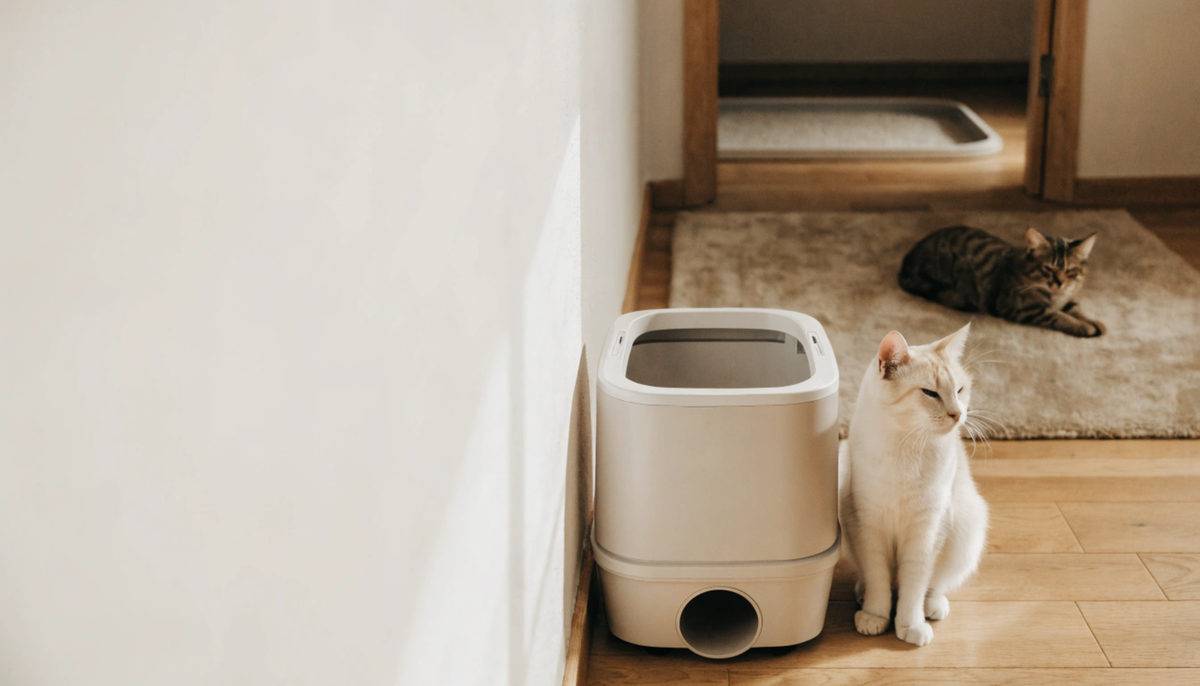
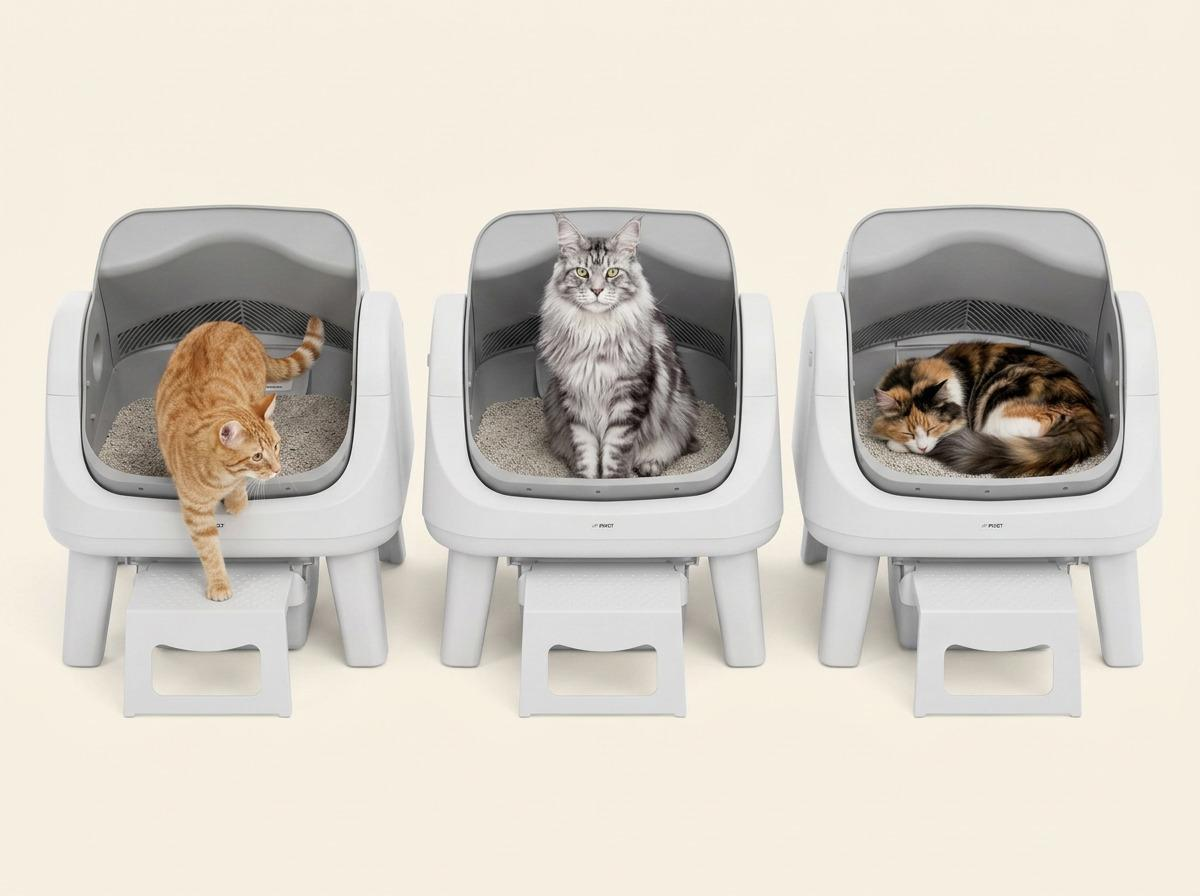
An automatic litter box for multiple cats can absolutely work. It just cannot do the one thing owners most want it to do: replace every tray in the house. A big drawer solves waste volume. It does not solve access. Those are different problems. That distinction runs through this whole guide. Below, you'll find realistic emptying intervals for two, three, and four cats; how to check that the box physically fits your largest cat; and why feline environmental guidance puts toileting resources in separate locations rather than in one bigger machine. Can Several Cats Share One Automatic Box? Yes, if the cats get on, the interior fits the largest one, and you empty the drawer often enough. No, if any cat guards the entrance, if you live over more than one floor, or if a cat is elderly, tiny, or unwell. The honest answer is that one unit handles the cleaning. It does not handle the queueing. Cats queue. Owners rarely notice. Capacity Is Not the Same as Availability This is the part marketing skips. A 12 litre drawer and a 20-liter drawer are both still one place to go. If a nervous cat arrives and a confident one is sitting in the doorway, drawer size is irrelevant. The cat needs a second option in another room. Veterinary guidance is specific here. Resources should sit in multiple locations, out of each other's view, not grouped. Two boxes side by side in one utility room count as one station in a cat mental map. Buy the machine for the scooping. Keep a second box for the access. Both jobs need doing. How Many Litter Boxes Do Multiple Cats Need? The standard is the N+1 rule. MSPCA-Angell states it plainly as two cats equals three litter boxes, and so on upward. Most homes do not hit that number. Treat it as the target, and treat every box below it as a compromise you knowingly choose. Cats N+1 target Workable real-world setup 2 3 boxes One automatic unit plus one tray in a separate room 3 4 boxes One automatic unit plus two trays, spread across the home 4 5 boxes Two automatic units in different rooms plus trays Multi-floor Add one per floor At least one box on every level cats use Never make a cat climb stairs to reach the only toilet. That single rule prevents a lot of accidents. Guarding, Blocking and the Time-Sharing Trap Cats compete quietly. Most owners miss it entirely. There is no fighting to see. The AAFP and ISFM guidelines make a point almost no buying guide repeats. Cats gathering at one resource doesn't mean they are friends. Many cats in multi-cat homes simply learn to time-share access, visiting at different times. A single box that seems to be working may just mean one cat is always waiting. Watch for these signals: One cat sitting or lying near the entrance while another needs it A cat hovering nearby, then walking away without going in Very fast in-and-out visits, or eliminating right beside the box Any cat ambushed on the way out Enclosed and dome designs make this worse, because a cat inside has one exit and no sightline. Open layouts let a cat see the room while it goes. Does the Box Physically Fit Every Cat? Measure the litter bed, not the outer shell. Marketing dimensions include the housing, which your cat never stands in. The bed should let your largest cat stand, turn a full circle, dig and cover without touching the sides. Body length nose to tail base is the number that matters. Check the entry height too. An arthritic or senior cat will avoid a lip it has to climb. Large breeds need headroom above all else. An open-top layout gives unrestricted vertical clearance, which suits Maine Coons and Ragdolls better than a curved drum ceiling. Compare the open-top automatic cat litter box range on interior dimensions rather than on stated weight limits. A weight rating tells you what the sensors detect. It says nothing about whether the cat can turn round in there. Waste Drawer Capacity for Two, Three and Four Cats Manufacturer figures are single-cat estimates under ideal conditions. They do not divide cleanly. Waste volume rises with cat count, but so does moisture, and damp clumps break down faster than dry ones. A drawer rated at 14 days for one cat does not give you seven days for two. Household Realistic emptying interval Why 1 cat 10 to 14 days The figure most specs quote 2 cats 5 to 7 days Roughly half, with a margin for moisture 3 cats 3 to 4 days Volume and odor both climb 4 cats 2 to 3 days Consider a second unit instead Empty it before it looks full. Overfilled drawers push odor back into the room and can block the sensors that stop a cycle. Larger cats, wet food and cheap litter all shorten these intervals. Track your own for two weeks and trust that number over any spec sheet. Safety in a High-Traffic Box More cats means more cycles, more back-to-back visits, and more chances for a cat to walk in at the wrong moment. Three protections matter: Presence detection. Weight, infrared or radar, ideally more than one type. A delay after the cat leaves. Several minutes, so a cat that turns back is safe. Stop on re-entry. The cycle must halt the moment anything enters. Check the minimum weight the sensors detect. A kitten or a very small senior cat may fall below it, and a cat the machine cannot sense is a cat the machine cannot protect. Run manual mode for any cat under the stated limit, and keep a plain tray available. Sensor positions and weight ratings vary by model, and the AutoScooper support and setup answers list them for that range. The Health Monitoring Trade-Off This is the real cost of automation. It doubles in a multi-cat home. A machine removes waste within minutes. That is the whole point, and it also means you stop seeing output. You cannot spot blood, straining, diarrhea, or a drop in urine volume in a sealed drawer. With several cats, you also cannot tell whose it was. That is the bigger gap. Most app tracking logs household-level cycles rather than identifying individuals. Treat any usage graph as a prompt to look closer, not as a diagnosis, because Cornell Feline Health Center lists medical causes among the reasons for house soiling. Check the drawer contents when you empty it. Straining, repeated unproductive trips, or crying in the box need urgent attention, and AVMA guidance explains why a blocked cat is an emergency. Keeping one manual tray makes individual monitoring far easier. Where to Put the Boxes Spread them out. Separate rooms. Out of sight of each other, and one per floor. Avoid dead ends where a cat can be cornered. Avoid placing boxes beside food and water. Poor distribution itself causes problems, and veterinary guidance links house soiling toinsufficient or poorly distributed resources, not just dirty trays. Introducing It to Several Cats Go slower than you think you need to. One nervous cat rejecting the box undoes the whole setup. Two to four weeks is normal across a group. Keep every existing tray. Remove nothing yet. Leave the new unit switched off. For several days, it is just a new tray. Use the same litter. Familiar smell and feel raise acceptance. Run the first cycles while you are there. Watch each cat react separately. Enable auto mode gradually. Then keep the old trays for two to three more weeks. Expect this to take two to four weeks across a group. Quiet operation and a gentle start help, which is one reason the AutoScooper self-cleaning range uses an open entry with no climbing required. Final Verdict One good automatic unit can carry the waste volume of two or three compatible cats. Emptying every few days, it will genuinely cut your workload. It still counts as one toileting station. Keep at least one more box somewhere else in the house, keep a manual tray for health checks, and add a second unit before you add a fourth cat. Automation fixes cleaning. Layout fixes conflict. You need both, and only one of them comes in a box. FAQs Do automatic litter boxes work for multiple cats? They work well for cleaning, since the bed is sifted between visits rather than once a day. They do not add access points. A multi-cat home still needs boxes in more than one location, and the waste drawer needs emptying far more often than single-cat figures suggest. Can three cats share an automatic litter box? Three friendly cats on one floor can share one unit if the interior fits the largest and you empty the drawer every three to four days. Add at least one more box elsewhere. Three cats sharing a single station is where guarding problems usually start. Is one automatic litter box enough for 3 cats? For waste capacity, often yes with frequent emptying. For behavior, usually not. The N+1 guideline puts three cats at four boxes, so one machine plus two trays in separate rooms is a sensible compromise. How many automatic litter boxes do I need for 4 cats? Plan on two units in different rooms, plus at least one manual tray. A single drawer serving four cats needs emptying every two to three days, and one station for four cats creates queueing and guarding. Do I really need 3 litter boxes for 2 cats? N+1 is the target, not a law. Two cats that groom each other and share space often manage with two boxes in separate rooms. Two cats that avoid or block each other need the third. Watch the behavior rather than counting cats. What are the downsides of an enclosed rotating litter box? Enclosed drums contain odor well but create a single exit with no sightline, which some cats dislike. Curved ceilings limit headroom for large breeds, and the rotation can be louder than open designs. Acceptance varies a lot between individual cats. What is the best automatic litter box for 2 cats? The one both your cats will use. Prioritize interior length over stated weight limits, a drawer you can empty every five to seven days, reliable stop-on-entry sensors, and parts you can fully strip and wash. What is the golden rule for litter boxes? One box per cat, plus one extra, placed in separate locations out of sight of each other. The second half matters as much as the first. Boxes grouped in one room function as a single station. Sources Ellis et al., Journal of Feline Medicine and Surgery (via PubMed) – AAFP and ISFM Feline Environmental Needs Guidelines MSPCA-Angell – What to Expect…Your Kitten’s First Year VCA Animal Hospitals – Feline Environmental Needs Guidelines Cornell Feline Health Center – Feline Behavior Problems: House Soiling American Veterinary Medical Association – Feline Lower Urinary Tract Disease Client Brochure Royal Canin Academy – Urinary Marking and House Soiling in Cats
Can Several Cats Share One Automatic Box?
Capacity Is Not the Same as Availability

How Many Litter Boxes Do Multiple Cats Need?
|
Cats
|
N+1 target
|
Workable real-world setup
|
|
2
|
3 boxes
|
One automatic unit plus one tray in a separate room
|
|
3
|
4 boxes
|
One automatic unit plus two trays, spread across the home
|
|
4
|
5 boxes
|
Two automatic units in different rooms plus trays
|
|
Multi-floor
|
Add one per floor
|
At least one box on every level cats use
|
Guarding, Blocking and the Time-Sharing Trap

-
One cat sitting or lying near the entrance while another needs it
-
A cat hovering nearby, then walking away without going in
-
Very fast in-and-out visits, or eliminating right beside the box
-
Any cat ambushed on the way out
Does the Box Physically Fit Every Cat?

Waste Drawer Capacity for Two, Three and Four Cats

|
Household
|
Realistic emptying interval
|
Why
|
|
1 cat
|
10 to 14 days
|
The figure most specs quote
|
|
2 cats
|
5 to 7 days
|
Roughly half, with a margin for moisture
|
|
3 cats
|
3 to 4 days
|
Volume and odor both climb
|
|
4 cats
|
2 to 3 days
|
Consider a second unit instead
|
Safety in a High-Traffic Box

-
Presence detection. Weight, infrared or radar, ideally more than one type.
-
A delay after the cat leaves. Several minutes, so a cat that turns back is safe.
-
Stop on re-entry. The cycle must halt the moment anything enters.
The Health Monitoring Trade-Off

Where to Put the Boxes

Introducing It to Several Cats

-
Keep every existing tray. Remove nothing yet.
-
Leave the new unit switched off. For several days, it is just a new tray.
-
Use the same litter. Familiar smell and feel raise acceptance.
-
Run the first cycles while you are there. Watch each cat react separately.
-
Enable auto mode gradually. Then keep the old trays for two to three more weeks.
Final Verdict
FAQs
Do automatic litter boxes work for multiple cats?
Can three cats share an automatic litter box?
Is one automatic litter box enough for 3 cats?
How many automatic litter boxes do I need for 4 cats?
Do I really need 3 litter boxes for 2 cats?
What are the downsides of an enclosed rotating litter box?
What is the best automatic litter box for 2 cats?
What is the golden rule for litter boxes?
Sources
- Ellis et al., Journal of Feline Medicine and Surgery (via PubMed) – AAFP and ISFM Feline Environmental Needs Guidelines
- MSPCA-Angell – What to Expect…Your Kitten’s First Year
- VCA Animal Hospitals – Feline Environmental Needs Guidelines
- Cornell Feline Health Center – Feline Behavior Problems: House Soiling
- American Veterinary Medical Association – Feline Lower Urinary Tract Disease Client Brochure
- Royal Canin Academy – Urinary Marking and House Soiling in Cats



You may also like

AutoScooper 11 Litter Base Bed – 2 Pack

AutoScooper 11 Waste Bags – 60 Count


AutoScooper 12 Lite Cat Litter Box

AutoScooper 12 Lite Cat Litter Box

AutoScooper 12 Lite Cat Litter Box
Further reading

8 Best Cat Litters for Odor Control in 2026
Automatic Litter Box for Multiple Cats: Size and Capacity Guide
Automatic Litter Box Odor Control Test: What to Measure Before You Trust Reviews