
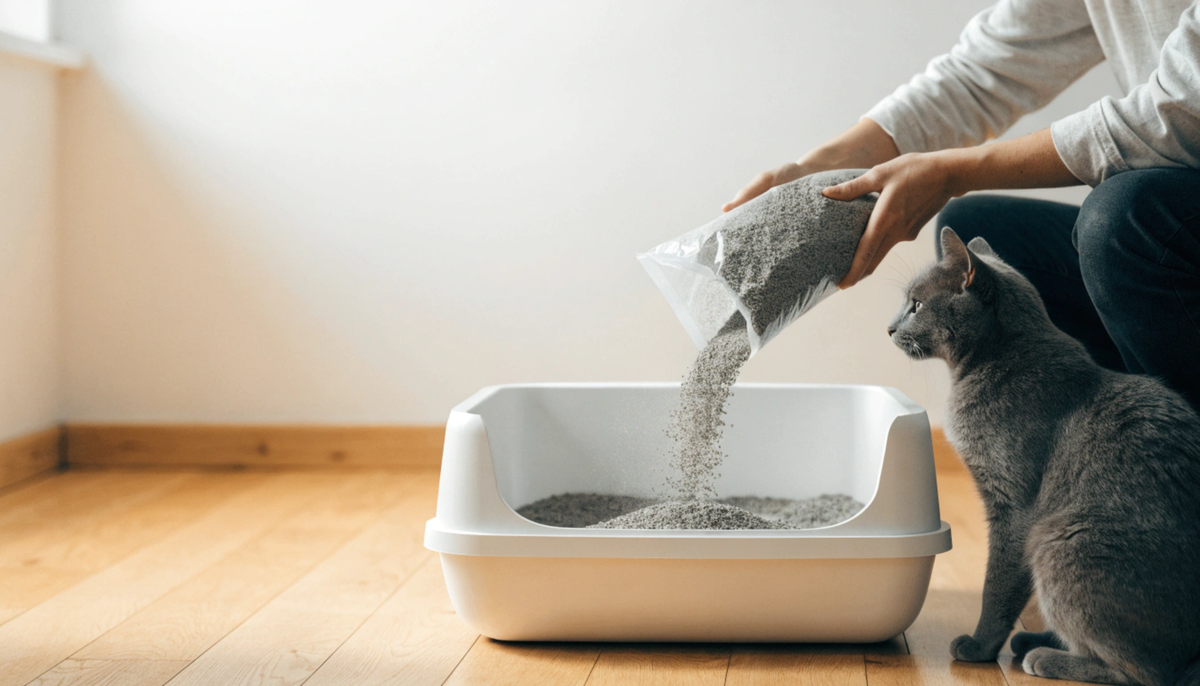
Best Low Dust Cat Litter in 2026: Types, Tracking and Real Tests

About the Author
Most bags labeled dust-free are not. They're lower-dust, which is a real and useful difference, and it is the honest thing to shop for. The lowest-dust formats are large, stable pellets made from paper, wood, or tofu. Fine-grain clumping litters sit a step behind, though the good ones are screened and perform well. Dust matters because cats breathe at box level. The Cornell Feline Health Center notes that feline asthma is an allergic response of the lower airways affecting one to five percent of cats, so airborne irritants are worth reducing. A second variable nobody separates properly is tracking. A litter can be very low dust and still coat your hallway. This guide covers both. It also covers what works inside an open-top automatic litter box, since machines are fussier about grain size than a plain tray, and it explains why we describe our own PoPoLitter as low dust rather than dust-free. Quick answer: what is the best low dust cat litter? Intact pellet litter releases the least airborne dust. Paper pellets, pine pellets, and tofu pellets all pour with almost no cloud because the particles are too heavy to float. For low-dust scooping, screened fine-grain clumping litter wins. It holds firm clumps, cats accept the sand-like texture, and quality brands sift out the fines before bagging. For cats with asthma or allergies, unscented paper or wood pellets are the usual starting point. For automatic boxes, hard clumping mineral litter is the only reliable choice. Why cat litter gets dusty Fines left over from manufacturing Every crushed or extruded litter produces particles far smaller than the intended grain. Good manufacturers screen these out. Cheap ones do not, and you inhale the difference on the first pour. Breakage during shipping and storage Pellets and granules grind against each other in the bag. A litter that tested clean at the factory can arrive with a layer of powder at the bottom after a long freight run. Digging, scraping and scooping Cats bury vigorously. That agitation lifts whatever fines exist into the air right where the cat's nose is. Sifting a scoop back and forth does the same thing at human head height. Normal breakdown in use Urine softens most litters. Wood pellets deliberately collapse into sawdust, clay clumps shed fines at the edges, and plant litters crumble. Dust levels rise as the box ages, which is why replacement schedules matter. Is cat litter dust harmful? Fine airborne particles irritate airways. That is true for cats and people, and it's why low-dust cat litter exists as a category at all. Cats are closer to the source than we are. They stand in the box, dig, then groom their paws. Anything suspended in that small cloud gets inhaled and swallowed. If your cat coughs, wheezes, or breathes with visible effort, that is a veterinary question, not a shopping question. Switching litter is a sensible environmental step alongside proper care, never a substitute for it. Crystalline silica and silica gel are not the same thing. This confuses almost every article on the topic. Two different materials share half a name. Respirable crystalline silica is the mineral dust regulated in construction and mining. OSHA links long-term occupational exposure to silicosis, lung cancer, and kidney disease at industrial concentrations over many years. Amorphous silica gel is what crystal litter beads are made from. It is a different structure and is not the regulated respirable hazard. Crystal litter is generally low dust, though some cats dislike walking on beads. Household litter exposure is nowhere near an industrial dose. That does not make dusty clay pleasant, and it is a fair reason to prefer a screened or pellet format, but the scare framing you see online overstates the case. Low dust litter types compared Litter type Dust level Tracking Clumping Odour control Main trade off Paper pellets Very low Low No Fair Frequent full changes Pine or wood pellets Very low when intact Low No Good Collapse into sawdust Tofu pellets Very low Low Yes Good Price, softens if damp Silica gel crystals Low Moderate No Strong Texture rejection Screened clumping clay Low to moderate Moderate Strong Strong Heavy bags, some fines Corn or cassava Low Moderate to high Strong Good Fine grains travel Walnut shell Low to moderate Moderate Varies Good Visible dark residue Paper pellet litter Recycled paper pressed into soft pellets. Among the lowest dust options available and gentle underfoot, which is why vets often suggest it after surgery. The catch is odor. Paper absorbs but doesn't clump, so you need to empty the whole box more often than most owners expect. Pine and wood pellet litter Kiln-dried pine smells clean and costs little. Intact pellets pour almost silently with no cloud. Then they wet and crumble into sawdust by design. Sifting boxes handle this well. Anything else fills with fine wood powder within a week or two. Tofu pellet litter Soybean fiber pellets that clump, flush in some formulas, and stay very low dust. Softer than wood, so cats accept them more readily. Expensive per pound, and long strip tofu pellets are incompatible with automatic litter boxes. They jam rakes and confuse sensors. Silica gel crystal litter Beads absorb urine and lock odor for weeks. Dust output is low, and the bag lasts a long time. Solid waste still needs daily removal, the crunch bothers some cats, and crystals are not suitable for automatic machines that rely on clumping. Screened clumping clay litter The category everyone assumes is dusty. Quality varies enormously, and a properly screened fine grain formula is far cleaner than the discount bag beside it on the shelf. Cats prefer this texture. International Cat Care notes that a fine sand-like substrate best matches the instinctive preference of the domestic cat's desert ancestor, and that many cats also favor clumping litter. Our PoPoLitter fine grain clumping litter sits here. It is 99.9 percent low-dust and dust-screened, made in the USA, with probiotic odor control. We do not call it dust-free, because no mineral litter is. Corn, cassava and grass litter Soft, plant-based, clumps naturally, low on airborne dust. Good performers in a standard tray. The grains are light and small, which means they leave the box on paws and stay in your carpet: low dust, high tracking. Walnut shell litter Crushed shells absorb odor unusually well and produce moderate dust. The residue is dark brown, so it shows on pale flooring more than it actually spreads. Low dust is not the same as low tracking. Two separate problems get sold as one. Dust is what floats. Tracking is what rides out on paws and fur. Fine plant litters are the clearest example. Almost nothing in the air, and a trail from the box to the kitchen anyway. Large pellets solve both at once, because heavy particles neither float nor wedge between toes. That is the honest reason pellet formats dominate low tracking cat litter lists. Box design carries part of the load too. High walls, a deep bed and a mat catch most of what escapes, an argument we cover in more depth in our piece on open versus closed automatic litter boxes. How to choose a low dust cat litter Look at the grain, not the label Open the bag and tip a little into your palm. If a haze rises off a small handful, the whole box will do it at scale. Treat percentage claims as marketing. Ninety-nine percent dust-free means the manufacturer measured something under their own conditions. It is a direction, not a guarantee. Compare it against what you see when you pour. Buy unscented or very lightly scented. Heavy perfume irritates the same airways dust does. Cats have a far sharper nose than we do, and strong fragrance is a common reason a cat quietly stops using a box. Do not trade away clumping. A litter that fails to clump means more full changes, more handling, and more dust over a month than a firm clumping formula that sheds a few fines. Weigh the whole routine. Check the box before the litter. Grain size has to suit the hardware. Sifting rakes need hard clumps, deep beds need volume, and low-entry designs need litter that doesn't scatter. Our page on why open top matters explains how entry style changes digging behavior and therefore dust. A simple home test before you commit Buy the smallest bag available. One test costs less than one wasted forty-pound purchase. Pour it slowly under a lamp with the beam angled sideways. Backlight makes a dust cloud obvious in a way overhead light does not. Watch the first dig. Some litters look clean in the bag and haze the moment a cat scrapes. Wipe the floor around the box after three days and look at the cloth. That tells you about tracking, which is the variable most owners misdiagnose as dust. Give it a full week before judging odor and clump strength. Fresh litter flatters itself on day one. Then watch the cat. Hesitation at the entrance, scratching the wall instead of the litter, or shortened visits all mean rejection, and our cat adaptation guide covers what to do next. How to make your current litter less dusty Pour low and slow, with the bag mouth just above the bed. Most of the cloud comes from dumping from height. Scoop gently. Shaking a sifter aggressively aerosolizes exactly the particles you are trying to avoid. Remove broken-down litter weekly rather than topping up over it. Powder accumulates at the bottom of every box. Keep the room ventilated and the bed dry. Damp litter breaks apart faster and then dries into finer dust. Clean with a damp cloth or a vacuum with a sealed filter. Dry sweeping just relaunches everything. Skip loose baking soda. It is finer than the litter and adds to the airborne load. Our cleaning and maintenance guide sets out a schedule that keeps a box from reaching the powdery stage. What works inside an automatic litter box Machines narrow the field considerably. A rake or a rotating drum needs clumps that survive being lifted. Clumping mineral or bentonite litter only. Non-clumping formats, silica crystals, and long strip tofu are not compatible with our machines, and plant-based litters form looser clumps that need cleaning more often. Fine grain matters here as well. Coarse granules bridge across sifting grates and leave residue on the bed. Sealed waste storage does the rest. In the AutoScooper 12 Lite, waste drops into an 8L drawer that only opens when you pull it, so ammonia stays contained between emptyings rather than rising off an open tray every time the cat digs. One honest limitation: an automatic box does not reduce dust at the moment of pouring or during a full clean. It reduces how often you disturb the bed, which is a different benefit. Cats must be at least six months old and 3 lbs to use these machines. Kittens below that need a plain low-sided tray and manual scooping. Switching litter without a boycott Change texture gradually. Cats form substrate preferences in kittenhood and defend them. Start with roughly one quarter new litter mixed through the old. Increase over seven to ten days. Keep the box and its location identical while the litter changes. One variable at a time. Offer a second box with the new litter if your cat is particular. Choice reduces refusal. If avoidance starts, slow down rather than pushing through. Sudden aversion can also signal discomfort or anxiety, which we cover in our article on stress signals in cats, and persistent house soiling warrants a vet visit to rule out urinary problems. Final takeaway: Which low-dust litter should you buy? For minimal airborne dust and minimal tracking, use pine, paper, or tofu pellets in a sifting or standard tray. For easy daily scooping with low dust, use a screened, fine-grain clumping litter. Most cats prefer it, and most machines require it. For a household running an open-top automatic litter box with two or more cats, pair a hard clumping mineral litter with a larger sealed bin. The AutoScooper 11 holds 10L behind a carbon filter, which is the difference between emptying daily and emptying once a week. Whatever you choose, buy small first and test it. The cat gets the final vote. If you want the compatibility rules and replacement intervals in one place before you order, our product FAQs list them by model, and our newsletter sends the seasonal maintenance reminders most owners forget. FAQS What cat litter is best for dust control? Intact pellet litters made from paper, wood, or tofu produce the least airborne dust because the particles are too heavy to float when poured or disturbed. Among fine grain options, screened clumping formulas perform well. Individual brands vary widely, so test a small bag before buying a large one. What is the best cat litter for reducing dust and tracking? Large pellets handle both problems at once. Heavy particles don't become airborne or wedge between paw pads, so pine, paper, and tofu pellets usually outperform fine granules on both counts. The condition is acceptance, since some cats refuse pellet texture underfoot. How do I make my cat litter less dusty? Pour slowly with the bag close to the bed, scoop gently instead of shaking the sifter, and replace litter before it breaks down into powder. Keep the room ventilated, wipe surrounding floors with a damp cloth or a sealed filter vacuum, and avoid mixing loose baking soda into the box. What is the lowest dust cat litter? Intact paper and wood pellets are generally the lowest dust formats sold. Both pour with almost no visible cloud. Wood pellets lose that advantage as they absorb urine and collapse into sawdust, so the low-dust rating applies to fresh litter rather than a box at the end of its cycle. Which cat litter is completely free of silica dust? Paper, wood, tofu, corn, cassava, and walnut litters are typically made without silica. Verify the ingredient panel for the specific product, since formulas change. Note that crystal litter beads are amorphous silica gel, which is a different material from the respirable crystalline silica regulated in industrial settings. Can you get dust-free cat litter? No litter is literally dust-free. The phrase is a marketing description rather than a measured guarantee, and every mineral or plant litter releases some fine particles during pouring, digging, or breakdown. Very low dust is the realistic standard, and screened or pellet formats come closest. Is low dust litter better for cats with asthma? Reducing airborne irritants is a reasonable environmental step for a cat with diagnosed respiratory disease, and unscented pellet litter is the common choice. It is not a treatment. Feline asthma requires veterinary diagnosis and management, so discuss any change with your vet rather than relying on litter alone. What litter works in an automatic litter box? Hard clumping mineral or bentonite litter, fine grain. Non-clumping litter, silica crystals, and long strip tofu are not compatible with AutoScooper machines. Plant-based litters clump more loosely and need more frequent cleaning. Using an incompatible litter is the most common cause of residue on the bed. Does low dust litter cost more? Sometimes. Pellet and plant formats usually cost more per pound than basic clay, though they often last longer per fill, which narrows the gap. Screened clumping mineral litter tends to sit in the middle on price while requiring less frequent full replacement than non-clumping alternatives. Should I use a covered box to contain dust? A cover traps dust inside the enclosure, where the cat breathes it. It contains the mess from your perspective and concentrates it from your cat's perspective. Deep walls with an open entry manage scatter without sealing the cat inside a small volume of disturbed air. For cat health questions, consult a licensed veterinarian. This guide covers litter selection only, and nothing here diagnoses, treats, or prevents any condition. Sources Cornell Feline Health Center, Feline Asthma: What You Need To Know (2024) Occupational Safety and Health Administration, Silica, Crystalline: Health Effects (2024) Occupational Safety and Health Administration, Silica, Crystalline: Overview (2024) International Cat Care, Choosing a Litter Tray for Your Cat (2024) International Cat Care, Soiling Indoors (2025) VCA Animal Hospitals, Housetraining for Kittens and Cats (2024) VCA Animal Hospitals, Cat Behavior Problems: House Soiling (2024) IAABC Foundation Journal, Evaluating Litter Substrate Preferences in a Population of Cats (2025)
Quick answer: what is the best low dust cat litter?

Why cat litter gets dusty

Fines left over from manufacturing
Breakage during shipping and storage
Digging, scraping and scooping
Normal breakdown in use
Is cat litter dust harmful?
Crystalline silica and silica gel are not the same thing.

Low dust litter types compared

|
Litter type
|
Dust level
|
Tracking
|
Clumping
|
Odour control
|
Main trade off
|
|
Paper pellets
|
Very low
|
Low
|
No
|
Fair
|
Frequent full changes
|
|
Pine or wood pellets
|
Very low when intact
|
Low
|
No
|
Good
|
Collapse into sawdust
|
|
Tofu pellets
|
Very low
|
Low
|
Yes
|
Good
|
Price, softens if damp
|
|
Silica gel crystals
|
Low
|
Moderate
|
No
|
Strong
|
Texture rejection
|
|
Screened clumping clay
|
Low to moderate
|
Moderate
|
Strong
|
Strong
|
Heavy bags, some fines
|
|
Corn or cassava
|
Low
|
Moderate to high
|
Strong
|
Good
|
Fine grains travel
|
|
Walnut shell
|
Low to moderate
|
Moderate
|
Varies
|
Good
|
Visible dark residue
|
Paper pellet litter
Pine and wood pellet litter
Tofu pellet litter
Silica gel crystal litter
Screened clumping clay litter

Corn, cassava and grass litter
Walnut shell litter
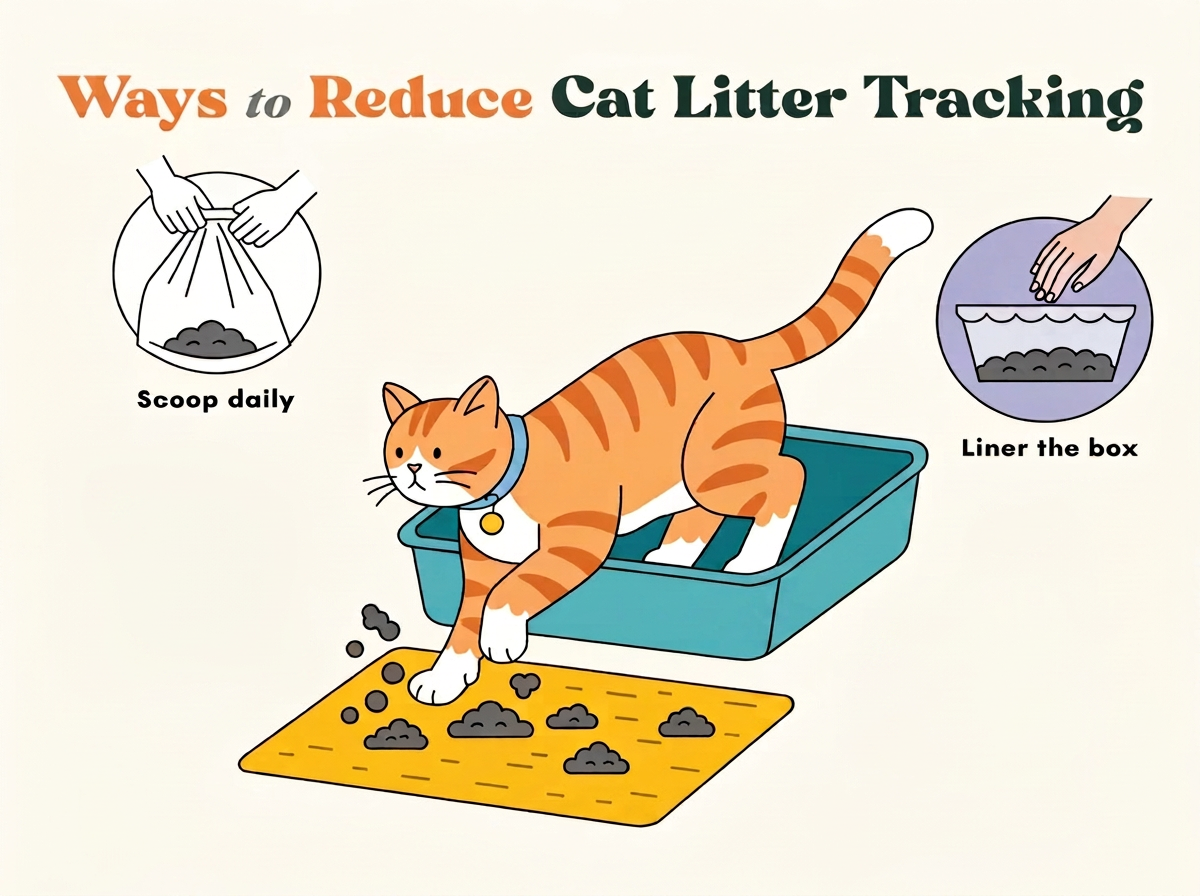
Low dust is not the same as low tracking.

How to choose a low dust cat litter
Look at the grain, not the label
Treat percentage claims as marketing.
Buy unscented or very lightly scented.
Do not trade away clumping.
Check the box before the litter.

A simple home test before you commit

How to make your current litter less dusty

What works inside an automatic litter box

Switching litter without a boycott
Final takeaway: Which low-dust litter should you buy?

FAQS
What cat litter is best for dust control?
What is the best cat litter for reducing dust and tracking?
How do I make my cat litter less dusty?
What is the lowest dust cat litter?
Which cat litter is completely free of silica dust?
Can you get dust-free cat litter?
Is low dust litter better for cats with asthma?
What litter works in an automatic litter box?
Does low dust litter cost more?
Should I use a covered box to contain dust?
Sources
- Cornell Feline Health Center, Feline Asthma: What You Need To Know (2024)
- Occupational Safety and Health Administration, Silica, Crystalline: Health Effects (2024)
- Occupational Safety and Health Administration, Silica, Crystalline: Overview (2024)
- International Cat Care, Choosing a Litter Tray for Your Cat (2024)
- International Cat Care, Soiling Indoors (2025)
- VCA Animal Hospitals, Housetraining for Kittens and Cats (2024)
- VCA Animal Hospitals, Cat Behavior Problems: House Soiling (2024)
- IAABC Foundation Journal, Evaluating Litter Substrate Preferences in a Population of Cats (2025)

You may also like

AutoScooper 11 Waste Bags – 60 Count


AutoScooper 12 Lite Cat Litter Box

AutoScooper 12 Lite Cat Litter Box

AutoScooper 12 Lite Cat Litter Box

AutoScooper 12 Lite Cat Litter Box-Gray
Further reading
8 Best Cat Litters for Odor Control in 2026
Automatic Litter Box for Multiple Cats: Size and Capacity Guide
Automatic Litter Box Odor Control Test: What to Measure Before You Trust Reviews